

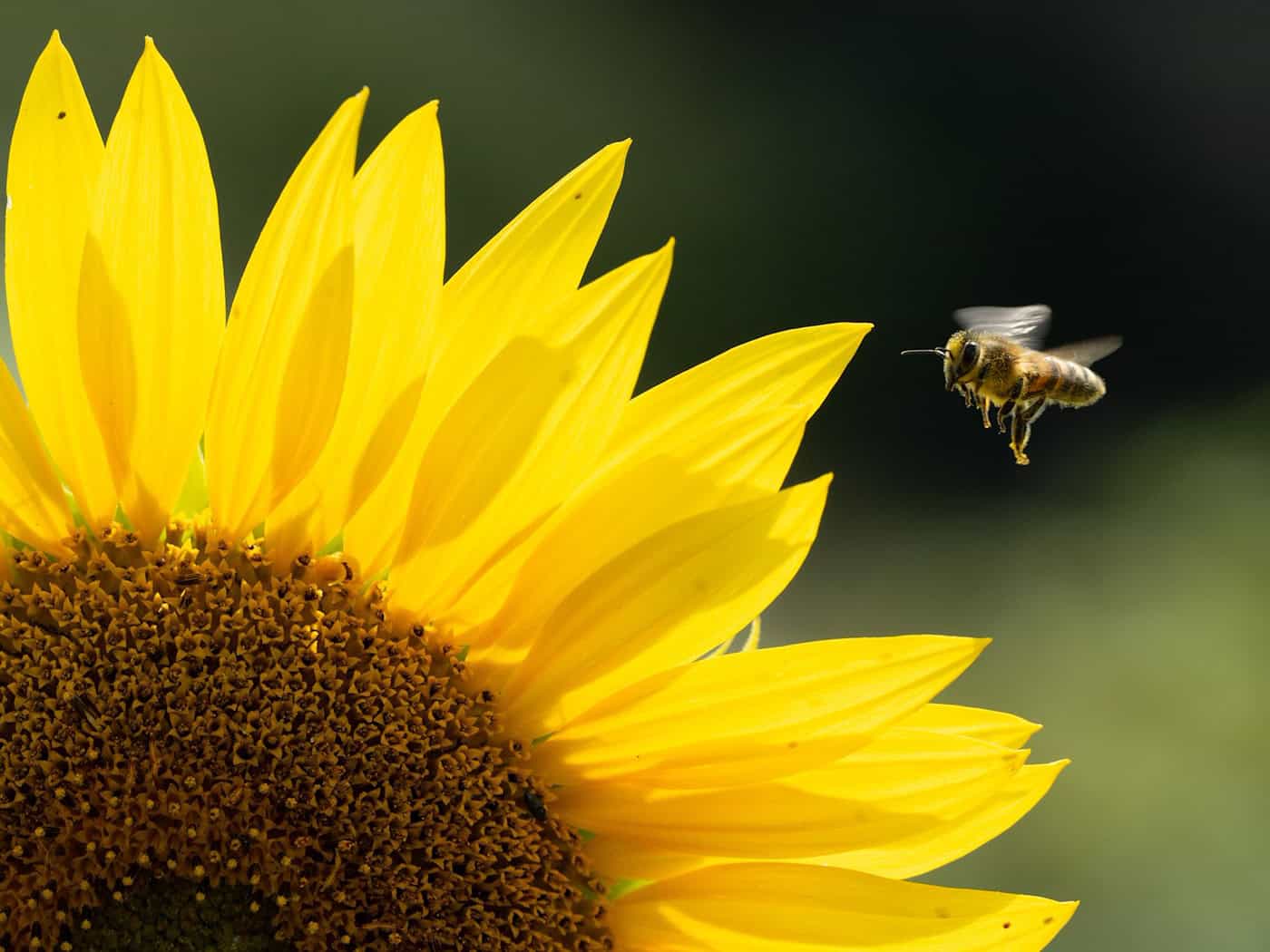
Sunflower fields are becoming increasingly widespread in Saxony. Over the past ten years, the area under cultivation in the Free State has increased sixfold, according to data from the Federal Statistical Office. According to the data, sunflowers were grown on 7,300 hectares this year. Compared to 2025 alone, 3,400 hectares were added; compared to 2016, the increase amounts to 6,100 hectares. The harvest yield has increased accordingly. In 2026, it totaled 18,000 metric tons—which is also slightly more than six times the 2016 figure. Sunflowers still lag far behind rapeseed—the dominant oilseed in Saxony. However, rapeseed cultivation has declined by one-fifth over the past ten years, to 103,000 hectares. During the same period, the harvest volume actually fell by one-third to 313,200 metric tons. Rapeseed cultivation has been marked by significant yield uncertainties in recent years, explains Markus Theiß of the consulting firm AgUmenda. This is due to changing weather conditions and a massive pest problem involving the rapeseed flea beetle. “Some fields are so badly infested that they have to be plowed under.” In this context, sunflowers are becoming an increasingly attractive alternative. To counteract the pest problem, many farmers are sowing earlier. This, in turn, runs counter to climate changes, according to Theiß. “When it’s warmer, you’d actually have to sow later, but then the young plants fall victim to the flea beetle.” Sunflowers, on the other hand, have so far had hardly any trouble with pests. They are only infested by aphids, but these are easy to control—and they also occur in rapeseed, explains Theiß. AgUmenda is participating, on behalf of the State Office for the Environment, Agriculture, and Geology, in a crop rotation trial in the district of Northern Saxony, which is exploring options in so-called nitrate areas with challenging groundwater conditions. In a field in Strelln, two different crop rotations are being tested side by side—one with locally common crops such as wheat and winter rapeseed, and one with alternatives that require less nitrogen and can also cope well with increasing heat and drought. Sunflowers are among these alternatives. The evaluation results show that sunflowers provide a more stable yield compared to winter rapeseed. They also require significantly less nitrogen fertilizer and pesticides. “The poorer the soil, the more the sunflower demonstrates its strengths,” says Theiß. It is less expensive to grow than rapeseed and, relatively speaking, more reliable as well. In addition, rapeseed cultivation is generally very labor-intensive and often becomes uneconomical when yields fall short. One disadvantage of sunflowers, however, is their lower market prices compared to winter rapeseed. This is also related to processing, says Theiß. “However, when yields fail to materialize, farmers start doing the math and say, ‘Okay, I’ll take less of a risk and try sunflowers.’” Switching to sunflowers is straightforward. Seeding can be done using the corn seeding equipment that’s often already available, as Theiß explains. After harvest, deep tillage should be avoided so that fallen sunflower seeds do not grow into the subsequent crop. Due to the sunflower’s deep roots, extensive loosening of the soil is not necessary. Unpretentious rye, for example, is a good choice as a follow-up crop. Copyright 2026, dpa (www.dpa.de). All rights reservedUncertain Yields for Rapeseed
Sunflowers Perform Well in Trial
Rapeseed cultivation is labor-intensive


