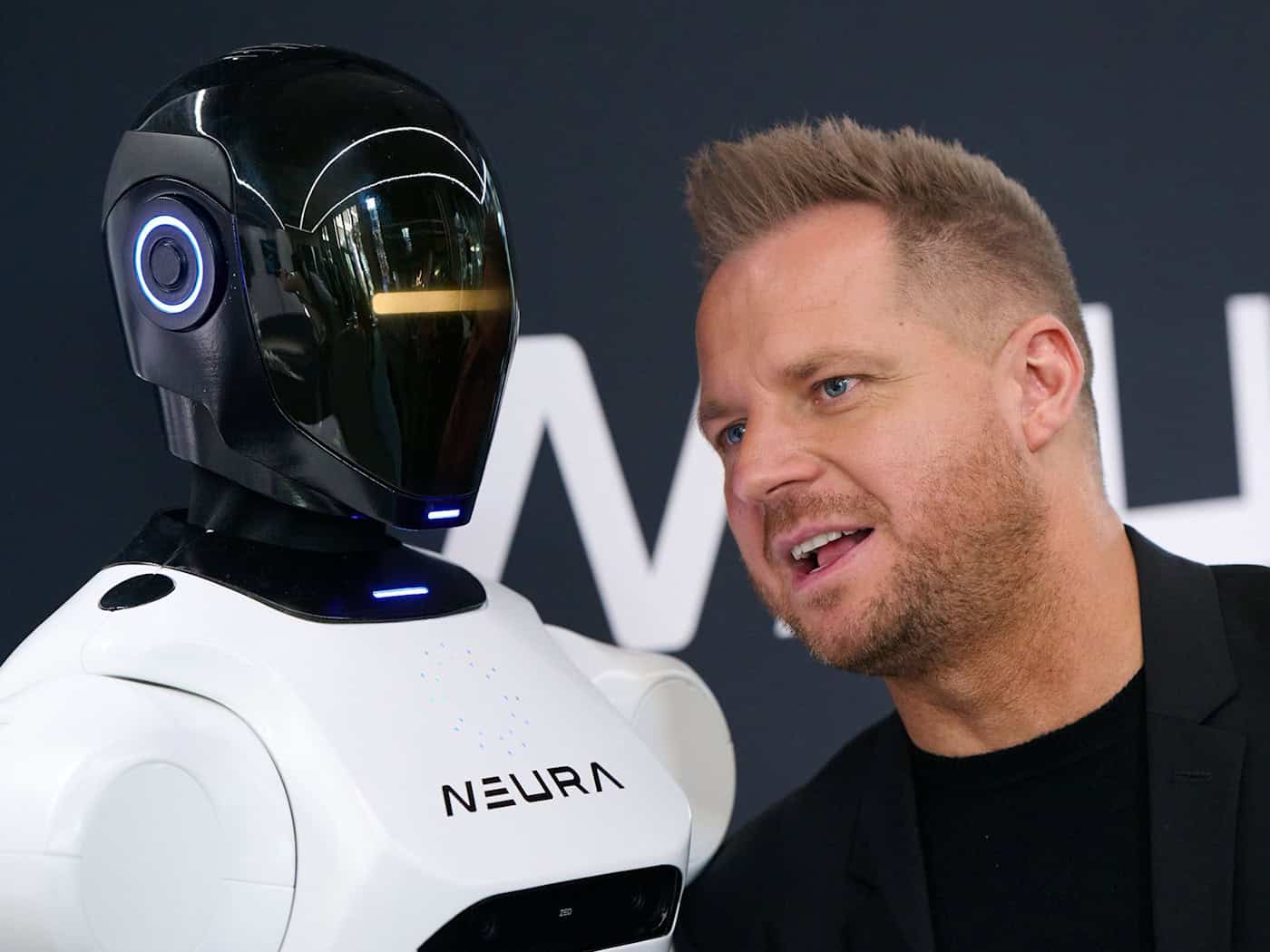
In the future, humanoid robots are expected to assist skilled workers in monitoring power grids. “The key is to combine technological progress with the practical knowledge of the people who operate our energy infrastructure on a daily basis,” said David Reger, CEO of the Swabian robotics manufacturer Neura Robotics. His company plans to collaborate with the energy company E.ON and the East German energy service provider EnviaM to develop and test applications for inspecting and monitoring technical facilities. Initial practical experience in grid operations is expected in the course of 2027. The focus is on inspections, the monitoring of critical facilities such as substations, and checks to ensure the safety of facilities. Physically demanding, repetitive, or potentially hazardous tasks are also to be evaluated as areas of application. “Humanoid robots can specifically relieve them of this burden,” said EnviaM CEO Stephan Lowis, referring to the employees. The robots will initially be trained under controlled conditions at the TUM RoboGym, a training center operated by the Technical University of Munich on the LabCampus at Munich Airport. Specialists will demonstrate work processes there and provide input on requirements. The robots are designed to learn how to analyze information from images, sounds, and touch. Subsequently, EnviaM’s grid subsidiary Mitnetz Strom plans to test applications in real-world grid operations. The training will combine human demonstrations, data from real-world robot deployments, and simulations. Specialists will demonstrate procedures, while sensors will record the robots’ movements and actions. Virtual environments will simulate additional scenarios. Afterward, the trained capabilities will be tested on real robots. Neura Robotics’ AI model, Neuron AI, is designed to process not only images but also sounds, touch, and forces. The trained capabilities are to be made available via the Neuraverse platform and used at other suitable locations. According to the partners, E.ON and EnviaM retain control over their data and trained capabilities. According to the companies, humanoid robots such as the 4NE1 model could navigate facilities designed for humans—for example, up stairs, through doors, and around control cabinets. This would not require any modifications to the facilities. Copyright 2026, dpa (www.dpa.de). All rights reservedRobots are set to take on these tasks
From Training to Field Testing in the Power Grid