

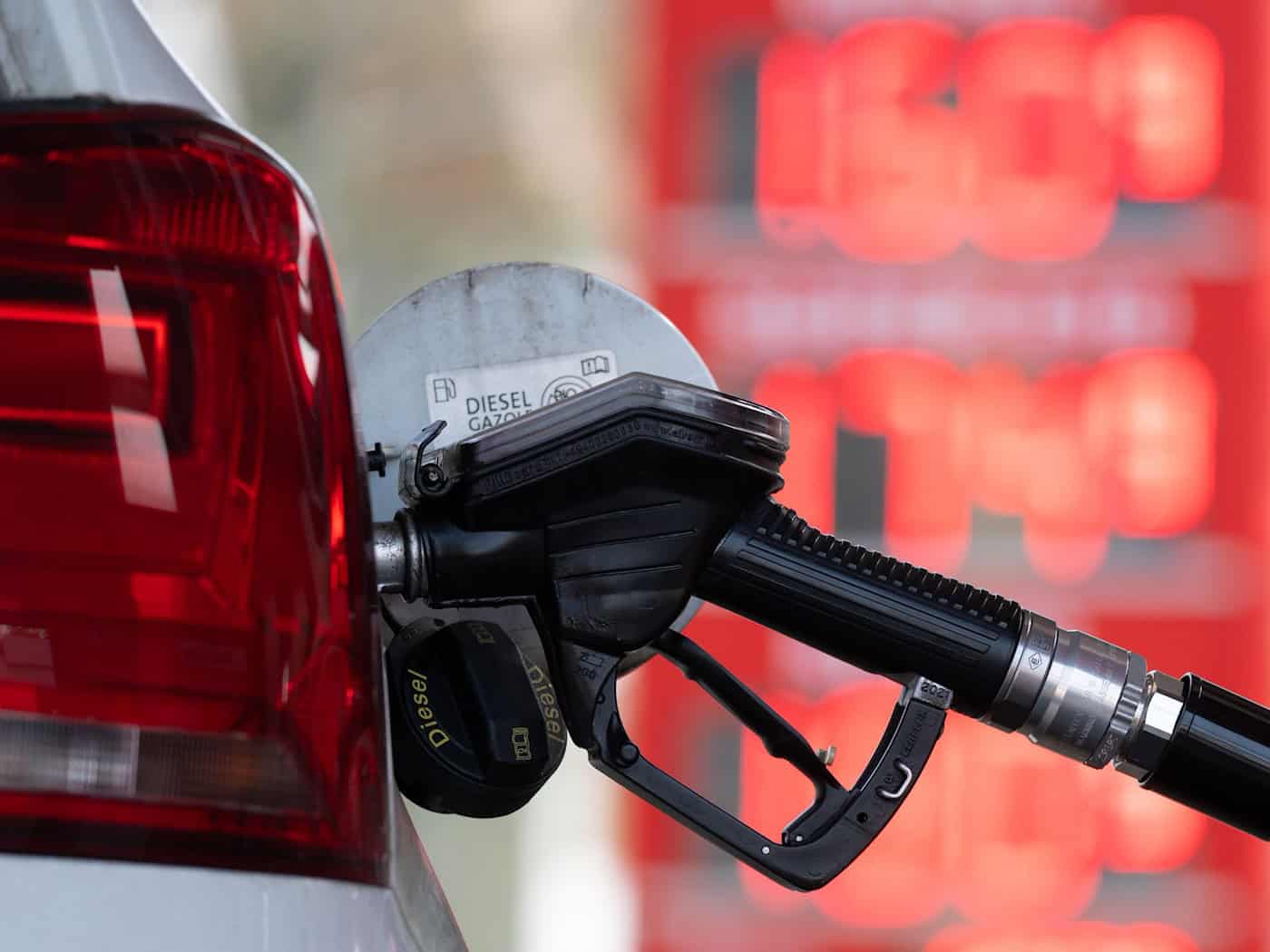
Whoever has to fill up in Saxony feels the high fuel prices to varying degrees depending on where they live. This is because the density of cars with combustion engines also varies significantly within the state. This is revealed by figures from the Federal Motor Transport Authority on the number of vehicles at the beginning of the year. A nationwide comparison is also striking: Leipzig, a city in Saxony, is at the bottom of the list in terms of diesel car density. There are around 83 diesel cars per 1,000 inhabitants. Only Berlin has even fewer at 66. The diesel density is also comparatively low in Dresden and Chemnitz. The situation is completely different in rural regions: There are a particularly high number of diesel vehicles per inhabitant in Central Saxony with around 165 per 1,000 inhabitants. This is followed by Bautzen (164) and the Erzgebirgskreis (161). This means that the diesel density in several districts is almost twice as high as in Leipzig. The Erzgebirgskreis is in the lead when it comes to petrol cars, with around 418 vehicles per 1,000 inhabitants on the roads there. This is followed by the Vogtland district (407) and Bautzen and Görlitz with a good 400 each. The lowest density of petrol cars is once again in the cities. In Leipzig, it is around 245 per 1,000 inhabitants, in Dresden around 252. If diesel and petrol vehicles are added together, it becomes clear that dependency on cars is particularly high in rural regions. The Erzgebirgskreis leads the way with around 579 combustion vehicles per 1,000 inhabitants, followed by Bautzen (567) and the Vogtlandkreis (562). In Leipzig (city), on the other hand, this figure is only around 328. Electric vehicles are also clearly in the minority in Saxony. The highest figures are in the district of Leipzig with around 15 electric cars per 1,000 inhabitants and Zwickau and Chemnitz with around 14 and 13 respectively. Görlitz has the lowest density of electric cars with around 7 vehicles per 1,000 inhabitants. The figures are also comparatively low in Central Saxony and the Vogtland district, at just over 10 and 11 respectively. A clear pattern emerges overall: vehicle density is significantly lower in the independent cities than in the rural districts. While there are only around 333 private cars registered per 1,000 inhabitants in Leipzig, there are almost 600 in the Erzgebirgskreis Rising fuel prices are therefore likely to be particularly noticeable for many people outside the cities - alternatives to the car are often rare there. Copyright 2026, dpa (www.dpa.de). All rights reservedHigh diesel density in rural regions
Many petrol cars in the Erzgebirge and Vogtland
Great differences overall
Electric cars remain rare
City-rural divide clearly visible


