


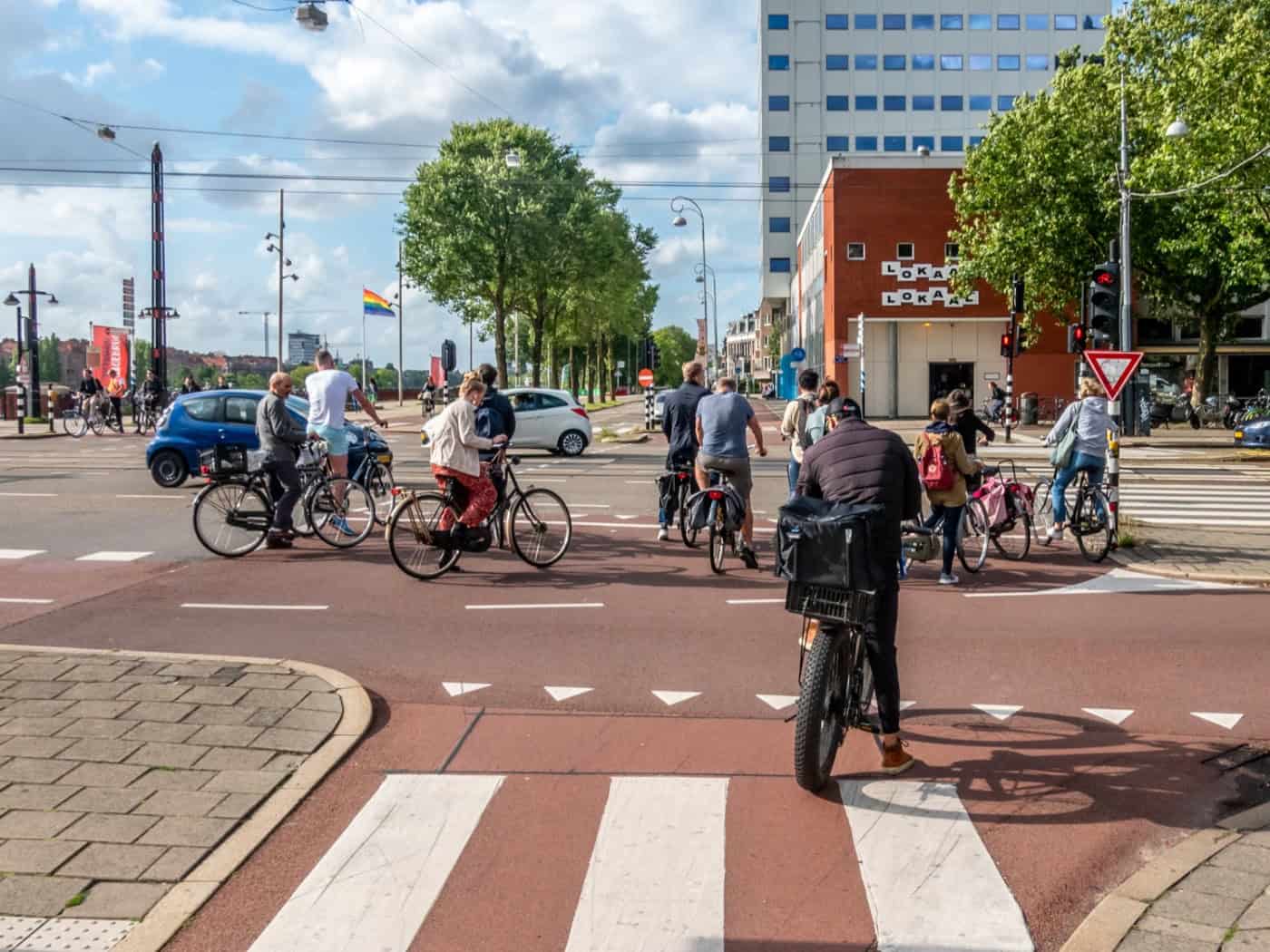
It is not unreasonableness that cyclists (here at the traffic lights on the Berlagebrug over the Amstel in the east of the city of Amsterdam) are all riding without helmets. It is common sense. That of the people in cars: they respect those on bicycles, there's a cooperative relationship. Probably because those in cars are often enough also those on bikes. And, of course, the city (the municipality, whoever is responsible) also does something for a prosperous coexistence. Cycle paths everywhere, parking garages for bicycles. And a sophisticated network of paths.
As good Germans with the relevant experience from the city and country, we naturally had our helmets with us on our trip to the Netherlands and used them at the beginning. That was in the countryside, on the coast - and we weren't the only ones wearing helmets. Virtually all the racers had one on, and there were a lot of them! So far, so good, so right. The not-so-fast ones - to which we clearly belong! - all managed without helmets, because even in the countryside there is, firstly, an almost complete network of cycle paths and, secondly, considerate motorists, apart perhaps from newly arrived tourists without a Dutch bike feeling.
We were out and about in and around Noordwijk and found four road networks there: Roads for cars, cycle paths (partly asphalted, with central reservation for outward and return cyclists), footpaths (natural surface, depending on the surroundings) and special paths for horses. Exaggerated? No, chic: everyone has different speeds and needs. Biertje and Bollen in the evening then of course go together again! At crossroads, there are always signs for knooppunte - these form a very nice tour system, where you can move from crossroads to crossroads and thus get around the country without a GPS or complicated maps.
In Amsterdam itself, there are no knooppunte - not worth it, because there are too many crossroads and you can easily reach them by bike on wide cycle paths anyway. Instead, there is a huge bicycle parking lot at Centraal station, for example. You can park 2,100 bikes there. Free of charge. We also found similar offers in other cities such as Haarlem or Leiden, often combined with maintenance and repair services.
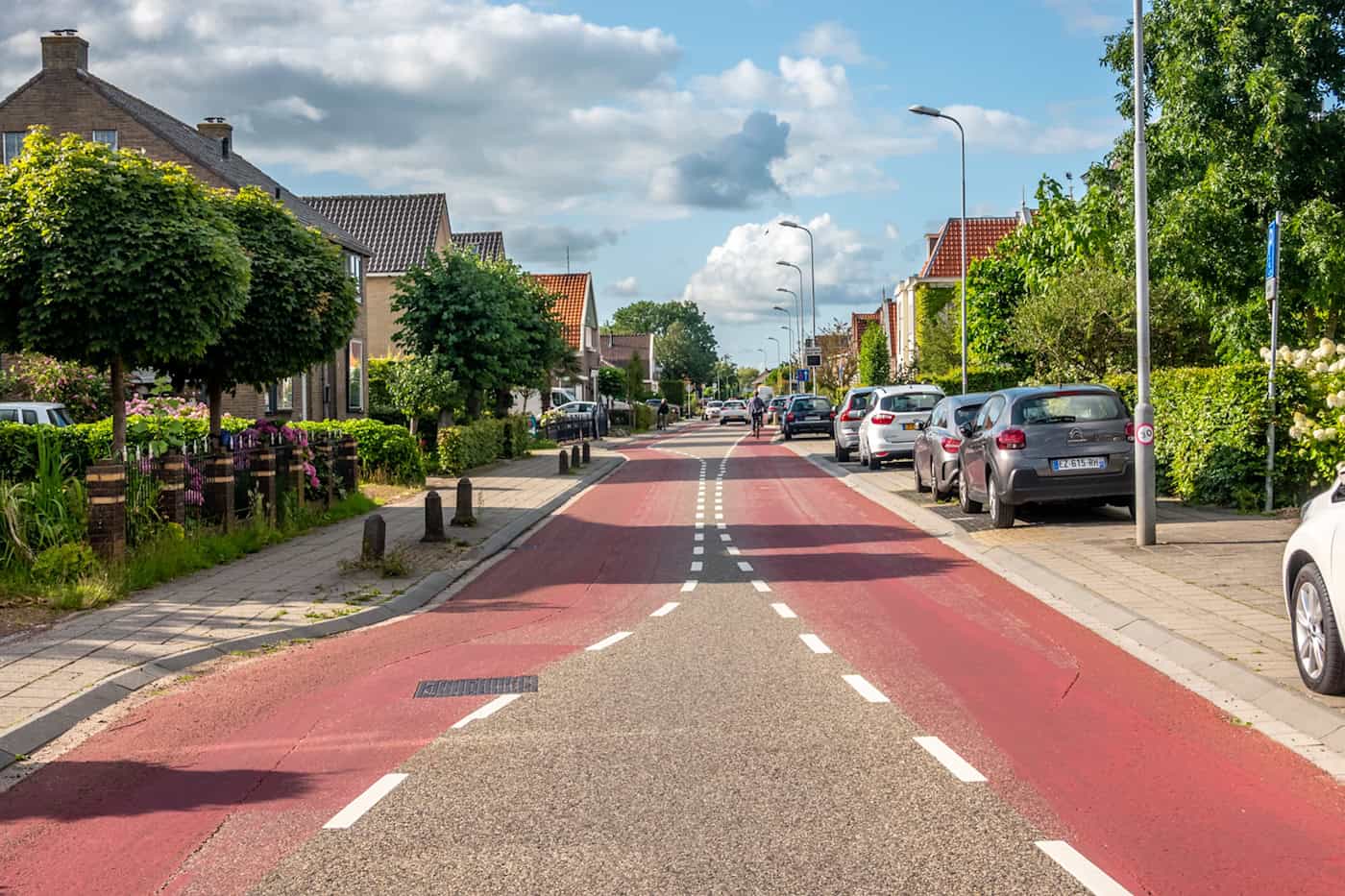
A very German phenomenon is that cycle paths tend to end very suddenly. Not spontaneously, because worried parents couldn't find a parking space to take their children to ballet class and therefore used the cycle path, which is actually far too small for their SUV, for a temporary stop. No, the planned ends are meant because - no idea why. In any case, it's the end of the cycle path and you can see whether you'd rather be on the road or, illegally, on the sidewalk. We saw a lot of fietsstraaten on our tours in the Amsterdam suburbs. Cars are allowed on these cycle streets and motorized traffic is only allowed to drive a maximum of 30 kilometers per hour. A cycle street is a road designed as a cycle path; cars are allowed here, but they are guests. But even without being a fietsstraat, a residential street can send a very clear signal to motorists that bicycles are more than welcome here: when the street narrows, the two cycle paths remain the same width, but the strip for cars becomes narrower. Very narrow.

