


Wolfram Siebeck: The Man Who Taught Germany About Taste
“Anyone can cook badly. But to be proud of it—only the German housewife can do that!” That’s a quote (unfortunately unsourced, since I’m just digging it out of my memory) from Wolfram Siebeck. I read it about 40 years ago, probably in *Die Zeit* or *Feinschmecker*. That’s where Siebeck wrote with cheerful bluntness and a penchant for sarcasm about the finer things in life: about food in its two most basic forms—making it yourself (commonly known as “cooking”) or eating out. And while his recipes were always eagerly recreated, his restaurant reviews (especially the scathing ones) stood in for the restaurant visits we couldn’t afford as students or journalists in our early years. So Siebeck has really taken root in our minds—and sometimes we think back on it, in that typical “old-age” way: “Back in the day…”
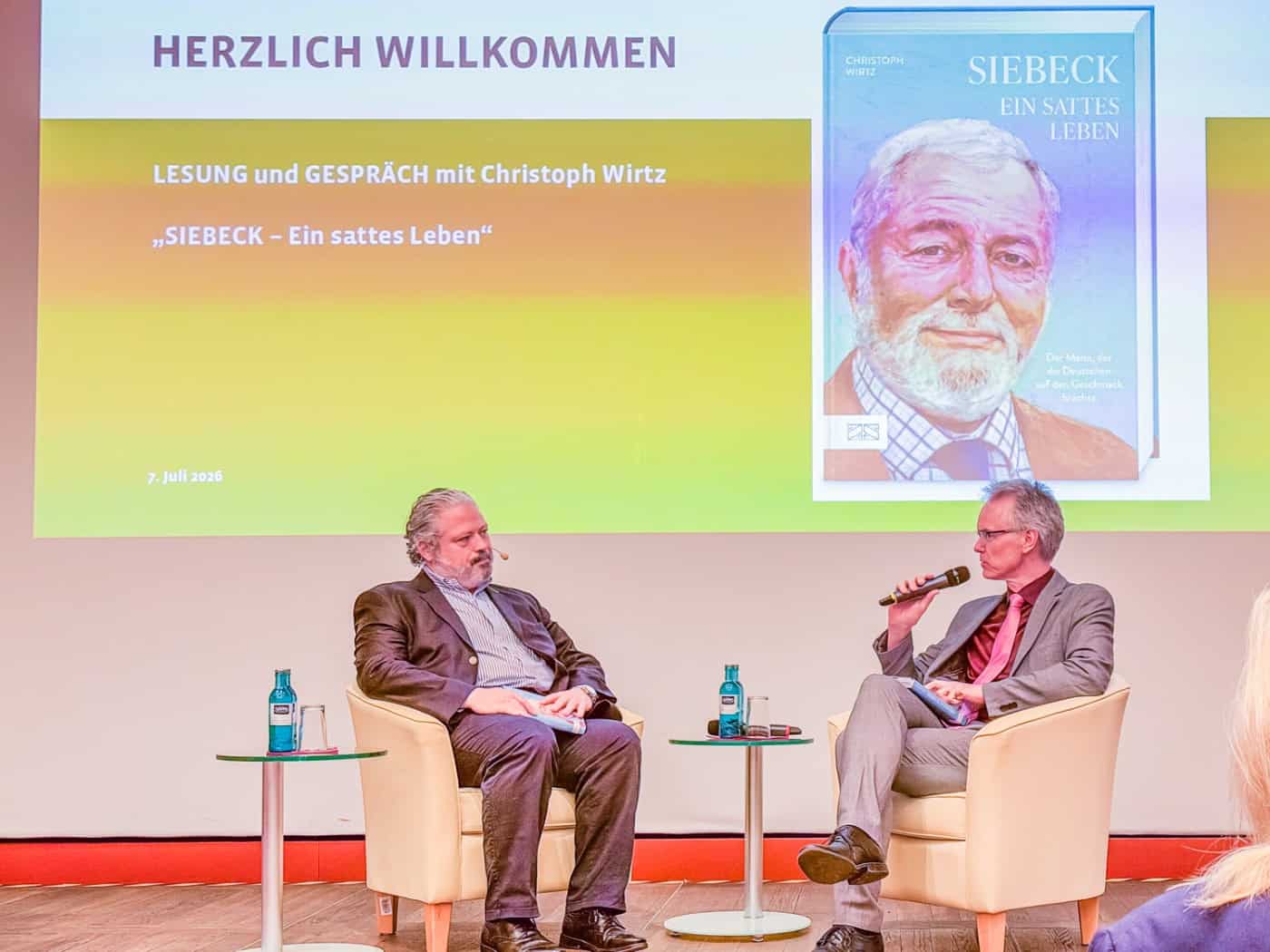
There’s a current reason to dig up those memories: a biography of Siebeck, who died on July 7, 2016, at the age of 87, has just been published. Surprisingly, it’s the first biography of the food critic who, like no other, taught Germans the finer points of fine dining. The book has been on the market since June—and on the very day marking the tenth anniversary of the magnificent food critic’s death, author Christoph Wirtz traveled to Dresden to read from his book at the SLUB (short for Saxon State Library—State and University Library) and discuss the book and Siebeck with Prof. Andreas Rutz.
Of course, it was no coincidence that the reading took place in this library and the conversation was with a professor of Saxon regional history: a manuscript containing notes by assistant cook Ernst Max Pötzsch from the kitchen of Prince Friedrich August of Saxony was donated to the SLUB, Prof. Dr. Josef Matzerath turned it into a research project with numerous publications. For today’s court menus (my review), Siebeck was brought on board as co-editor. And that’s not all: In 2018, the SLUB Dresden was able to acquire the estate of journalist and food critic Wolfram Siebeck (1928–2016) with financial support from TU Dresden (incidentally, most other estates were donated to the SLUB).
The SLUB is the custodian of the Siebeck estate
The estate is part of the German Culinary Archive (see my article in Falstaff) and is therefore open to the public. Of course, Wirtz—who knew Siebeck personally and, as the longtime editor-in-chief of Gault&Millau, brought a refreshingly critical tone to the publication—took advantage of the “grace of the archive,” as he put it in a conversation with Prof. Rutz: “I gained insight into very personal documents,” which helped with contextualizing and writing the book. “I believe this is a very honest book. In any case, it’s not sugarcoated,” Wirtz said about Siebeck. That’s true insofar as it also reveals the—let’s say—unconventional sides of Siebeck, who was not only a brilliant writer but also quite the egomaniac. In the interview, Wirtz summed this up beautifully when asked about the role of Siebeck’s wife, Barbara: “To say that Barbara Siebeck was the center of his world isn’t true, because the center of his world was Wolfram Siebeck.”
So, in 25 chapters, Christoph Wirtz introduces us to Siebeck as a man dedicated to refining the art of cooking—who by no means always goes about it with a foil, but rather sometimes strikes boldly with a sword or even an axe. In the process, you learn a lot about Siebeck and also about the “good old days,” which weren’t always so good—it’s definitely worth a read. And Christoph Wirtz isn’t just a companion of Siebeck’s; he’s also a master storyteller. For the most part, the text reads quite smoothly, sometimes even with a touch of smugness—but at times, Wirtz also had his off moments as a writer: sentences with 40 to 50 words would certainly not have made it past the editors at Gault&Millau.
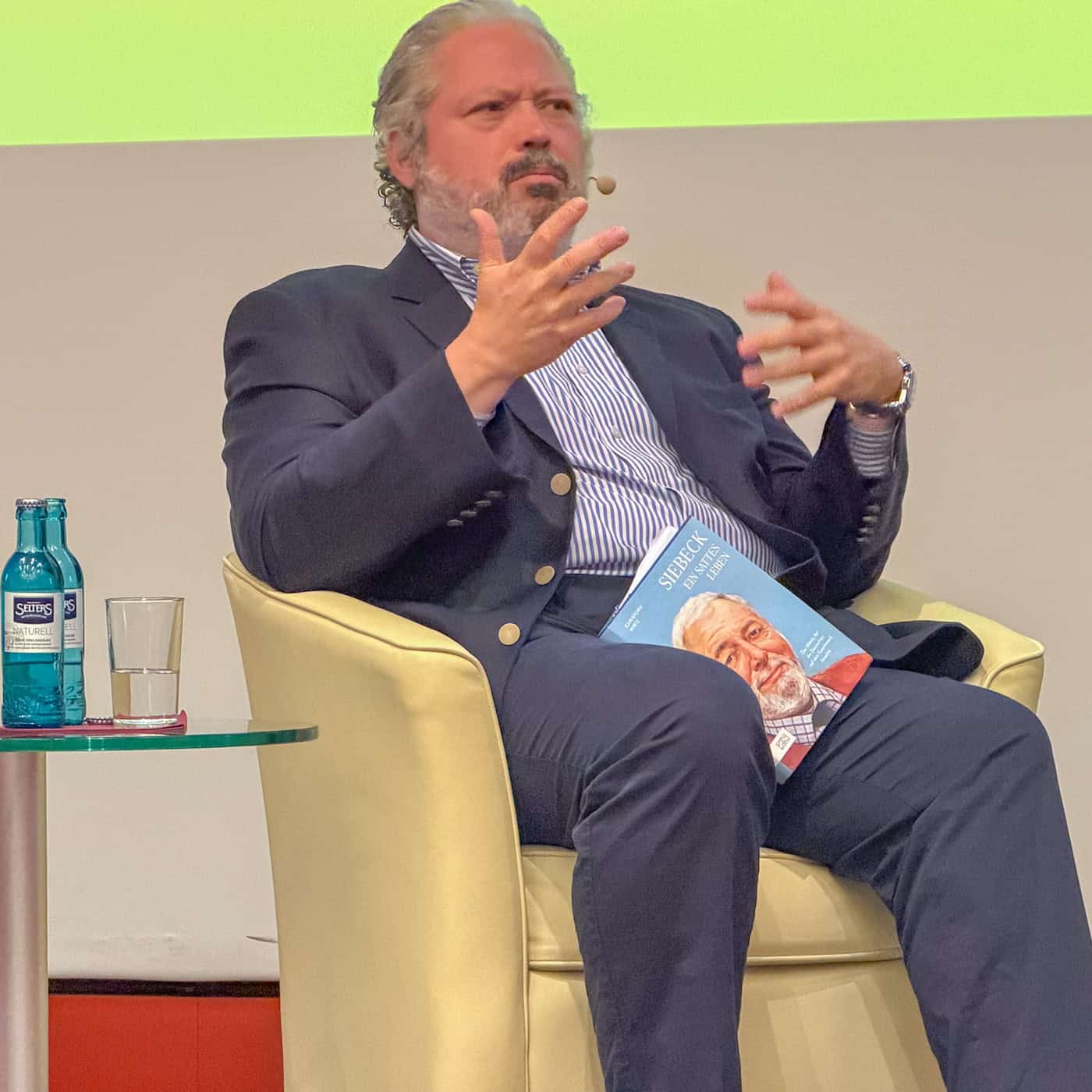
How Wirtz evaluates and organizes his knowledge (which, after all, stems from personal experience and what he has read) is, of course, his own business. But despite his own self-perception, I still find him too close to being a companion and colleague in some respects. For in my view, the late Siebeck showed little wisdom of age; rather, I had to conclude that he was simply senile. Whether the bon vivant drank even more in his old age than in his younger years, I cannot say—I wasn’t there, after all; it was just what others whispered. Wirtz doesn’t address this; only at the start of the conversation at the SLUB did a remark slip out: “Water wouldn’t have been to his liking…” That’s true, I thought, and wondered whether Siebeck would have enjoyed taking part in the conversation while lying in his biographer’s lap?
But when you twist the truth to suit your own sharp words and start “finding” alternative facts as early as 2013, that’s a special kind of stubbornness. In his blog “Wo isst Siebeck,” he ranted in 2013 in his usual manner about the budding landscapes: “Berlin and the surrounding eastern regions are failing to deliver the necessary excellence.” Siebeck then turns to Dresden and writes: “This is evident at the only establishment in the popular city on the Elbe that boasts a Michelin star, ‘Bean&Beluga.’ We were there on a Thursday evening and were the only guests.” I knew better—both about the number of Michelin-starred restaurants (after all, the long-standing Caroussel at the Hotel Bülow Palais was already there at the time) and about there being only one table: Stefan Hermann had assured me that, aside from Siebeck’s table, there were four others. By the way, my comment was never published, so I’ll make up for it here: “Dear Mr. Siebeck, a little research certainly does every article good, even if you’re *the Siebeck*: Dresden has two Michelin-starred restaurants. And a little self-awareness (no one expects modesty from Siebeck, after all) would also be in order. For example, if you praise something toward the end of the post for which you yourself were paid—because you had a stake in it—that should definitely be mentioned there!” Incidentally, the praise at the end of *Knospende Landschaften* referred—and here we’ve come full circle—to the “Theme: The Court Kitchen around 1900,” where he himself served as co-editor…
Christoph Wirtz: “Siebeck.” A Full Life
ZS Verlag, Munich 2026.
ISBN 978-3965845589
304 pp., ill., hardcover, €29.90.

