


The toads will soon be on their way - but they need help
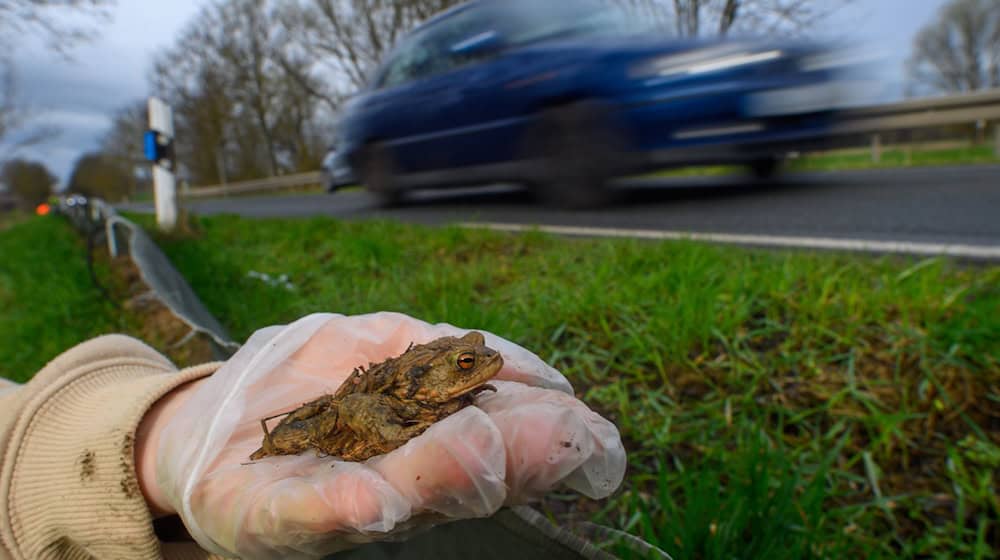
The toads will soon be crawling out: especially in the milder regions of Saxony, the first toads could leave their winter quarters as early as the beginning of February and make their way to their spawning grounds. Common toads, for example, can "usually be observed migrating from the beginning of February to the end of April", says Wolf-Rüdiger Große, Chairman of the Nature and Biodiversity Conservation Union (Nabu) Saxony. The migratory instinct is innate in toads. To ensure that the amphibians get from A to B safely and don't get run over on the roads, some people are taking precautions. Volunteers are already being sought in Chemnitz, as many amphibian species in Saxony are threatened or highly endangered. "The preservation of amphibian populations in Chemnitz is currently one of the most important tasks in urban nature conservation," the city announced. The volunteers check the trapping buckets on amphibian protection fences in the mornings or evenings when temperatures are five degrees Celsius and above. Captured animals are identified, counted, brought safely across the road and released again. In the Dresden area, however, there is currently no additional need for helpers. "In Dresden, 35 people are working on amphibian fences this year in roughly ten teams," the city administration announced. Should there be any changes to the teams, the Environment Agency will promptly take care of the necessary reinforcements. In Leipzig, Nabu has been organizing and coordinating help with amphibian migration for many years. Planning is currently still underway, it said. However, due to the annual turnover of helpers, support is regularly sought at critical points. "Around 300 volunteers work on the amphibian protection fences managed by Nabu Saxony every year," explains Große. Last year, almost 8,000 meters of fence were maintained - for example in the Leipzig area, in northern Saxony, in the Ore Mountains, in Freiberg and in the Dresden region. "Put simply, there are two types of migration," emphasizes Große. The first group are the early migrants - so-called early spawners. "The spring frog, moor frog, grass frog, newt, common toad and common spadefoot start right after the frost." The late spawners, on the other hand, only follow with the onset of spring. According to current findings, around 17 amphibian species are native to Saxony. Copyright 2025, dpa (www.dpa.de). All rights reservedVolunteers needed
Kilometre-long protective fences protect early and late migrants

