


The Spree River Faces a Water Shortage – NABU Calls for Natural Solutions
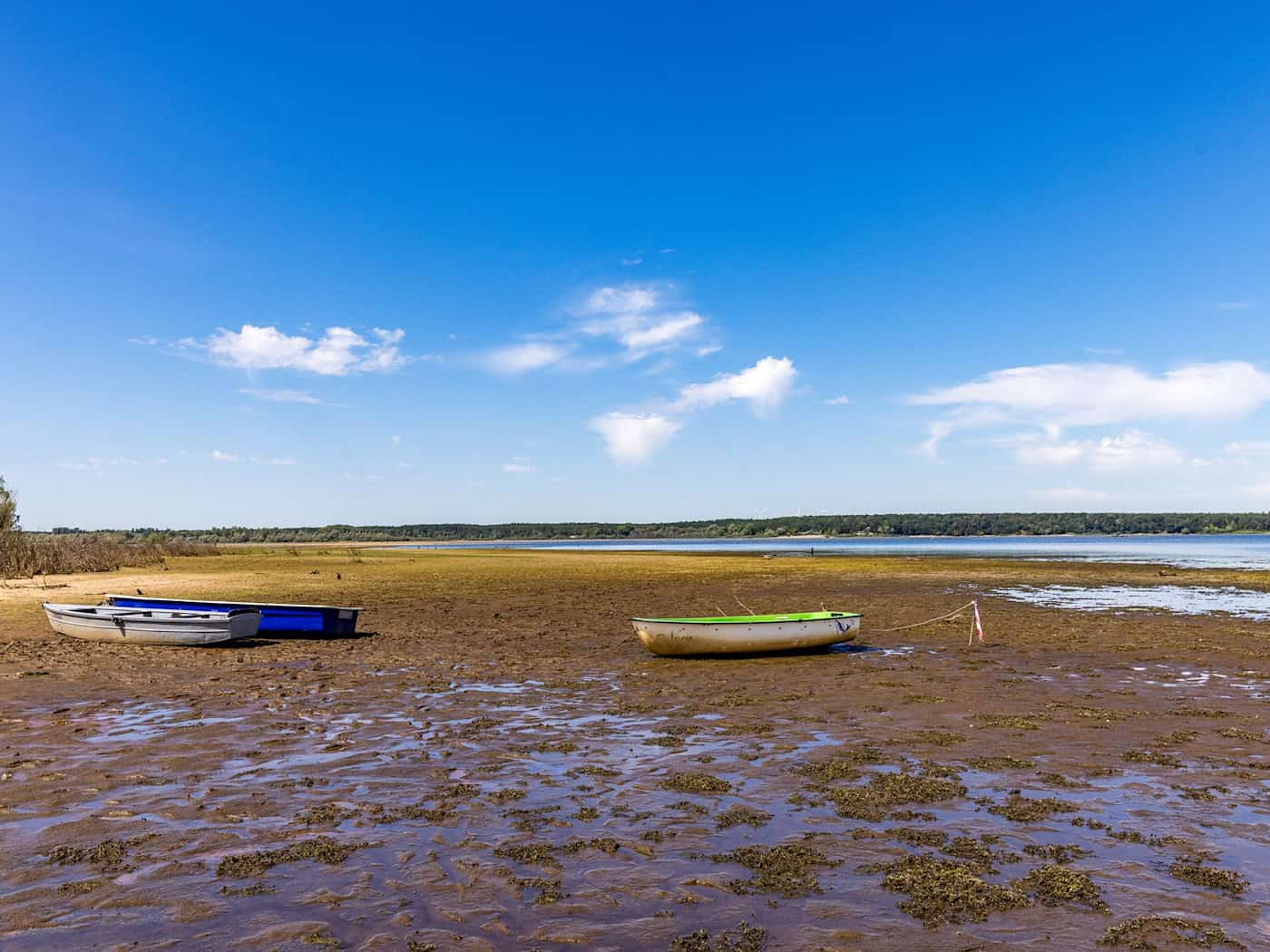
According to the Nature and Biodiversity Conservation Union of Germany (NABU), residents along the Spree will have to get used to less water in the riverbed in the future. Now that the river has been artificially modified through straightening, deepening, widening, and regulation, there is an opportunity to restore conditions closer to nature, the NABU state chapters in Berlin, Brandenburg, and Saxony stated in a declaration marking International Rivers Day this Sunday. Renaturation—for example, by reducing the cross-sectional area of the waterway and reconnecting floodplains—offers a sustainable alternative, they said. The abandonment of artificial ditches in the Spreewald and the temporary drying up of sections of waterways in the summer are inevitable. “For nature, these phenomena—which have also occurred in the past—are far less dramatic than is often claimed. First and foremost, humans must learn to adapt once again to conditions that are closer to nature than those of the past 150 years,” said Björn Ellner, head of NABU Brandenburg. The NABU state chapters pointed out that with the end of lignite mining in Lusatia, the river is at risk of running dry. To balance water levels, the Spree has been fed for decades with so-called drainage water from coal mining. Both the Spreewald and Berlin have become accustomed to the artificially increased water volumes, they said. “With the end of coal mining, the tap to the Spree is being turned off,” clarified Rainer Altenkamp, head of NABU Berlin. Climate change will further exacerbate the situation. The NABU chapters therefore appealed to the governments of the affected federal states not to compensate for the consequences of lignite mining with technology, but rather to implement “nature-based” solutions along the entire course of the river and improve water retention across the region. “A sustainable water policy must consider river basins as a whole and must not simply shift water problems from one region to another,” warned Maria Vlaic, NABU chairwoman in Saxony. To counter the looming water shortage, there has long been discussion about diverting water from the Elbe to the Spree. However, the project is highly controversial—and not just because of the associated costs. The Elbe, too—as was clearly evident this summer—is struggling with low water levels. “Technical solutions like water transfers merely treat the symptoms and do not address the root cause of the problem,” said Björn Ellner. Such measures would also entail enormous interference with nature and the landscape. Copyright 2026, dpa (www.dpa.de). All rights reservedHumans must learn to adapt once again
With the end of coal mining, the Spree’s water supply will be cut off
NABU Calls for Natural Solutions Instead of Technical Ones
Elbe Water Diversion Under Fire

