


Plants cannot keep up with climate change
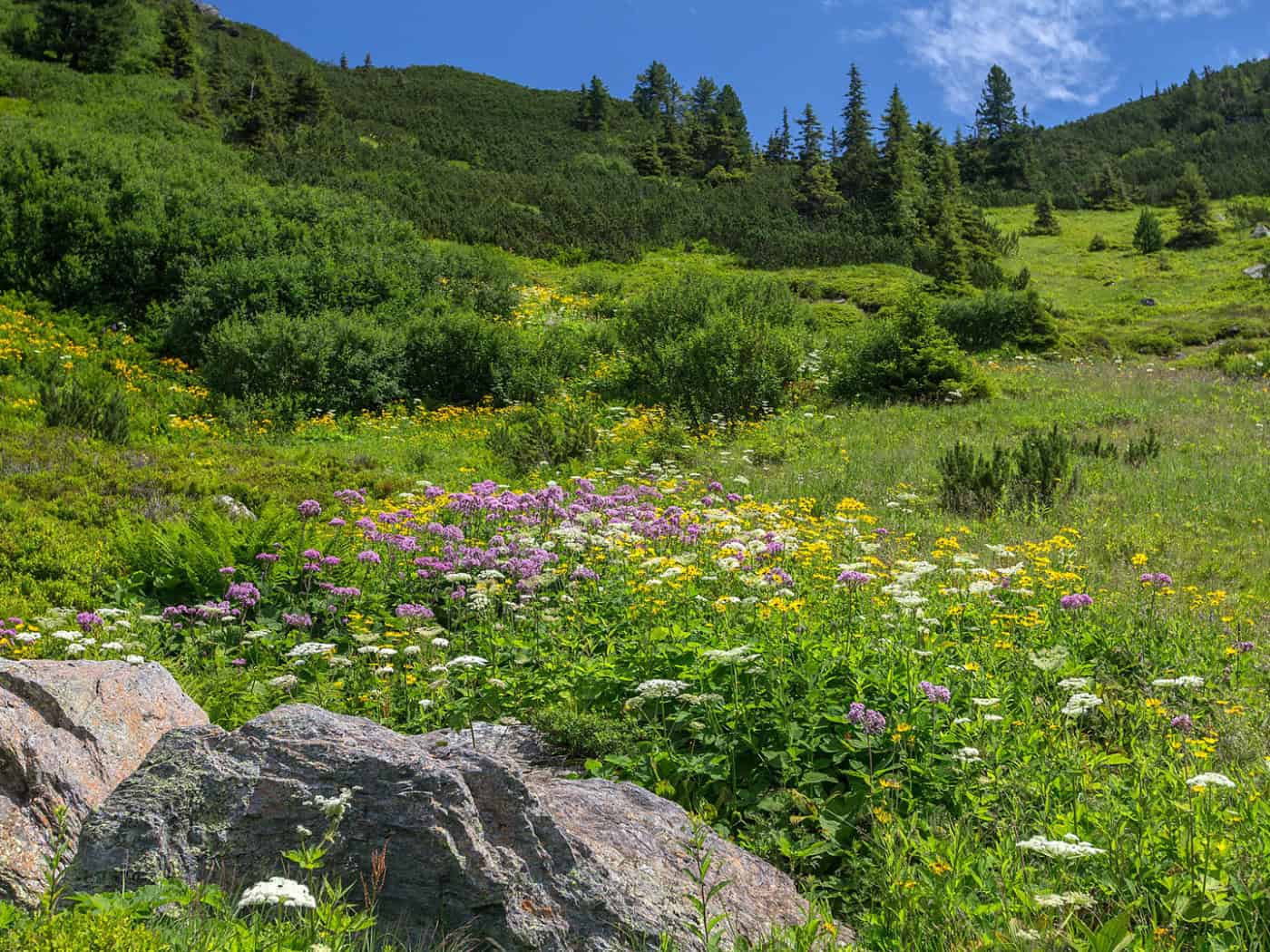
Whoever spends time in the mountains still sees lush meadows and colourful flowers. But Europe’s plant life is already changing in the background — quietly, but profoundly. Cold-adapted species are disappearing, and this is happening particularly fast on mountain peaks.
A new study published in the journal Nature shows how differently Europe’s ecosystems are responding to rising temperatures. It was initiated at the German Centre for Integrative Biodiversity Research in Leipzig (iDiv). Scientists from Leipzig University, Friedrich Schiller University Jena and the Senckenberg Institute for Plant Diversity Jena were also involved. The study does not just offer snapshots: it is based on long-term observations from across Europe.
Plants lag behind the heat
The researchers analysed data from more than 6,000 monitoring plots, from Ireland to Ukraine and from Norway to Spain. They compared which plant species used to grow in a given place and which grow there today. In doing so, they identified a so-called “climate debt”. This describes the gap between the climate a plant prefers and the climate that actually exists where it grows. Plants respond slowly: they adapt more slowly than temperatures rise.
“This is why we could see more rapid changes in vegetation composition in the coming years,” says Prof. Markus Bernhardt-Römermann of Friedrich Schiller University Jena, who is also a member of iDiv. That would happen when conditions become so unfavourable for individual species that they die out locally. The study therefore does not describe a sudden upheaval, but a shift that has already begun in many places and could continue to accelerate.
Mountain peaks are changing the fastest
These changes are particularly pronounced in the mountains. On mountain peaks, plant communities are changing about five times faster than in meadows and forests. Cold-loving species are declining especially quickly there, while warmth-loving species are hardly increasing. More generally, plant communities in all the habitats studied are responding more slowly to warming than temperatures are rising. This delay was most pronounced among plants growing beneath the forest canopy.
The study does not explain in detail why individual ecosystems respond so differently. But it clearly shows that the effects of warming do not unfold in the same way everywhere. Depending on the ecosystem, the pace of change varies considerably. For researchers, this is an important indication that the consequences of climate change do not follow the same pattern across all landscapes.

