


Few near-natural moors - more efforts required
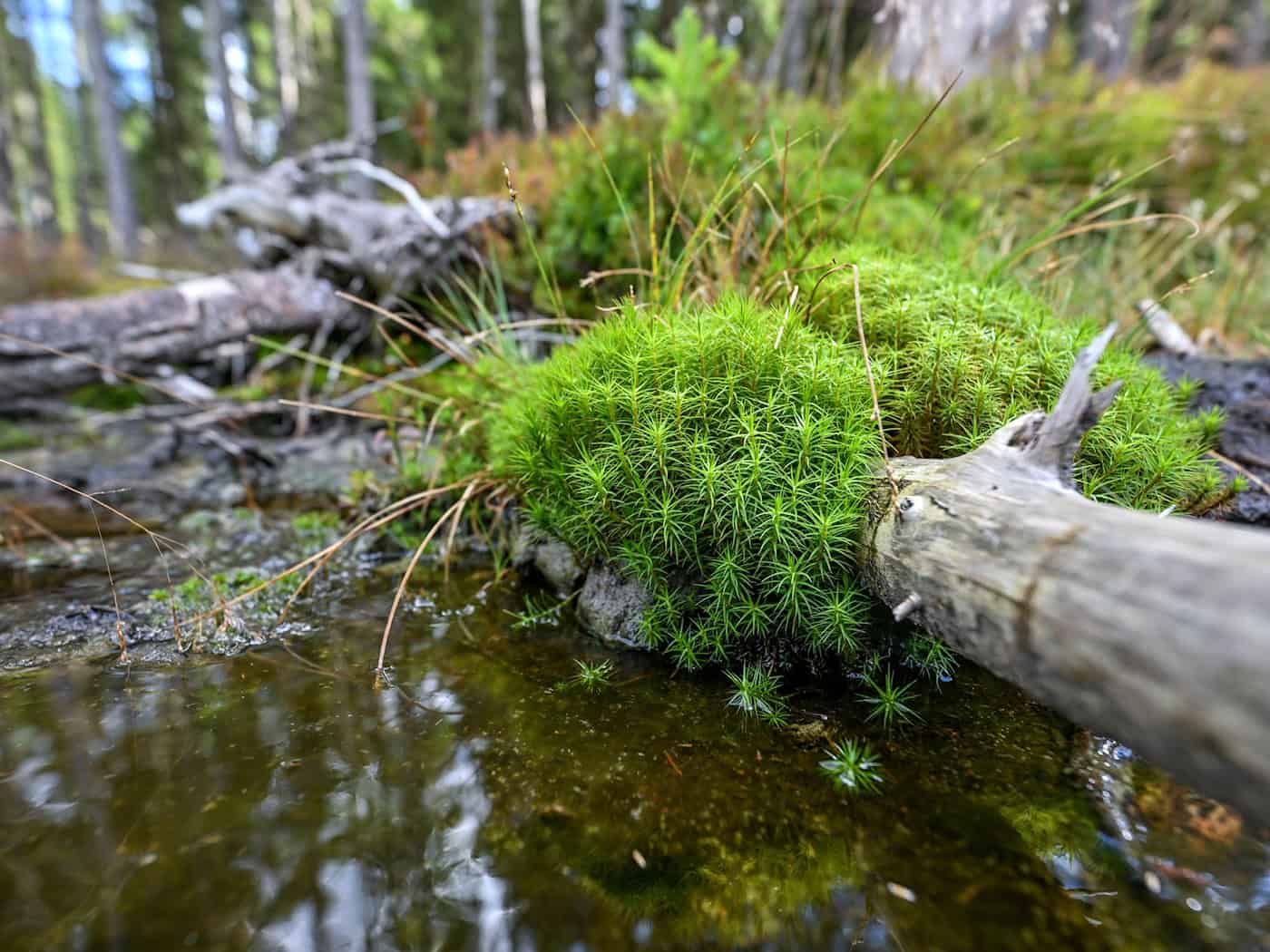
The environmental organization BUND is calling for more efforts to protect moors. "In Saxony and Germany, moorland protection has not yet gone beyond individual model projects," criticizes the chairman of BUND Saxony, Felix Ekardt. "What is needed is to rewet a significant proportion of the areas, both in the Lusatian fens and in the upland moors in the Ore Mountains." Bogs are considered important for climate protection because they bind CO2 in the long term. They are also important habitats for animal and plant species. According to the State Office for the Environment, Agriculture and Geology, there are around 47,000 hectares of moors and organic wetlands in Saxony. This corresponds to 2.5 percent of the state's area. However, only a fraction is actually a near-natural moorland ecosystem. Many areas were drained in the past in order to use them for agriculture and forestry. A good 11,000 hectares of moorland alone are used for agricultural purposes as grassland or arable land. Saxony's CDU-SPD coalition has agreed in the coalition agreement with regard to environmental and climate protection: "We will develop a concept for Saxony's moorland areas that reconciles the reduction of net CO2 emissions, ecosystem services, biodiversity protection and agricultural production." To this end, "long-term economic prospects" are to be created for the owners and users of the land. This concept is on the home straight and should be published at the end of the year, the Ministry of the Environment informed dpa in response to a query. It is intended as a guideline for action and has a "technical recommendatory character". It would not specify concrete area targets. The sticking points in the revitalization of moors include complex ownership structures, the financing of such projects and conflicts with other uses - such as agriculture, but also the protection of drinking water, it said. "The revitalization of moors is a process that takes a long time," said the state office responsible. According to the experts, the condition of drained areas generally continues to deteriorate. "On the other hand, where rewetting measures have been initiated, signs of stabilization can certainly be observed." Current moorland protection projects are underway in the Mothäuser Heide in the Erzgebirge and in the Dubringer Moor (Bautzen district). "In addition, several project applications are currently being prepared via the federal funding guideline "1,000 Moors" and are intended to provide financial resources for new projects," emphasizes spokeswoman Karin Bernhardt. The state office has been offering a new advice center since this year. The Moorland Soil Protection in Saxony's Moorland Regions (MoSa) project advises public, private and association stakeholders who want to become active in moorland protection. This will run until the end of 2032. There are currently around 586 hectares of pure mire biotopes in Saxony's forests, as the state enterprise Sachsenforst reported on request. The area is set to grow. In the Eibenstock forest district, for example, work is underway to wet out a ten-hectare area of forest: the moor on the Red River. The area was drained with ditches in the 19th century in order to use it for forestry, explains forest district manager Johannes Riedel. Attempts are now being made to restore the landscape to its original state. To this end, dams are being built and old ditches filled in. "The rewetting of as many moors as possible is important for climate and biodiversity protection, but only in addition to a complete phase-out of fossil fuels in the near future and a sharp reduction in livestock farming," explains BUND state director Ekardt. "If these steps are taken, only a few percent of Germany's current emissions will remain." In order to achieve the goal of climate neutrality, these could be bound in moors and near-natural forests. Copyright 2026, dpa (www.dpa.de). All rights reservedMinistry of the Environment is working on a concept for Saxony's moors
State office: revitalization takes a long time
Forest area to be converted back into mire biotope

