


Bird Chicks in Distress After Heat Wave—Rescuers at Their Limit
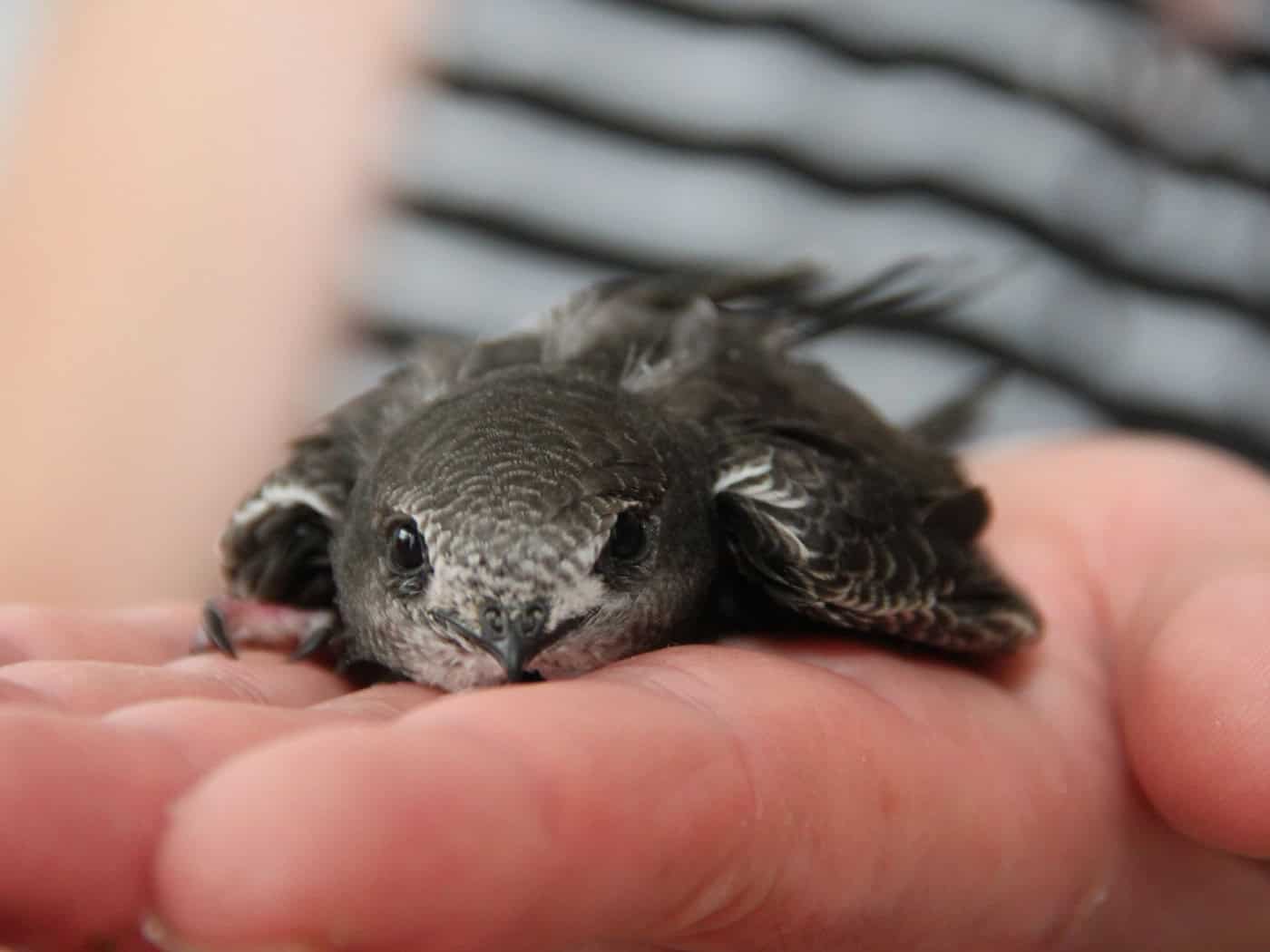
The young birds climbed to the edge of their nests to escape the heat inside—and fell. During the heat wave at the end of June, hundreds of young wild birds in Saxony found themselves in distress this way. Since then, Corinna Heinrich’s phone hasn’t stopped ringing. Swifts that have fallen from their nests and other weakened young birds are filling the bird and hedgehog rescue center in Bad Elster in the Vogtland region. The animals must be fed every few hours during the day. Heinrich reports that many wildlife rescue centers across Germany are at full capacity or on the verge of having to stop accepting new animals. The recent extreme heat has “been the last straw,” Heinrich explains. She has taken in around 50 swift chicks in the past few days. These wildlife rescue centers—most of which are privately run and funded almost exclusively by donations—were already at their limit. “More and more are giving up.” For many, the time-consuming care was no longer manageable alongside work, family, and health issues. Corinna Heinrich now runs the only remaining rescue center for small wild animals in large parts of southwestern Saxony and as far as Upper Franconia in Bavaria. “If I were to stop, I’d constantly have to think about what would happen to the animals.” The situation has recently been particularly dire in sweltering major cities with temperatures around 40 degrees Celsius, explains Karsten Peterlein, director of Wildvogelhilfe Leipzig. During the four days of the heat wave in June, over 500 reports of found swift chicks were received. Seventy-six birds could be taken in. “We had to turn the others away—it’s a disaster.” There is simply a lack of time, staff, and money. Many young birds climbed to the edge of their nests because of the heat, fell, and needed help. For Corinna Heinrich, caring for the young swifts now defines her day. Each bird must be handled carefully. One wrong move could injure its beak. Raising a common swift costs about 50 euros in food expenses, she reports. But her sanctuary is also home to hedgehogs, bats, and other wild animals. Donations are urgently needed. “I simply can’t cover the costs for the vet and food on my own.” There is no long-term government funding for most wildlife rescue centers in Saxony, says René Sievert of the Saxony Nature Conservation Union (NABU). “People who find wild animals are often desperate. They spend a long time on the phone and still can’t find anyone to talk to.” Outside of business hours, authorities in the fields of hunting, forestry, or nature conservation are often unavailable. “Then people inevitably end up at the volunteer wildlife rescue centers,” says Sievert. Many people are unaware that the volunteers care for the animals alongside their jobs and family lives. Capacity is very limited. NABU is working hard to provide information and raise awareness so that help can be coordinated as smoothly as possible, Sievert explains. Recently, the nationwide Wildlife SOS app has also been helping finders assess whether an animal needs help and who they can contact. The fact that even experienced operators are occasionally unable to help exacerbates the situation, adds Tobias Rietzsch from the wildlife rescue center in Rödlitz (Zwickau district). Things are quieter at his facility than in previous years. For health reasons, he is currently unable to take in any animals. However, the requests keep coming in. Veterinarians, fire departments, and government agencies also contact him time and again. “So far, there have been no indications from the state of Saxony that they intend to support us in our work.” Many volunteers find it hard to say no for moral reasons. As an example, Rietzsch mentions a falconer who has been saying for years that he wants to quit. He is now over 90 years old. But whenever the phone rings, he keeps going. “We want to help, after all,” says Rietzsch. The fact that people who find injured animals often have to search for a long time to find a suitable foster home was one of the reasons behind the founding of the Wildtierhilfe Sachsen network three years ago, explains Executive Director Simone Schulz. The network aims to bring together foster homes, veterinarians, government agencies, and wildlife conservation organizations. The idea originated at the University of Leipzig’s veterinary clinic. “Also because the number of seriously injured animals is increasing.” Today, the network has around 150 members. It supports volunteer foster homes with, among other things, training courses and resilience seminars designed to provide mental relief for the helpers. This is because admission freezes and the loss of foster homes have placed an enormous strain on wildlife rescuers. At the same time, however, new initiatives have emerged in Saxony, or volunteers have shared the burden of care, according to Schulz. Copyright 2026, dpa (www.dpa.de). All rights reservedHeat Causes Great Suffering for Birds in Cities
Emotional Strain on Rescuers

