

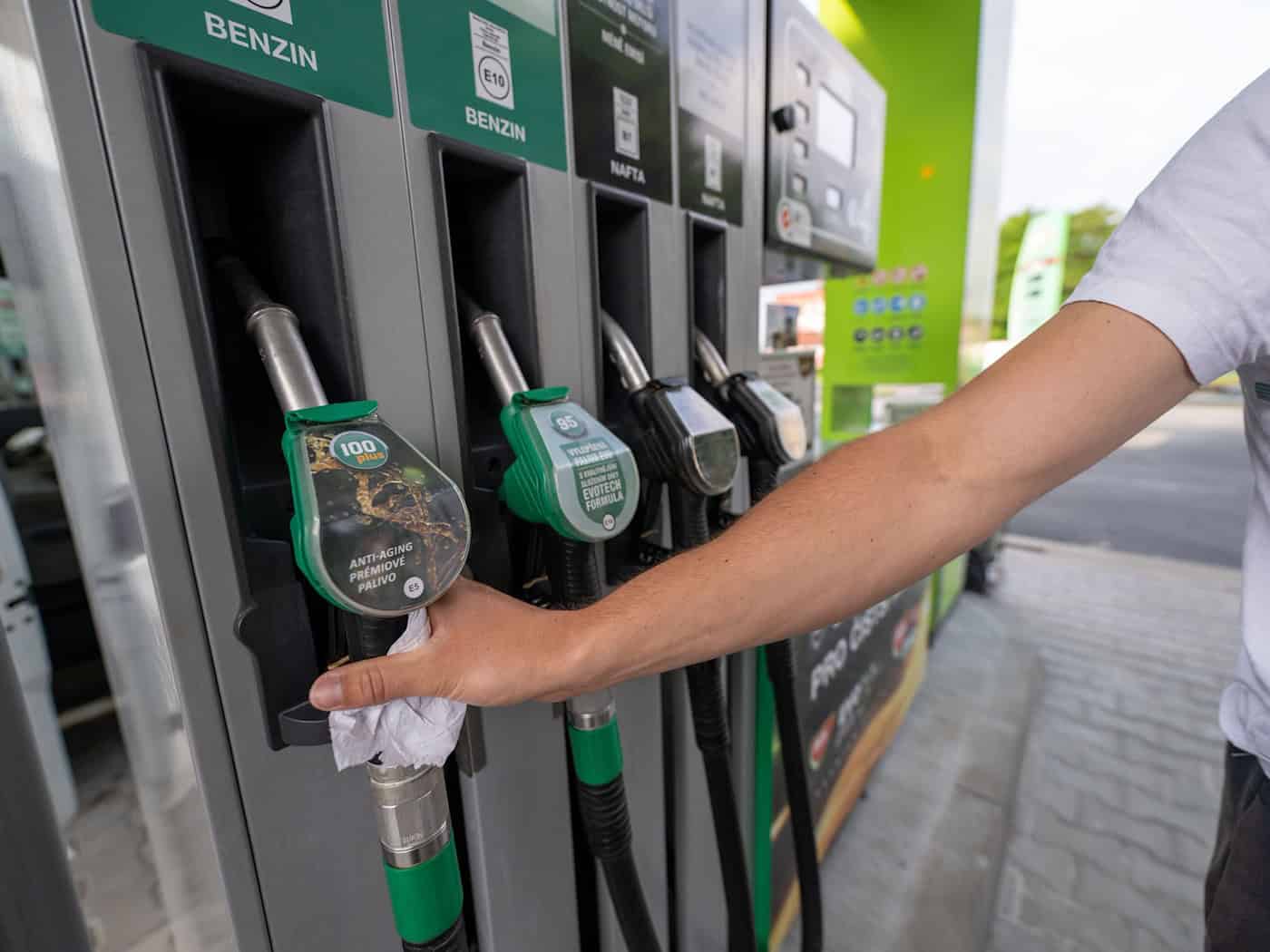
After more than three months, the government’s price cap on gasoline and diesel has expired in the Czech Republic. However, prices at many gas stations rose only slightly—by the equivalent of a few euro cents—as reported by the CTK news agency. Experts expect somewhat steeper increases at heavily trafficked locations such as highway rest stops. The government led by right-wing populist and billionaire Andrej Babis had enacted the fuel price cap in early April in response to the energy crisis resulting from the war in Iran. The maximum permitted prices were adjusted daily and most recently stood at 43.41 korunas (about 1.79 euros) per liter of gasoline and 42.13 korunas (about 1.74 euros) per liter of diesel. Representatives of the gas station industry criticized the measure from the outset as an “unfortunate” and “unnecessary” step. Finance Minister Alena Schillerova stated that the price regulation had served its purpose, but that the reasons for it no longer applied. The country is returning to market mechanisms. “However, I would like to assure everyone that we will not leave the market unsupervised,” she emphasized. The government is prepared to intervene again at the first sign of any anomalies or abuse. Due to the comparatively low gas prices, many drivers from the German border region cross the border to fill up their tanks. However, customs, tax, and hazardous materials regulations must be observed. The Czech Republic has a dense network of gas stations. The largest operators are the Polish Orlen Group and the Hungarian company Mol. The state-owned company Cepro also operates 209 gas stations under the Eurooil brand and 75 under the Robin Oil brand. Copyright 2026, dpa (www.dpa.de). All rights reservedMany Germans Fill Up in the Czech Republic


