


Mini livers in space: Dresden researchers send tiny organs into space
If you've been ill in bed for a long time, you'll know the feeling: muscles are wasting away, the body is changing. Something similar happens in space, only much more extreme. Seeing astronauts floating on board the ISS looks impressive. But weightlessness and radiation put enormous stress on the body because they change fundamental biological processes. Researchers at TU Dresden are investigating how these influences affect mouse liver tissue grown in the laboratory. Both under simulated space conditions - and in space itself.
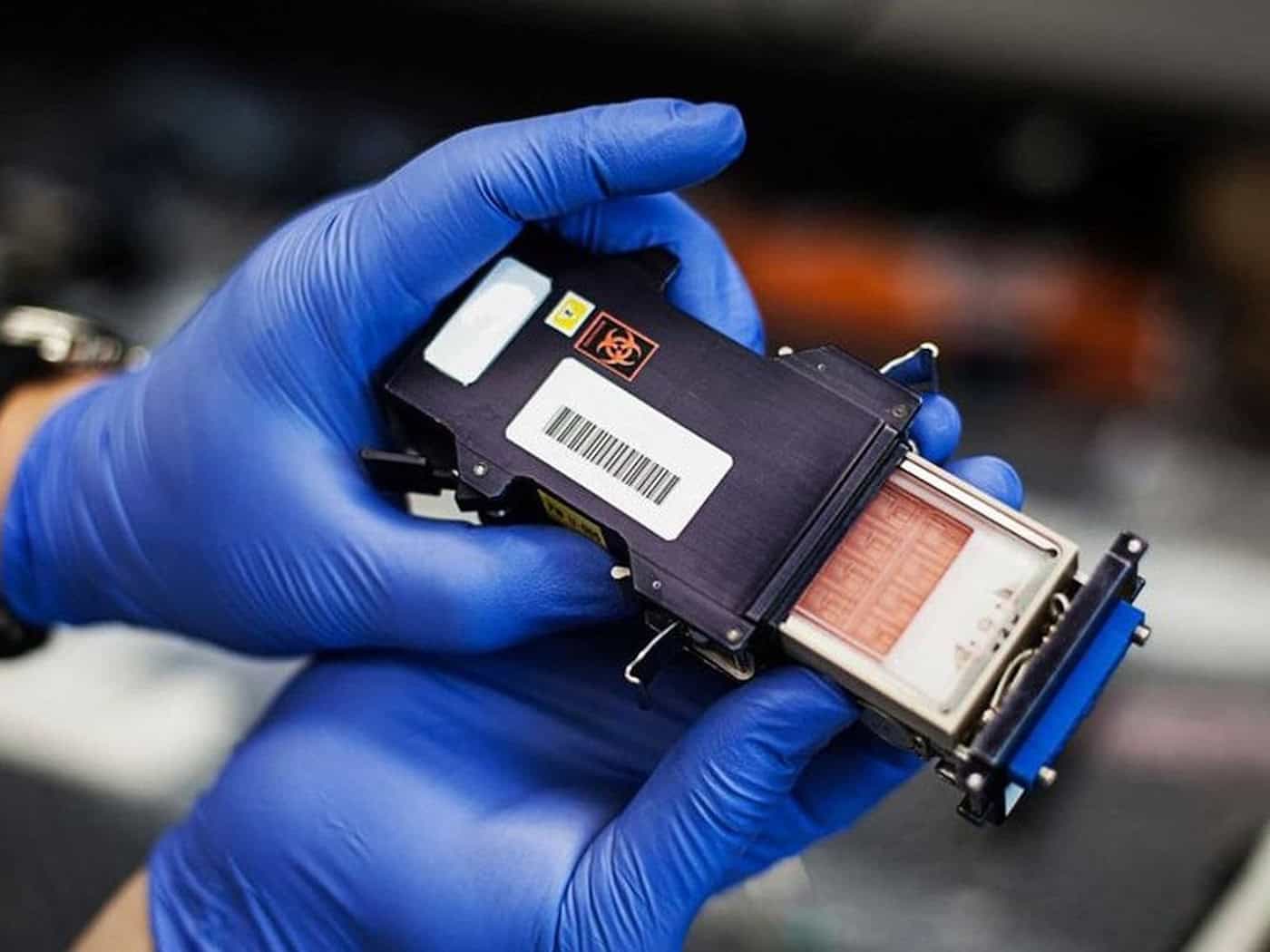
The project is called ILLUMINATE and is part of the Cellbox program of the German Aerospace Center (DLR). The researchers are not sending real organs into space, but so-called organoids. These are mini-models of the liver grown in the laboratory, about the size of a pinhead. These are housed in a smartphone-sized mini-laboratory in a spacecraft and orbit the Earth for several weeks.
A new method makes genes visible
The sub-project is led by Prof. Nils Cordes, Head of the Radiation Biology Department at OncoRay, the National Center for Radiation Research in Oncology at TU Dresden. His team is investigating how weightlessness and cosmic radiation change the liver organoids. What changes occur in the cell environment? What activity occurs in certain genes and even in the structure of the genetic information itself? The liver organoids are provided by Prof. Meritxell Huch at the Max Planck Institute of Molecular Cell Biology and Genetics. The data will be analyzed by the DRESDEN-concept Genome Center at TU Dresden, among others.
For the first time, a method called ATAC sequencing will be used in space. This sounds complicated, but is essentially simple to explain: this technique can be used to see which sections of the genetic information, i.e. the genetic blueprint of a cell, are currently being used under space conditions. This allows the researchers to understand how tissue changes in space and which biological processes play a role in this.
"Space biology research has an enormous transformative character that goes far beyond basic science," says Prof. Cordes, describing what particularly excites him about the project. "For our team, it is something special that an idea we developed is actually flying into space and helping to better understand the fundamentals of tissue biology."
What space brings us on Earth
The findings from space could help to develop new drugs and design protection strategies for organs during long-term missions. After all, understanding how tissue reacts under extreme stress can also help combat diseases on Earth, such as liver disease or radiation-induced damage after cancer therapy.
"The Cellbox program impressively demonstrates how basic research and applied science intertwine," emphasizes Prof. Esther Troost, Dean of the Faculty of Medicine at TU Dresden. "The participation of Dresden University Medicine in this project is a valuable opportunity for us to better understand the adaptability of the human body and to gain new impetus for the healthcare system." The Federal Ministry for Economic Affairs and Climate Protection is funding ILLUMINATE with around 280,000 euros until October 2028.
Further information on the ILLUMINATE project can be found here.

