


How fats find their way inside cells
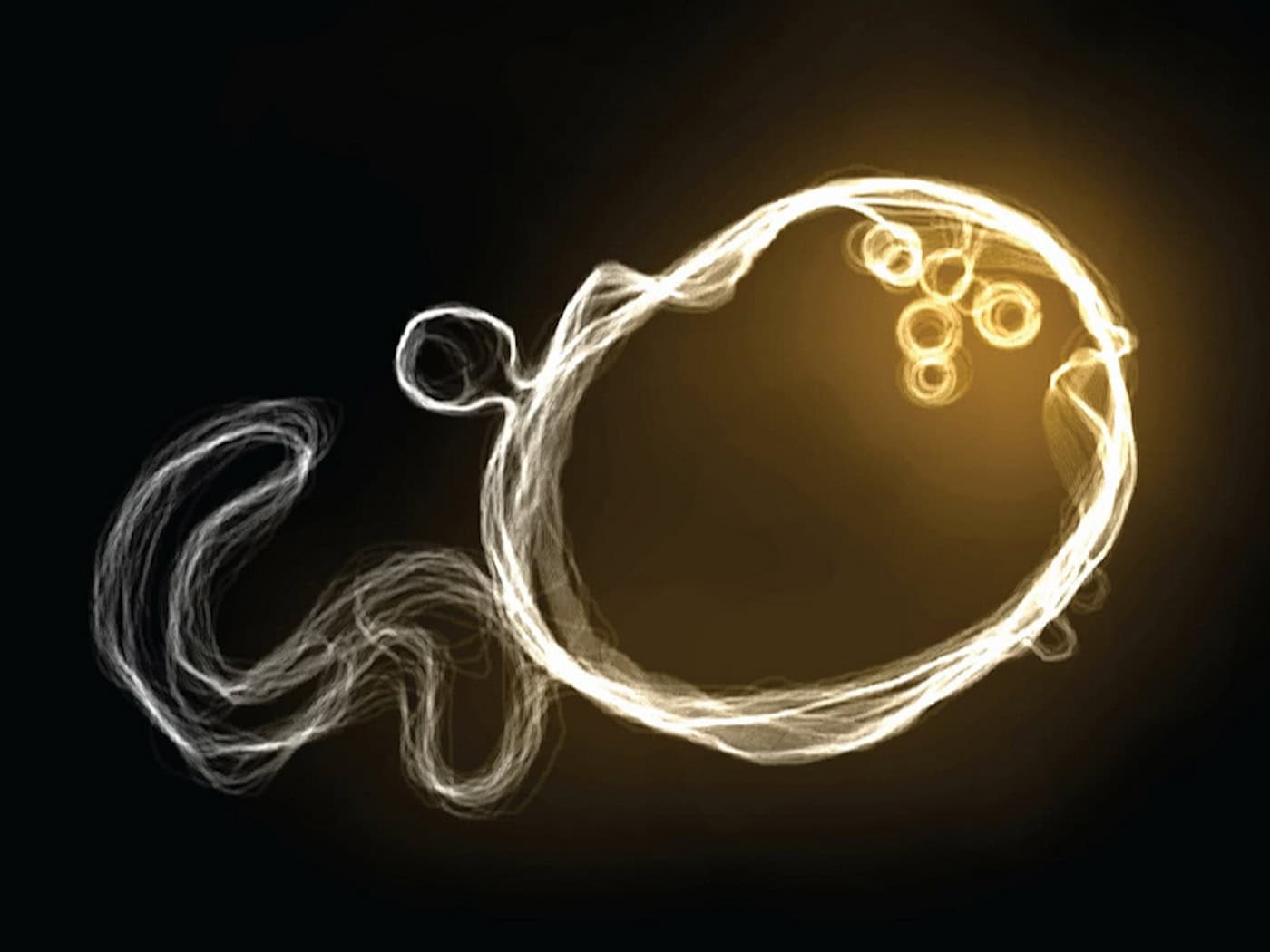
Our body consists of around 37 trillion cells. Each one is surrounded by a membrane that protects it and controls what goes in and out. This membrane is made up of fats and proteins. But how exactly these fats are organized has been difficult to study until now. Researchers at the Max Planck Institute of Molecular Cell Biology and Genetics (MPI-CBG) in Dresden have now developed a method that could change this.
The core problem is simple, yet difficult to solve: fats, known as lipids, move extremely quickly within the cell membrane. With previous methods, it was almost impossible to determine exactly where they are located. The Dresden team led by group leader André Nadler and Mathilda Lennartz solved this problem with a clever approach. They used tiny, slightly modified fat molecules as a kind of GPS marker. These markers are introduced into living cells, then fixed in place using light and subsequently labeled with a fluorescent tag. This makes it possible to track where specific lipids are located without significantly altering or disturbing the cell. For imaging, the researchers combined two microscopy techniques. Light microscopy shows where the labeled lipids are located, while electron microscopy reveals the fine details of the membrane structure. The team calls this combined approach “Lipid-CLEM”.
Different pathways inside the cell
To test how well their method works, the researchers focused on a specific structure inside the cell: so-called early endosomes. These can be thought of as distribution stations within the cell, where incoming material is sorted and sent along different routes. Until now, it was mainly known that proteins are sorted in this way. The new method now shows that the same is true for fats.
The researchers examined the lipid sphingomyelin in more detail. “Using Lipid-CLEM, we observed that a certain lipid, sphingomyelin, occurs more frequently in small vesicles inside the endosome and less frequently in tubular membrane regions,” says Lennartz. Although sphingomyelin and a specific protein arrive together, they are then distributed differently. Fats and proteins therefore follow different routes through the cell.
Making the invisible visible
For years, researchers around the world have been trying to better understand how fats are organized in cell membranes. This is challenging because these molecules move very quickly and are difficult to visualize with existing methods. There are already various approaches, such as high-resolution microscopy or specialized labeling techniques. However, these methods usually capture only part of what is happening.
The Dresden method goes a step further: it shows exactly where specific fat molecules are located – in three dimensions and in relation to the fine structure of the cell membrane. What is new is not so much the idea that fats are sorted, but that this process can now be observed directly.
Original publication:
H. Mathilda Lennartz, Suman Khan, Weihua Leng, Kristin Böhlig, Gunar Fabig, Yannick Kieswald, Falk Elsner, Nadav Scher, Michaela Wilsch-Bräuninger, Ori Avinoam, André Nadler: Visualizing sub-organellar lipid distribution using correlative light and electron microscopy. Nat Cell Biol (2026)

