


Rigid but agile: the secret of the diatom revealed
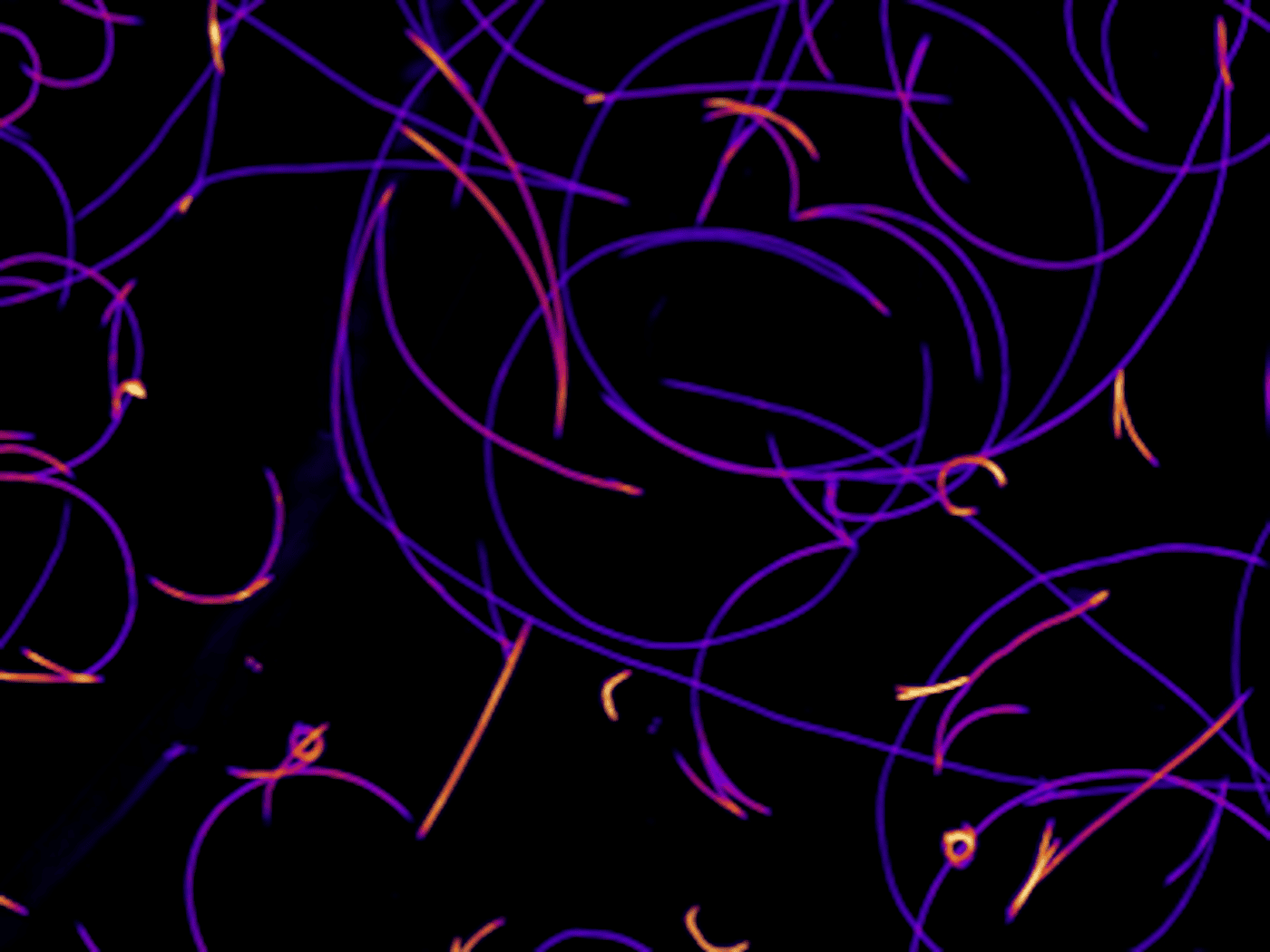
Imagine being trapped inside a rigid shell and still having to maneuver precisely. Diatoms have been doing exactly that for millions of years. These tiny single-celled algae are completely enclosed in a silicate shell — a glass-like material that is hard and inflexible. No legs, no wings, no cilia.
And yet they glide across surfaces, move in tight circles and abruptly change direction. How they manage this had long remained unclear. Researchers at the B CUBE – Center for Molecular Bioengineering at Technische Universität Dresden have now found a surprisingly simple explanation.
Watching algae glide for hours
The team led by Stefan Diez and Nicole Poulsen filmed hundreds of individual diatoms over many hours. Using high-resolution cameras and specialized microscopes, the researchers tracked every tiny movement. “We were surprised that their movement could change abruptly — from almost straight lines to tight circular paths — which is very counterintuitive for a cell surrounded by a rigid glass wall,” says Stefan Golfier, author of the study.
The key lies in tiny curved slits in the cell wall known as raphe branches. Through these structures, the algae transfer forces to the surface and push themselves forward. What matters is which section of the slit is touching the surface at a given moment. “Whenever a diatom lifts one side, the cell starts rotating strongly. If both sides remain in contact with the surface, the cell moves in a straight line,” explains Golfier. In other words, the algae steer by slightly tilting their rigid shells — somewhat like a ship adjusting its position in the water to change course.
What researchers can learn from this
To better understand the mechanism, the Dresden team collaborated with theoretical physicists from Heidelberg University. Together, they developed a mathematical model linking the shape of the raphe branches to the observed movement patterns. The calculations closely matched the experimental observations.
Diatoms are among the most important microorganisms on Earth. They produce large amounts of oxygen and absorb carbon dioxide from the atmosphere. “We have uncovered a simple physical principle that enables a rigid single cell to orient itself dynamically,” says Diez. In the long term, the findings could inspire the development of tiny and robust micromachines for applications in medicine, materials science and microsystems engineering.
Above all, however, the study solves a biological mystery that has puzzled researchers for decades..
Original publication:
Stefan Golfier, Veikko F. Geyer, Leon Lettermann, Ulrich S. Schwarz, Nicole Poulsen, Stefan Diez: Dynamic switching of cell-substrate contact sites allows gliding diatoms to modulate the curvature of their paths. PNAS (April 2026)

