


RoboCup 2026: Leipzig robots claim world championship silver
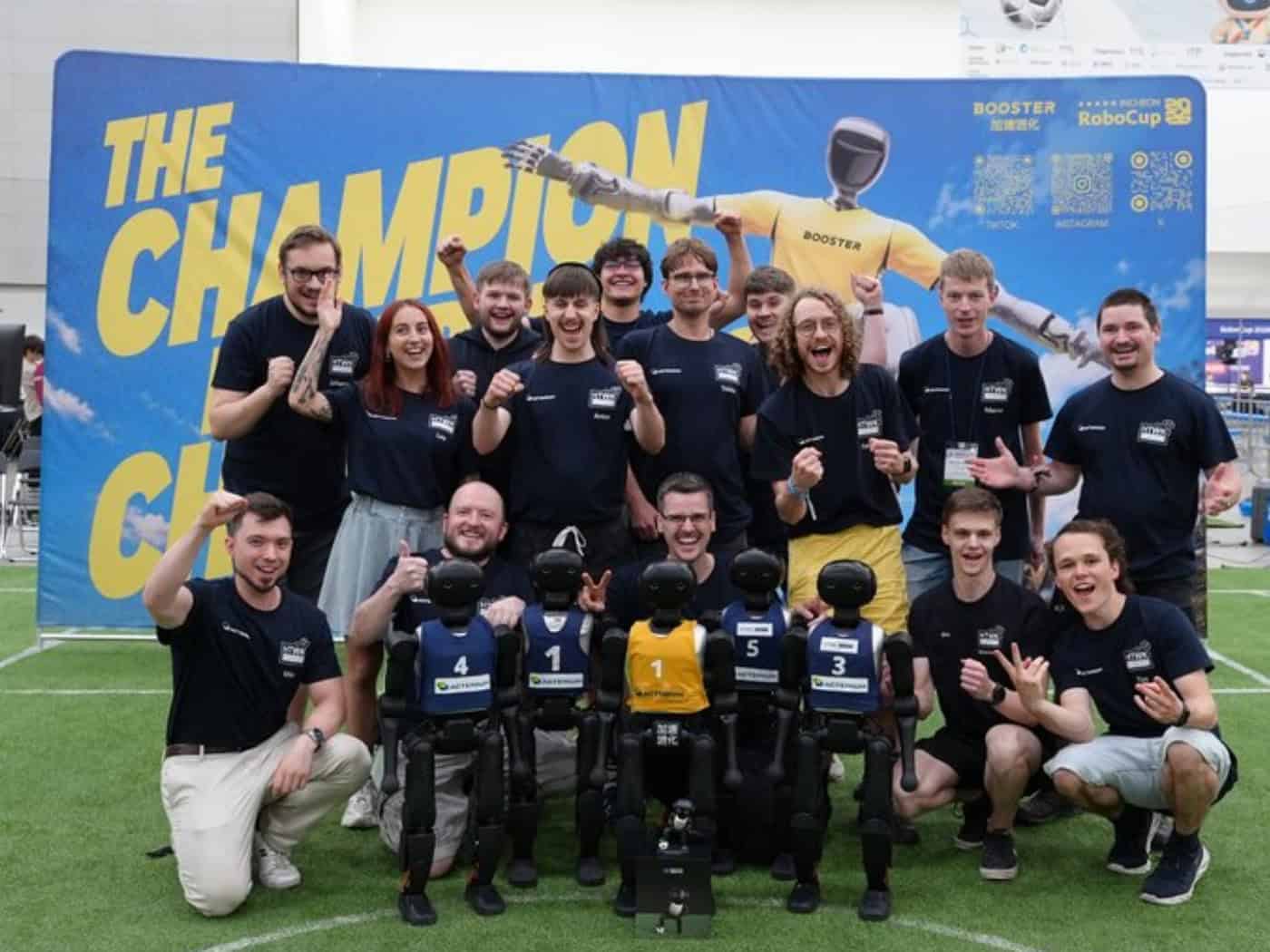
Soccer fascinates millions of people. Goals, excitement, and team spirit thrill fans around the world. However, a team from the Leipzig University of Applied Sciences (HTWK Leipzig) is sending robots – not humans – onto the field. At RoboCup 2026 in Incheon, South Korea, the HTWK robots advanced all the way to the final of the “Middle Division” of the Humanoid Soccer League.
There, they faced off against Team B-Human from Bremen. The final score was 0–6. As a result, the Leipzig team finished as runner-up and had to relinquish their world championship title from the previous year.
A close first half, then the collapse
For a long time, it looked like it would be a close game. “While we were able to hold on to a 0–2 lead for much of the first half, our goalkeeper unfortunately had to make four more saves in the second half,” summarized Tobias Jagla of the Robots team. Third place went to the French team Rhoban.
The RoboCup is one of the world’s largest robotics competitions. This year in South Korea, more than 2,000 participants from 21 countries competed against each other in a total of 62 teams.
The Leipzig team had been preparing intensively since March. For about a year, the researchers and students have been working with a new generation of robots: the Booster K1 – which is about one meter tall – from the Chinese company Booster Robotics. These robots are larger than the Nao robots, with which the team had previously competed at the international top level for more than 15 years.
Artificial Intelligence Opens Up New Possibilities
The new technology for the RoboCup also brought new training methods. “We focused primarily on training movements. We can now run even faster, and we have a new shot and a new pass,” explains Jagla. Today, movements are no longer programmed step by step. Instead, the robots learn them in computer simulations using artificial intelligence techniques. In addition, the team has improved the robots’ image recognition capabilities.
This leap forward was also made possible by an international collaboration. “In a very short time, the collaboration with Booster Robotics from China solved several technological problems for which we couldn’t find European partners,” says Jens Wagner, HTWK professor of mobile robotics and the team’s advisor. The progress made in recent months was equivalent to several years’ worth of work, Wagner added.
The HTWK Robots have been among the world’s best in robot soccer for years. Their greatest successes include two world championship titles and now their eighth runner-up title. “I would like to extend my heartfelt congratulations to our team on the runner-up title!” says HTWK Rector Jean-Alexander Müller. The consistent success over so many years demonstrates the research and development achievements of HTWK Leipzig in the fields of artificial intelligence and robotics.
The team is already looking ahead. At the end of August, they’ll head back to Asia for the World Humanoid Robot Games in Beijing.

