


New measurement system for ultra-thin films
Every smartphone, every solar panel, every modern sensor contains them: ultra-thin layers of material, sometimes only a few atoms thick. They determine how well a device performs. But anyone trying to measure what really happens inside these layers quickly reaches the limits of current methods. A new research project in Dresden aims to change that.
The Fraunhofer Institute for Photonic Microsystems IPMS has launched the “SMut” project together with the Saxon companies Credoxys and SweepMe! The goal is to develop a new type of measurement system for so-called thin films. These extremely thin material layers are used, for example, in organic LEDs (OLEDs) found in modern flexible displays, as well as in thin-film gas sensors. So far, characterizing them has been complex and has not always produced equally reliable results under varying conditions.
What the new system will do
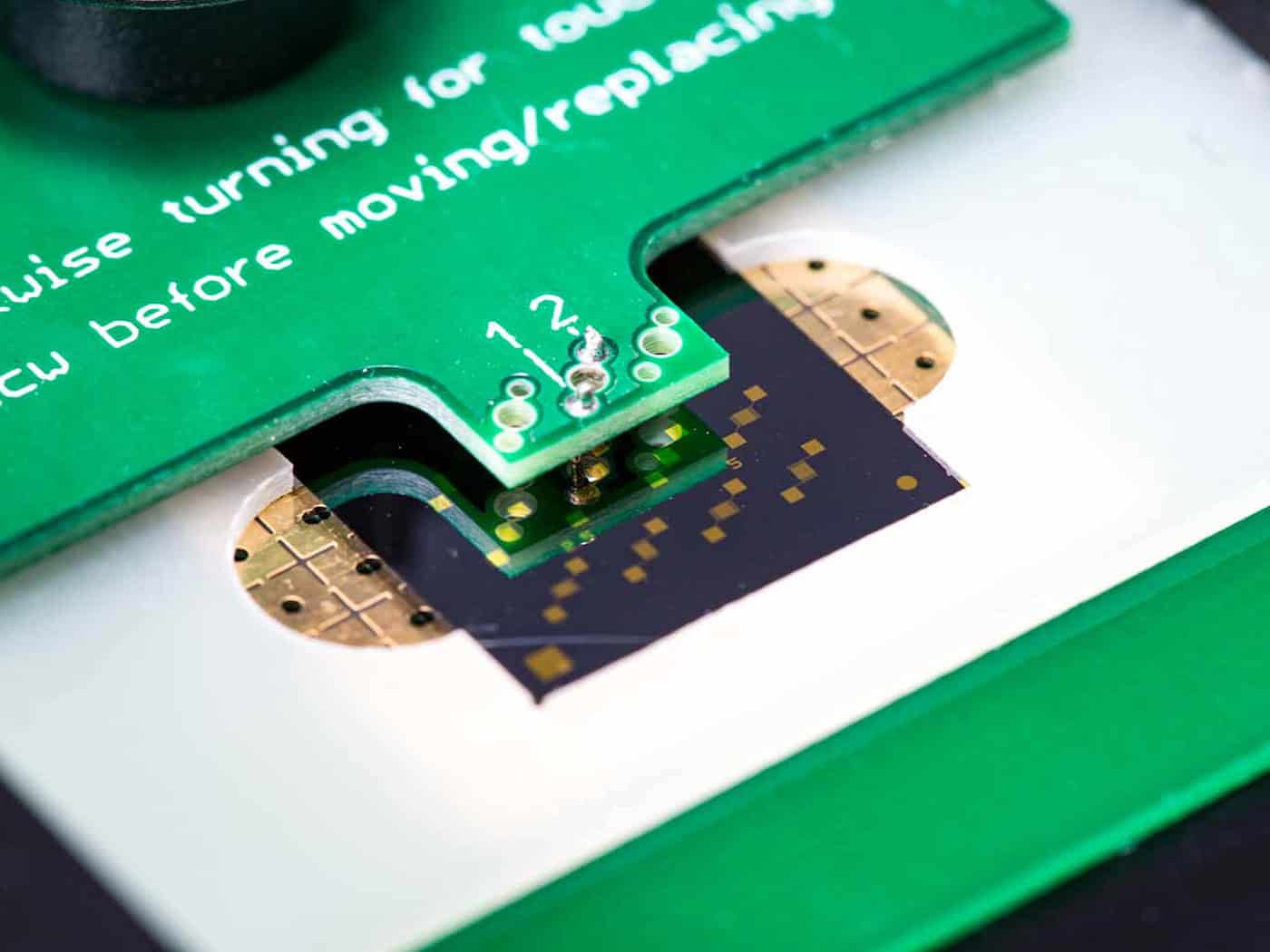
The planned system consists of a base station and so-called sample carriers — small holders into which material samples are inserted. These carriers can be prepared inside a special protective-gas chamber known as a glovebox. This prevents sensitive materials from coming into contact with air or moisture, which could distort the measurement results.
“This allows long-term measurements over several weeks,” explains Dr Alexander Graf, project manager at Fraunhofer IPMS. The system is designed to enable electrical and photoelectrical experiments under different gases, pressures and temperatures.
Easier operation, more precise measurements
The software being developed by Dresden-based company SweepMe! is intended to make the system particularly user-friendly. “The software solution enables an intuitive, out-of-the-box characterization platform for the first time,” says Dr Axel Fischer, Managing Director of SweepMe! In other words, the system should be ready to use immediately, without lengthy training.
Credoxys, a company that develops materials for OLEDs, expects the project to deliver above all greater reliability. “The effort we are currently putting into characterizing our OLED materials is enormous,” says Dr Jörn Vahland, materials developer at Credoxys. “This system takes thin-film characterization to a new level. The reproducibility and measurement possibilities are sensational.” The project is funded by the European Regional Development Fund and by tax revenue from the Free State of Saxony.

