


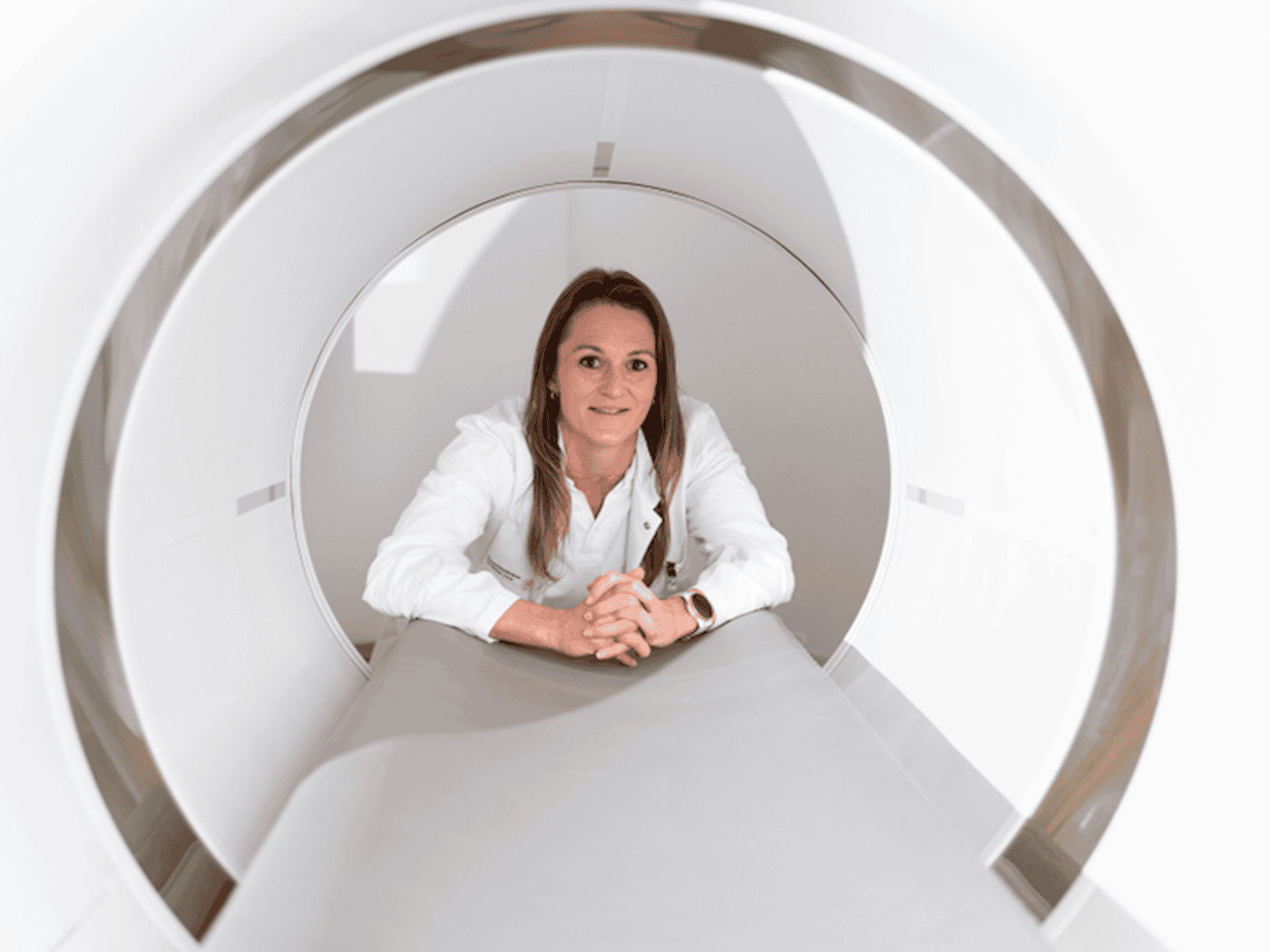
Someone comes in for an examination in the morning – a short time later, doctors can see a detailed picture of metabolic processes throughout the entire body. What previously took several separate scans and a lot of time could soon be achieved in a single scan. The Helmholtz-Zentrum Dresden-Rossendorf (HZDR) has received almost five million euros in EU funding for a so-called whole-body PET scanner.
PET stands for positron emission tomography. A patient is injected with a very small amount of a radioactively labelled substance called a radiotracer. It spreads throughout the body and makes metabolic processes visible – even in places where cancer develops. However, conventional PET devices only scan a small section of the body, around 20 to 25 centimeters. The new whole-body scanner, on the other hand, captures more than a meter in a single scan – almost the entire trunk of the body.
Less radiation, better images
This sounds technical, but it has direct benefits for patients. Because the device is much more sensitive, it requires less radioactive substance. Radiation exposure is therefore reduced. At the same time, it can detect smaller tumors earlier and more accurately. This is particularly important for radiation-sensitive people such as infants, children and pregnant women.
"Whole-body PET is a key technology for the further development of radiopharmaceutical approaches in personalized precision medicine," explains Prof. Anja Braune, Head of the PET Department at the HZDR. The system enables the best possible quantitative recording of the distribution of radiopharmaceuticals throughout the body - without invasive intervention. It also opens up new possibilities for AI-supported imaging procedures and more precise individual therapy planning.
Research and treatment under one roof
The device is scheduled to go into operation at the Carl Gustav Carus University Hospital in Dresden in 2028. The total cost is just under eight million euros. It will primarily be used for research. However, up to 20 percent of the capacity may also be used directly for patient care.
Saxony's Science Minister Sebastian Gemkow emphasizes that this close link between research and patient care is one of the Free State’s strategic goals. "On the one hand, the new PET scanner promises to improve the quality of radiopharmaceutical cancer research at the HZDR," said Gemkow. At the same time, it will be tested at the university hospital and therefore represents an example of how research can be translated into benefits for individual patients.
Closely linked to the purchase is the establishment of a new expert group called SYNRaDT. Its goal is to bring newly developed radiopharmaceuticals from the laboratory into clinical use more quickly – a bridge between basic research and medical practice.

