


The sensors that simply dissolve
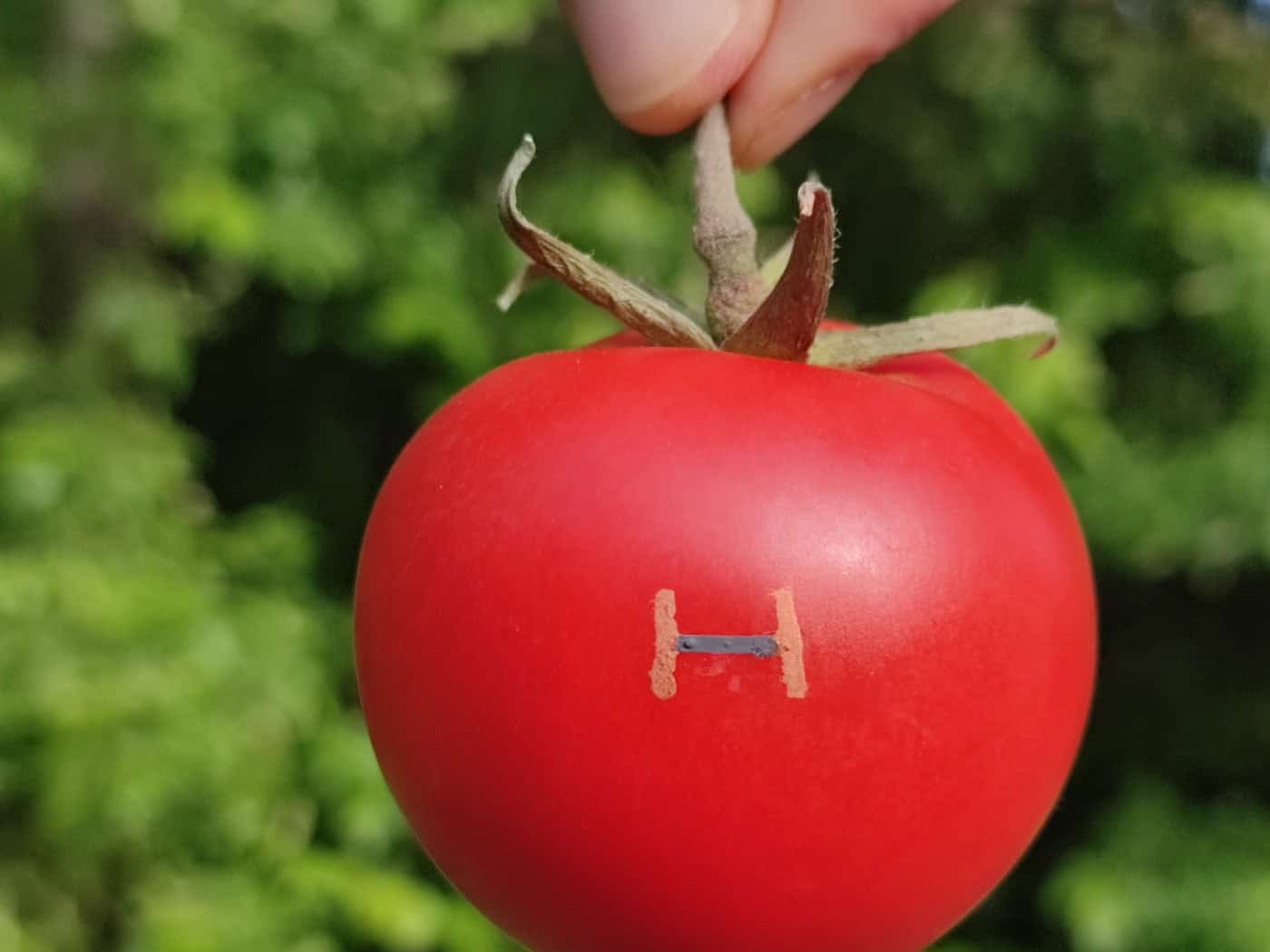
Magnetic field sensors can be found in smartphones, cars, games consoles and security systems. They measure movements, positions and distances. Billions of these tiny components are produced every year. This is a problem because many contain materials such as nickel or cobalt, which can be harmful to the environment and health. A research team at the Helmholtz-Zentrum Dresden-Rossendorf (HZDR) is now proving that there is a more sustainable way.
The researchers present a new type of magnetic field sensor in the journal Nature Communications. The basic ingredients seem surprisingly simple: iron, iron oxide, cellulose, starch and beeswax. "Mankind has known iron or cellulose for centuries," says Lin Guo, who is developing the project as part of his doctoral thesis. "The challenge is to develop a sensor with usable performance from these sustainable materials."
The Dresden development fits in with a global trend in electronics research: devices should remain powerful, but at the same time become more sustainable and easier to recycle. Researchers refer to this as "green electronics" or biodegradable electronic systems. This is particularly difficult for magnetic field sensors, as problematic metals such as nickel or cobalt have often been used up to now.
Printed instead of milled
The sensors are manufactured using a screen printing process. The process originally comes from the textile industry. Instead of laboriously removing material, the sensor layer is printed on in a targeted manner. "We only print sensors where we need them," explains Denys Makarov, Head of the Intelligent Materials department at the HZDR. This saves material and energy. According to the team, the new sensors already achieve a sensitivity in certain applications that is comparable to today's commercial solutions.
In order for the sensors to work precisely enough, the researchers use so-called core-shell particles. An iron core is surrounded by a thin layer of iron oxide. This combination significantly improves the measurement properties.
Sensors that dissolve
The way in which the end of life of the components is handled is particularly unusual. The sensor layer is embedded in biodegradable materials such as cellulose or starch. A coating made of beeswax or other natural materials protects against moisture and also determines how long the sensor remains stable. "We can use the encapsulation to control how long a sensor remains stable," says Guo. If the coating dissolves later, oxidized iron in particular remains behind. "This is basically rust," explains Makarov. Potentially problematic nickel or cobalt compounds are deliberately not included in the concept.
The technology has already been licensed. The team is now working on specific applications, such as for disposable medical products, intelligent packaging or sensor systems in agriculture. It would be a solution wherever electronics are only needed for a limited time and should then disappear in a way that conserves resources as much as possible.
Original publication:
L. Guo, R. Xu, P. T. Das, E. S. Oliveros-Mata, X. Peng, O. V. Pylypovskyi, R. Hübner, F. Ganss, X. Wang, Y. Li, S. Gepp, Y. Zabila, X. Bao, S. Li, Q. Zhang, I. Veremchuk, Ž. Janićijević, L. Baraban, C. Voigt, S. Mosch, O. Gutfleisch, R.-W. Li, D. Makarov: Eco-sustainable magnetoresistive sensors towards disposable magnetoelectronics, in Nature Communications, 2026

