


Bark beetles, fires and storms: forest damage could double by 2100
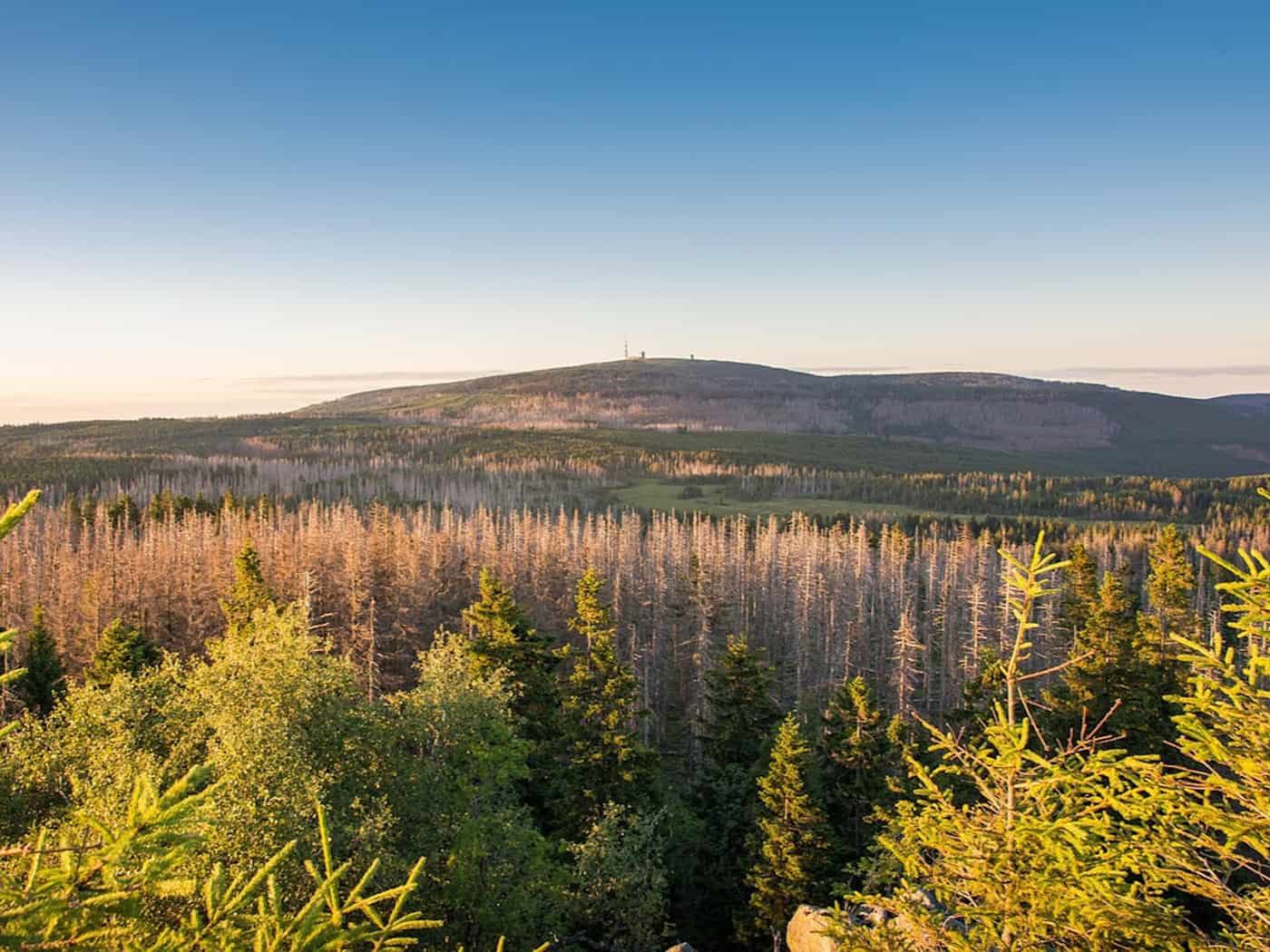
If you've driven through the Harz Mountains or the Thuringian Forest in recent years, you've seen it: bare slopes, dead trees and brown patches where greenery once thrived. What many perceive as a local problem is actually a pan-European phenomenon. It could worsen considerably in the coming decades. That is the conclusion of a new study recently published in the journal Science.
A large international research team led by Rupert Seidl, Professor at the Technical University of Munich (TUM), has calculated for the first time how forest fires, storms and bark beetles could reshape Europe’s forests by 2100. One of the co-authors is Dominik Thom, Professor of Silviculture at the Technical University of Dresden (TUD). The calculations paint a clear picture: even if global warming is limited to around two degrees Celsius, researchers expect more forest damage in the future than during the already heavily affected period between 1986 and 2020. In the worst-case scenario, with warming of more than four degrees, the area of damaged forest could more than double.
Millions of data points, a clearer picture
To make these predictions, the researchers used an AI-supported simulation model. They trained it using 135 million data points from forest simulations at 13,000 locations across Europe and combined the results with satellite data. This allowed them to estimate the occurrence of forest damage down to an area of one hectare, roughly the size of a soccer field.
According to the study, forests in southern and western Europe will be particularly strongly affected. In northern Europe, the changes are expected to be less pronounced, but even there so-called hotspots — areas with particularly high levels of damage — are likely to emerge. “Disturbances are increasingly becoming a problem across regions, disrupting timber markets throughout Europe and threatening the public services provided by forests,” says Seidl. These services include everything forests provide for society: storing carbon, supplying timber, providing habitat for wildlife and protecting drinking water resources. All of these functions could change significantly in the future.
Using change as an opportunity
However, the researchers do not see these developments only as a threat. “We have to be prepared for the fact that forests will continue to suffer major damage in the coming years,” says Seidl. At the same time, disturbances can also create opportunities to establish new forests that are better adapted to a changing climate. In this sense, they can act as “catalysts for change.” Forestry will have to respond to both the risks and the opportunities, supported by new scientific methods.
The findings therefore feed directly into the debate on how forests should be managed in the future — to ensure that they remain healthy and resilient for generations to come.
Publication:
Grünig, M.; Rammer, W.; Senf, C. et al 2026. Climate change will increase forest disturbances in Europe throughout the 21st century, Science, in press

