


25 years of Pongoland: decoding the minds of great apes
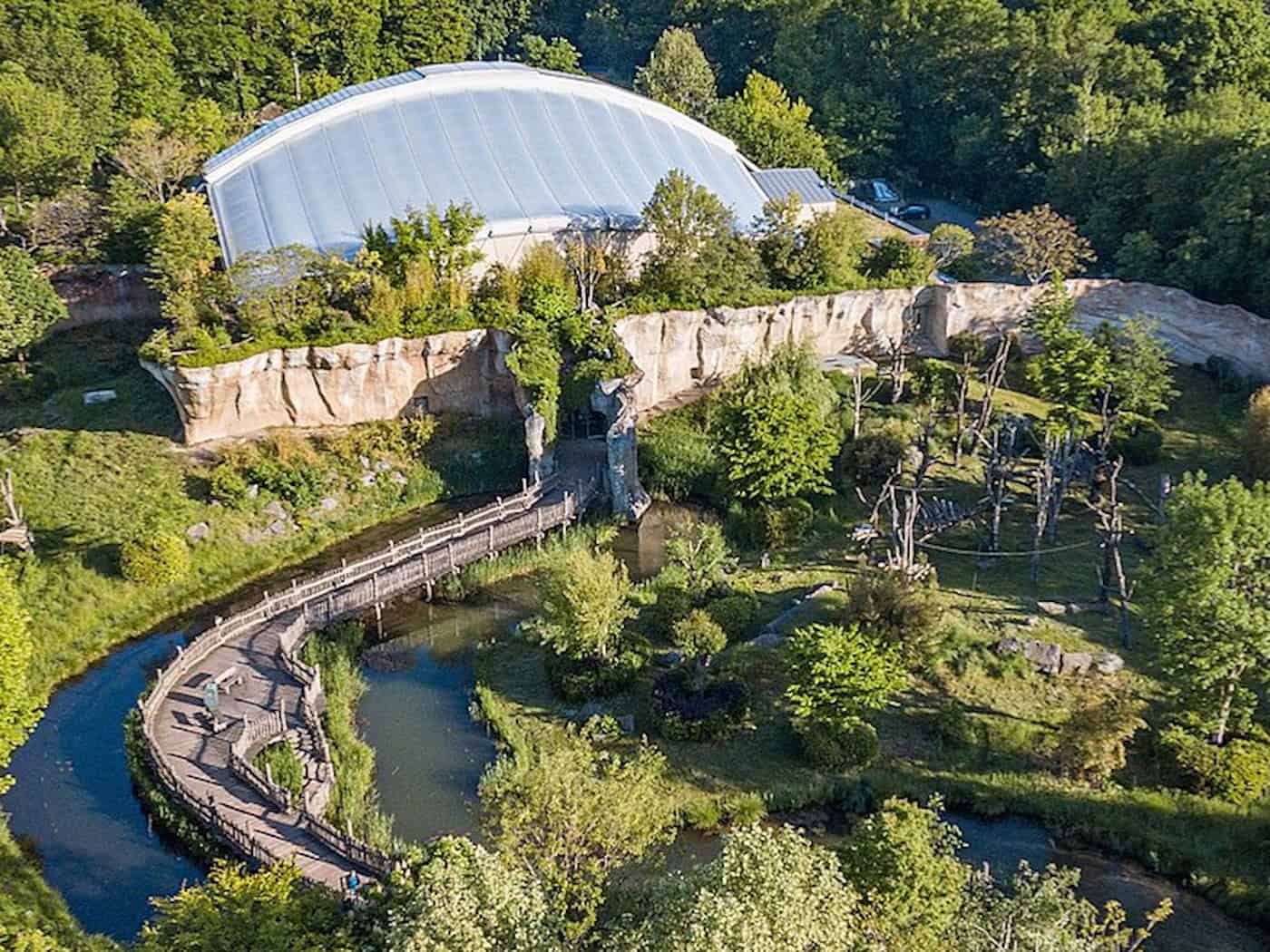
What actually distinguishes us from our closest relatives in the animal kingdom? The Wolfgang Köhler Primate Research Center (WKPRC) at Leipzig Zoo has been providing answers to this question for 25 years. Here, scientists research the thinking and behavior of four great ape species under unique conditions - and thus the foundations of what makes humans human.
Since April 2001, the Leipzig Max Planck Institute for Evolutionary Anthropology (MPI-EVA) has been running the WKPRC, nicknamed "Pongoland". Around 50 great apes live there: chimpanzees, bonobos, gorillas and orangutans.
Unique in the world
This is unique in the world. Only here is continuous behavioral and cognitive research conducted with all four species at one location. The researchers work without interfering with the animals' bodies. Instead, eye-tracking is used by measuring the animals' line of vision via camera. Touchscreen tasks and virtual environments are also used. Participation is voluntary for the animals.
The researchers have already published some remarkable results: Bonobos and orangutans, for example, select tools for future situations and store them in a targeted manner. In competitive situations, chimpanzees take into account what others see or know. In addition, spontaneous helpfulness towards others has been documented. Chimpanzees even lifted a peanut in a tube of water by using water as a tool.
Leipzig connects the world of primate research
"The fact that we can combine research, animal welfare and transparency for visitors so closely is largely due to the excellent cooperation with Leipzig Zoo," says Daniel Haun, Director of the Department of Comparative Cultural Psychology at the MPI-EVA.
In order to answer even bigger questions, Leipzig researchers founded the ManyPrimates network in 2019. It connects research stations from all over the world and pools data on dozens of primate species. An initial study on short-term memory already included over 400 animals from more than 40 species at almost 30 locations. In the future, the WKPRC wants to continue to be a key location for science, showing how close we are to our animal relatives and how much we can still learn from them.

