

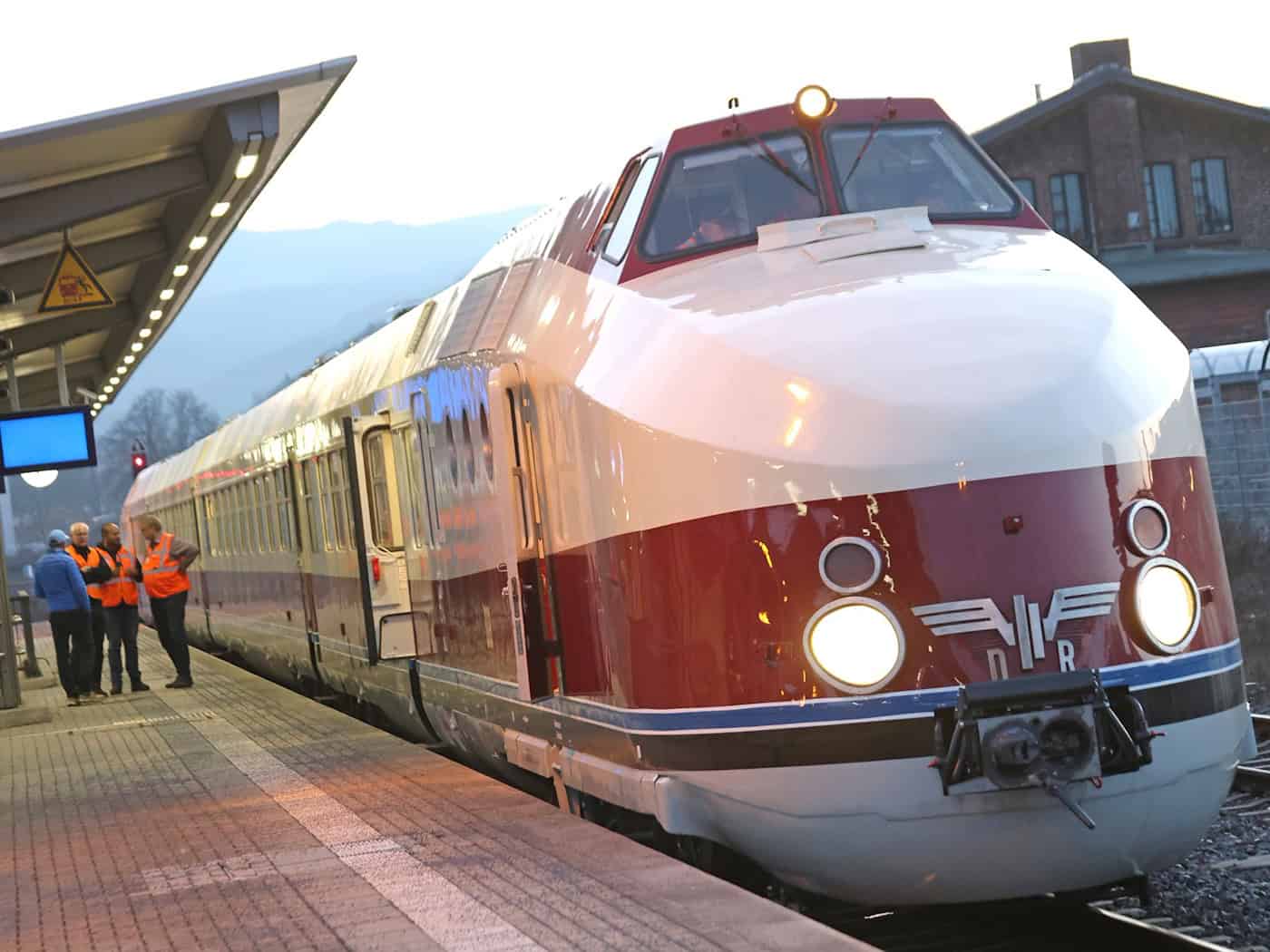
The restored GDR express train SVT Görlitz is to go on tour for the second time after the experience of the first test run. The managing director of SVT Görlitz gGmbH, Mario Lieb, told the "Leipziger Volkszeitung" (Friday edition): "We want to start a second test run soon, then at a higher speed". However, it is still unclear when the official opening trip can take place. Among other things, increased diesel prices have thrown previous calculations out of kilter. As expected, the first test run at the beginning of March was not flawless. "But the train drove the 80 kilometers under its own power and without any major damage or malfunctions. That is a great achievement for everyone involved. Engines, gearboxes, wheels, electrics, interior fittings - everything had to be refurbished." Leaks in oil lines and cooling circuits, adjustments to bogies and work on an exhaust system were all necessary. "Most of it has already been done," said Lieb. The SVT Görlitz was once considered a prestige train of the Deutsche Reichsbahn for international traffic. With its streamlined front and distinctive nose, it was a technical novelty at the time of construction. Eight trains of this type were built between 1963 and 1968, only three of which are still in existence today. The high-speed railcar was approved for a maximum speed of 160 kilometers per hour. The train once connected Berlin with Prague and Vienna, among other places. The railroad enthusiasts had collected funding and donations and invested a lot of their own money in the restoration - around seven million euros in total. However, there were still some unfulfilled wishes, according to Lieb: "What we didn't manage to do was find a long-term cooperation partner, especially with regard to future operations." There is a concept and a calculation for the future. Whether these will hold up in reality remains to be seen. "But just look at the diesel prices now. We last calculated at 1.60 euros per liter, which is now unrealistic." In order to be economical, the train would have to run 50 times a year with 200 passengers each time. "It should be a travel experience for everyone. The aim is also to appeal to people who, for example, say: I want to spend a nice day with my family and not sit in the car. We want to bring in culture. If everything works out, we'll go on a concert tour to Cottbus with the band Keimzeit." Copyright 2026, dpa (www.dpa.de). All rights reservedGDR prestige train for international traffic
Millions of euros flowed into the restoration


