

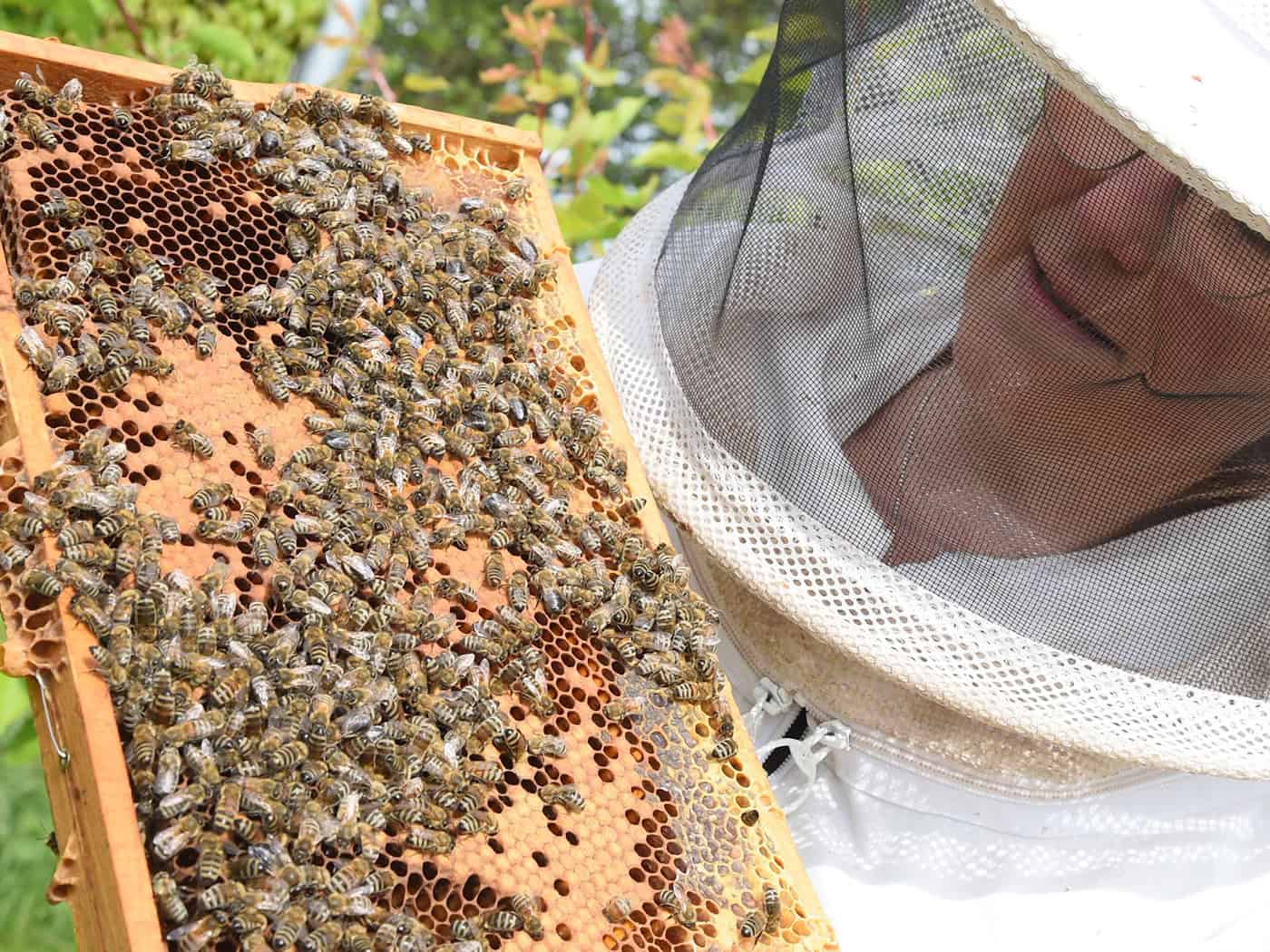
Saxony’s beekeepers are looking forward to a good honey harvest, but the heat has taken a toll on their bee colonies. At times during the summer, the supply of pollen in nature was very scarce. “Due to the heat, many plants had dried up and there was little flowering,” explained Michael Hardt, chairman of the Saxon Beekeepers’ Association. “Bees need pollen to raise their brood.” As a result, many colonies took a break from breeding. In addition, on hot days, they expended a lot of energy fetching water and regulating the temperature inside their hives. As a result, they consumed more of their own honey reserves. Nevertheless, most beekeepers can be satisfied with the honey harvest. According to a nationwide online survey, in which more than 100 beekeepers from Saxony also participated, an average of 46 kilograms of honey per colony was harvested in the Free State—23.3 kilograms in the spring and 22.7 kilograms in the summer. Both figures were higher than the national average. In general, 2026 was “a very good foraging year” compared to previous years, explained Saskia Wöhl, director of the Center for Bees and Beekeeping. The institution in Rhineland-Palatinate conducted the online survey. Saxony’s Beekeepers’ Association is also surveying its members about honey yields. However, the results are not expected to be available until early November at the earliest, according to reports. The fact is: The demand for honey in the Free State exceeds the amount extracted and bottled by local beekeepers. According to figures from the State Statistical Office, 3,733 metric tons of honey were imported last year, while only 10 metric tons were exported. The largest quantities come from Argentina, Ukraine, and Chile. At the same time, larger beekeeping operations have recently had trouble marketing their honey through wholesalers, Hardt reports. “They can’t compete with cheap imported honey.” That is one reason why the number of bee colonies has declined noticeably. In 2025, just under 61,000 colonies were registered with the animal disease fund. This figure also includes beekeepers who are not members of an association. This marks the second consecutive year that the number has fallen since the peak of 69,200 colonies in 2023. Due to sales problems through wholesalers, some larger beekeeping operations have reduced their colonies, Hardt explained. Beekeepers are left primarily with direct sales as a way to get their honey to consumers. Furthermore, the trend toward beekeeping appears to have plateaued. This is also evident in the fact that the number of people keeping bees has recently declined after years of growth. In 2025, just under 8,500 beekeepers were registered with the animal disease insurance fund in Saxony. Since the middle of the year, the countries of origin for honey must be precisely indicated on the label. This provides consumers with better information about its origin. Previously, labels often contained only general information such as “blend from EU and non-EU countries.” Will this give a boost to domestic honey? Saxony’s chief beekeeper, Hardt, expressed skepticism: “Anyone who wants to buy honey from Germany has been able to do so all along.” He points, for example, to the German Beekeepers’ Association’s protected trademark “Echter Deutscher Honig” (Genuine German Honey). “Anyone who buys cheap honey will continue to do so,” he feared. The price of Saxon honey purchased directly from beekeepers varies by region, according to Hardt. In cities, it is usually more expensive than in rural areas. In addition, selected varieties such as linden, black locust, or wildflower honey generally cost more than blends like spring-blossom or summer-blossom honey. This is primarily a matter of supply and demand, Hardt explained. “There’s simply more of the blended honeys available.” Ultimately, however, they represent floral diversity in the landscape. Even though prices vary by region, Hardt offers a recommendation when asked: In his view, beekeepers in Saxony should not sell their honey for less than 7.50 euros per 500-gram jar. Copyright 2026, dpa (www.dpa.de). All rights reservedExpert: “A very good foraging year”
Saxony imports thousands of metric tons of honey
The exact country of origin must be listed on the honey jar


