

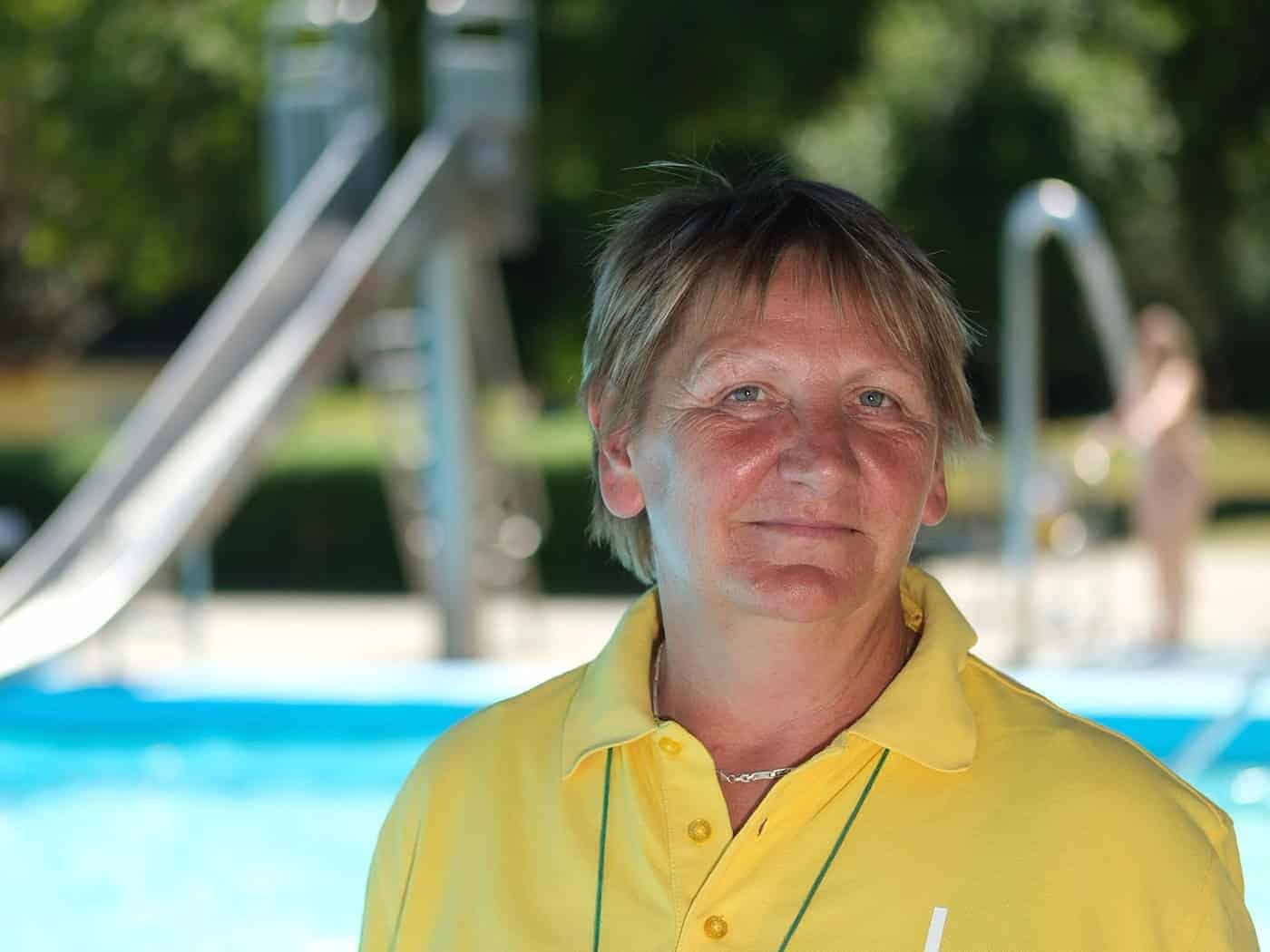
On hot days, many people flock to outdoor pools—and as visitor numbers rise, so do safety concerns. A pool operator in Halle recently came under nationwide criticism because he has recently begun implementing a controversial admission rule in an effort to ensure greater safety at his beach pool: He no longer wants to admit people to the Heidebad who do not speak enough German to understand the pool rules. The decision sparked a debate about the boundaries between inclusion and safety. A visit to an outdoor pool in Leipzig—and a look at how important safety is in and around the water. At Antje Silber’s pool, it was already crowded by mid-morning on a weekday. Groups of children, retirees, and young people: Everyone is looking to cool off. Although it’s crowded these days, her pool doesn’t have an admission rule like the one in Halle. On most days, operations at the Kleinzschocher summer pool run smoothly without any major incidents. However, the outdoor pool manager believes rules—even if they seem rather strict to some at first glance—are important. For example, eating in the pool is prohibited. In addition, young children must always be within their parents’ sight—the duty of supervision cannot be handed over at the entrance. “We’re not doing this to annoy people, but for their safety,” the 57-year-old emphasizes in an interview with the German Press Agency. Silber has been the pool manager in Leipzig’s Schleußig district for nearly 30 years. She says that she and her team pay particular attention to inexperienced swimmers, toddlers without flotation devices, and those without an adult within reach. Special attention must also be paid to groups where people are pushing each other or dunking one another underwater, as well as to older adults. Time and again, teenagers come who “want to test the waters.” Others, however, have come to realize by now that they’re better off not coming to Silber’s pool for that. They therefore prefer to go to the lake. “If we feel it’s unsafe, we approach people directly and in a friendly manner, ask them if they’re okay or if they need a break, or point out that they’re breaking the rules,” says Silber. What’s always important to her is to stay friendly and not embarrass anyone. Still, people don’t always respond cooperatively. “That’s difficult, and it’s become more common in recent years,” reports the 57-year-old. More and more often, people start arguing and refuse to accept that certain things aren’t allowed. “For example, this includes eating in the water, running through the hedges, climbing up the slide the wrong way, or failing to supervise children adequately.” One father once retorted that he didn’t need to be lectured by her. “Yes, I do—that’s my job,” says Silber. “We have the right to enforce the rules here. If I ask a guest at my home to take off their shoes, they do it—without arguing.”» Proactive communication with swimmers is an important part of the job for Silber and her team. They often explain the pool rules to swimmers, says Silber. “There are always people who come here for the first time and ask what they need to watch out for. I think that’s good. After all, swimmers also have a responsibility to ensure their own safety.” After the new admission requirement became public, the city of Halle, among others, intervened and demanded that pool operator Mathias Nobel rescind the rule. At the same time, several parties suggested alternative ways to improve safety, such as pictograms or multilingual lifeguards. Pool operator Nobel, however, had rejected accusations of racism. He emphasized that his “sole concern is protecting human lives and preventing swimming accidents.” To encourage swimmers to take responsibility for their own safety, flyers outlining the applicable rules are available at the summer pool in Leipzig. The pool rules can also be accessed in multiple languages via a QR code. Especially on hot days, it’s important for people to drink and eat enough, take breaks, stay in the shade, and shower before entering the water. It’s also essential that swimmers remain relaxed, attentive, and respectful toward others, says Silber. For Martin Hagedorn, head of pool operations at Leipzig’s public swimming pools, it’s important that people at the pools help ensure that operations remain safe for everyone. “That’s why we inform people and involve them in taking responsibility,” he says. It’s not without reason that children learn swimming rules in swimming lessons. However, he emphasizes that every pool has its own challenges. “It always depends heavily on the catchment area. Every pool has its own rules. You have to know your people—and respond accordingly.” Copyright 2026, dpa (www.dpa.de). All rights reservedLeipzig pool attendant: Strict rules are important
Uncooperativeness Makes the Job Harder
Controversial Admission Rule in Halle
Multilingualism for Personal Responsibility


