


Fennel Tarte Tatin: It looks complicated, but it's actually easy
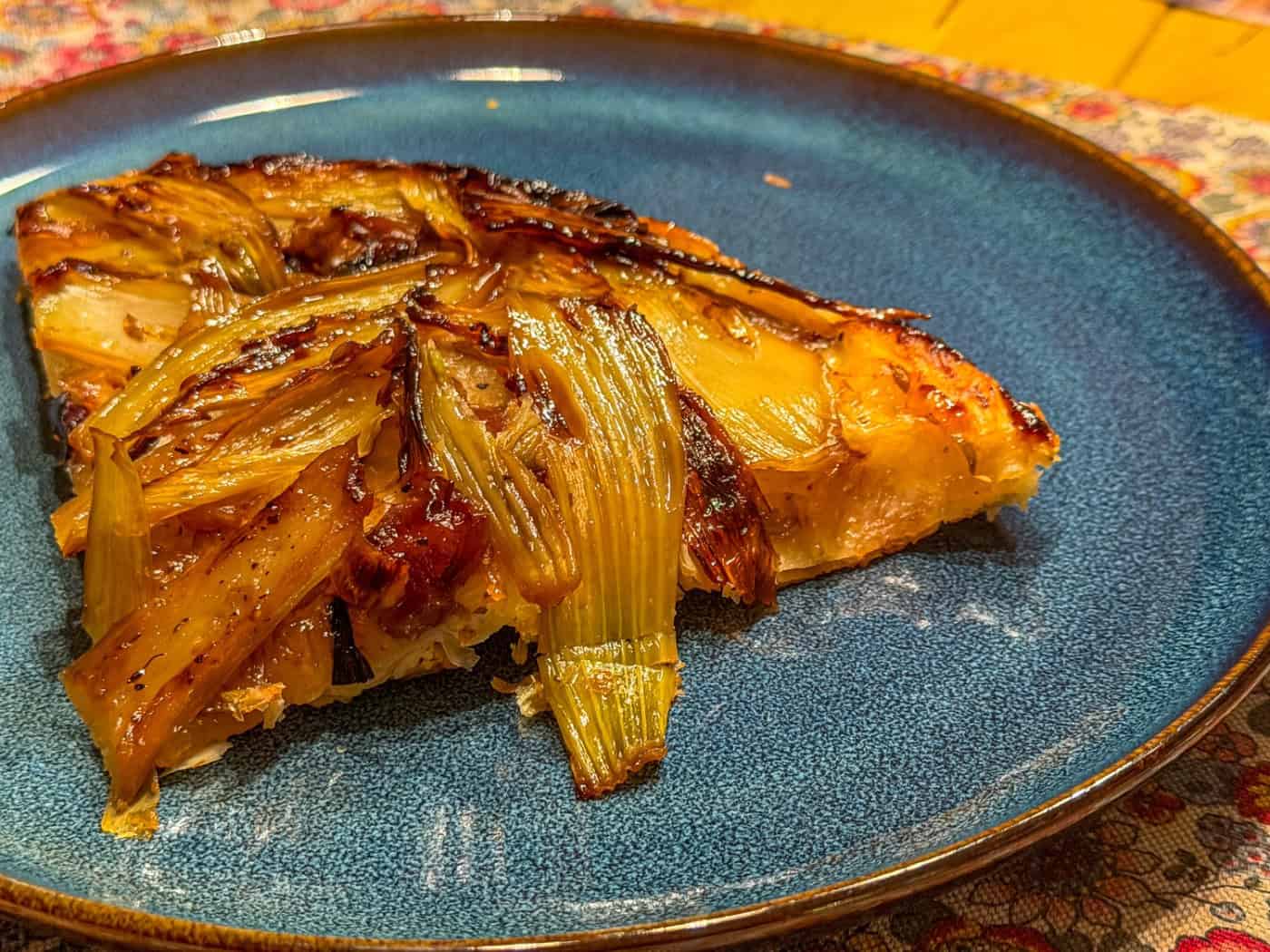
Reading is fun—there are almost no limits to the imagination. Reading cookbooks, however, can sometimes take away from the fun: your mouth waters too much while reading, and you’d love to have exactly what you’ve just been enjoying reading about on your plate right this very moment. Of course, “right this very moment” rarely works—but with a little preparation and time, you can see if the cookbook theory actually works in practice. While preparing the review of Yotam Ottolenghi’s *Simple Too*, I had that “Oh, I want that!” moment more than once. So I just went ahead and made it: fennel tarte Tatin.
Why this one, of all things? Quite simply because the book says: “It looks fancy and seems complicated, but it’s easy (really!)”. Plus, my wonderful special Tarte Tatin pan gets used far too rarely! On top of that, I like fennel, and I even had the puff pastry on hand as specified (from the refrigerated section, 280 g). So far, so good. But Ottolenghi, that rascal, although he also has this beautiful Le Creuset Tarte Tatin pan, doesn’t use it for this Tarte Tatin. He knows why: the puff pastry is too short. So once again, we had to cut it into pieces—it works, but it doesn’t look quite as nice. Here’s a tip: try it out before cooking or baking and trim the pastry roll if necessary—as long as the pan is cold, it’s relatively easy!
The Recipe
The rest of the (vegetarian) main course is simple and starts by preheating the oven to 220 °C (convection). Next, remove the cores and stems from four medium-sized fennel bulbs (as well as any outer layers that are too tough), cut the bulbs in half, and slice them into strips about three centimeters wide (target amount: 750 g). In the U.S., using the standard unit of measurement there—the inch—the strips would certainly be 2.54 cm wide (1 inch), which shows that the exact measurements aren’t that important here.
Line the Tarte Tatin pan with parchment paper (making sure to cover more than just the bottom—pull it up along the inner edges). Lightly crush 2 tsp of fennel seeds in a mortar, halve 100 g of dark seedless grapes, and cut 85 g of butter into small cubes. Add these three ingredients, along with 80 ml of maple syrup, 1½ tsp of salt, and plenty of pepper, to the lined pan and mix well. Bake in the oven, which has been preheated thoroughly, for 40 to 45 minutes. Halfway through the baking time, turn the mixture over once.
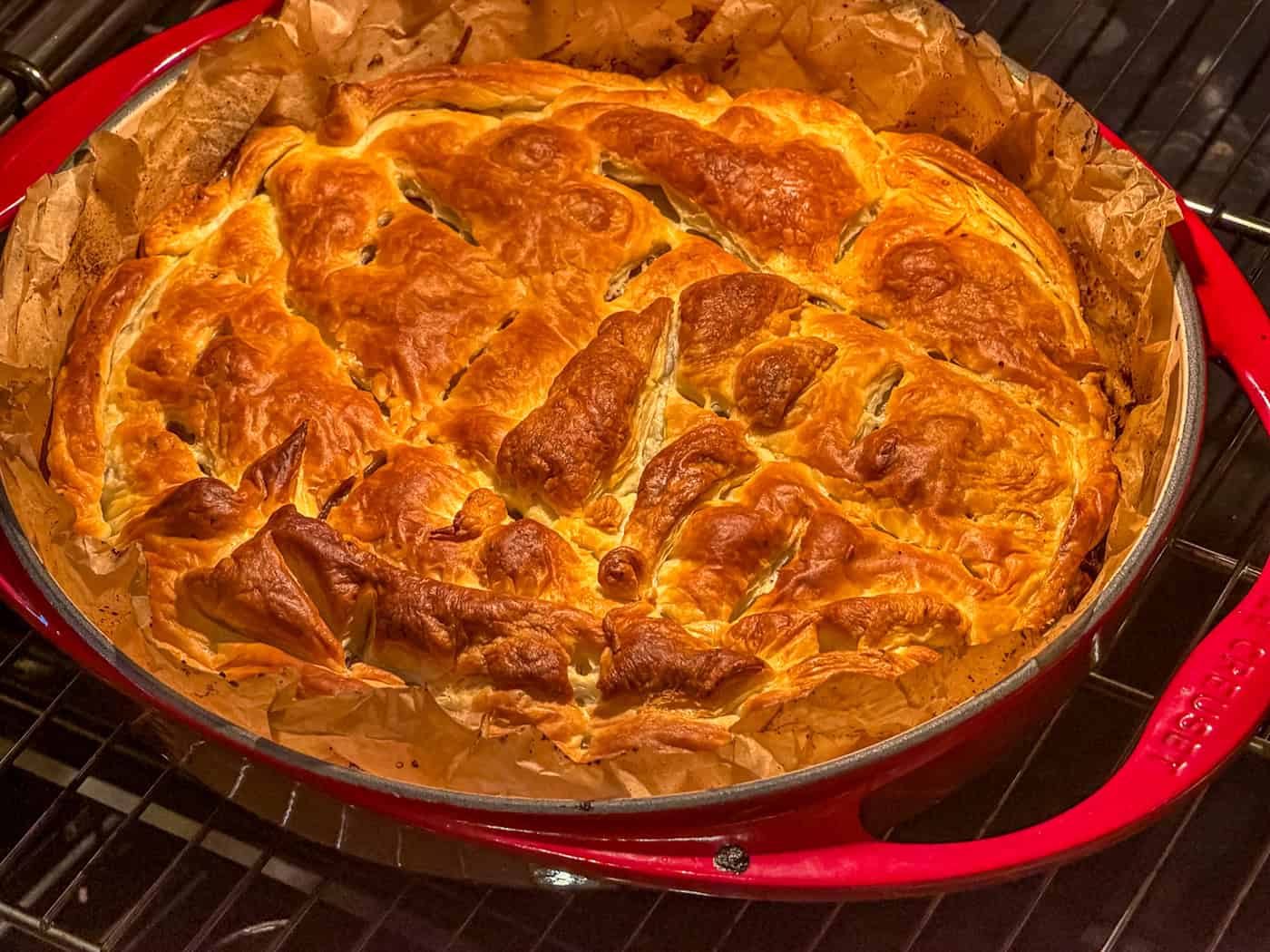
Remove the pan from the oven and reduce the temperature to 220 °C. Add 75 g pitted and halved Kalamata olives to the mixture, mixing everything well once more. Now place the puff pastry over the pan—as described: if the diameter of the rolled-out puff pastry is too small, patch it together. Ideally, tuck the dough between the inner edge of the pan and the filling to create a rim. Important: To allow steam to escape during further baking, cut four or five small slits in the dough with a knife.
Bake the tart in the oven for 25 to 30 minutes. The pastry will puff up and turn a golden brown. Remove the pan from the oven and let it rest for two to three minutes. Invert the tarte Tatin onto a serving plate (or a wooden board), cut it into quarters, and serve.
From:
Yotam Ottolenghi, Verena Lochmuller, *Simple too*. DK Verlag (ed.), 2026

