

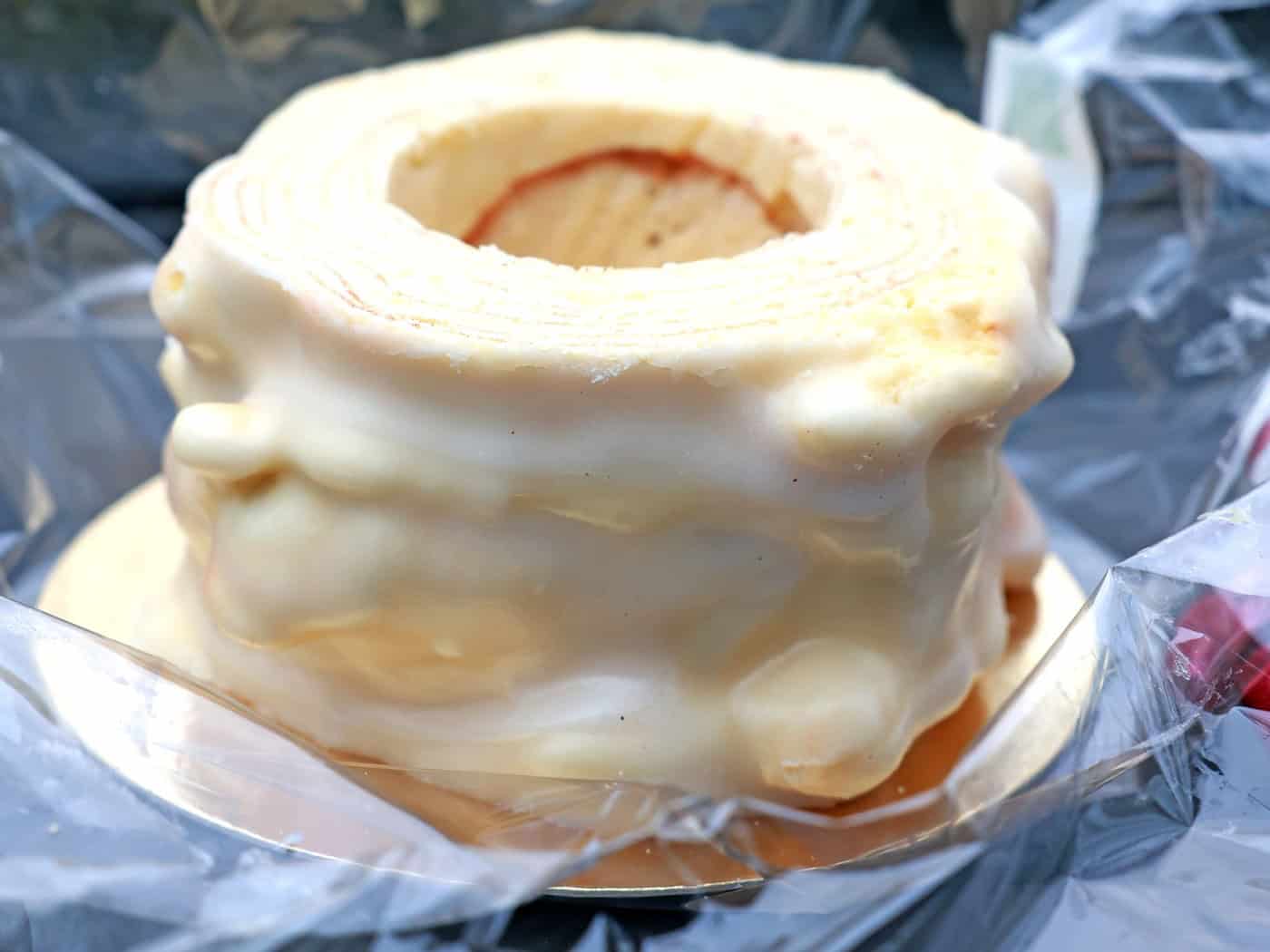
Lutherstadt, Hansestadt, Bad - numerous towns in Saxony, Saxony-Anhalt and Thuringia have an officially awarded title. But many more of the 1,200 or so towns and municipalities in the three states adorn themselves with unofficial nicknames. Why do they do this? And what regional characteristics do they use to highlight? Salzwedel is a Hanseatic city - a regular title that can only be used with a historical reference to the medieval Hanseatic League. In addition, the town of 23,000 inhabitants in the Altmark region also calls itself the "Baumkuchenstadt" (Baumkuchen town) - a reminder of the tradition of this popular pastry. In the first half of the 19th century, several confectioners produced the sweet specialty - and are said to have delighted King Frederick William IV of Prussia with it. Later, Salzwedel entrepreneurs supplied the royal court. Baumkuchen is still made in the north of Saxony-Anhalt today. The Thuringian town of Schmölln also has a culinary tradition, at least with one of its two nicknames. The small town in the Altenburger Land region is the "Knopf- und Mutzbratenstadt Schmölln", as a brown sign on the Autobahn 4 has proclaimed since 2021. Schmölln was an important center of the button industry in the late 19th and early 20th centuries, with 30 factories at times, explained city spokeswoman Maja Persch. But today, this is just a memory that is cherished with the nickname. Mutzbraten is much more contemporary - a piece of pork seasoned with salt, pepper and marjoram and roasted over a birch wood fire. "Especially in the summer months, Mutzbraten is a natural part of gardens, club life and village festivals in many places," said Persch. A nickname is far more than just a slogan for a town, said the spokeswoman. "It brings together history, special features and identity in a form that is easy for people to understand and remember." Such titles do not make a city new - "but they make visible what makes it special". The Saxon city of Plauen also recalls an industrial tradition with its nickname "Lace City": the Vogtland lace and embroidery industry. At the height of its heyday in 1912, 16,000 embroidery machines are said to have been in use in Plauen, as the town writes in a "History of Plauen Lace". Bombed during the Second World War, nationalized in the GDR and privatized after 1990 - Plauen lace has survived various eras. It is still produced today. Eight regional companies are members of the Plauener Spitze industry association. The tradition is also celebrated with the town festival - which in Plauen is of course called the "Lace Festival". In Central Saxony, two towns have a giant boot as their figurehead, look back on a great shoemaking tradition and are therefore also known as the "boot town": Döbeln and Leisnig. The towns, which are around 20 kilometers apart, have even been involved in a "boot war". It was sparked by the first giant boot from Döbeln: master shoemakers from Döbeln made the 3.70-metre-high boot in 1925. It made its way to Leisnig, where it was kept and exhibited at Mildenstein Castle for decades from the 1950s onwards. It was finally decided in court that the oversized footwear had to go back to Döbeln. Last year, the "100 years of giant boots" anniversary was celebrated there. However, the people of Leisnig also have a giant boot again. It was made in secret by two master shoemakers and presented in 1996 for Leisnig's 950th anniversary celebrations. At 4.90 meters, it is taller than the historic giant boot from Döbeln. Döbeln and Leisnig have long since stopped talking about a "war" over the giant boots. "Both towns are working together to promote the boot region," explained Döbeln's town spokesman Thomas Mettcher. There's no getting around Skat in Altenburg. Not only have playing cards been produced in the Thuringian town for 500 years, and not only has it been considered the "cradle of skat" since the invention of the game 200 years ago, but it is also home to a playing card museum with around 30,000 decks of cards as well as the headquarters of the German Skat Association and the International Skat Court. In addition, water gushes from a skat fountain in the town, skat is recognized as an intangible cultural heritage and a skat club from Altenburg has recently started playing in the first national league, according to town spokesman Christian Bettels. In short: Altenburg is the "Skat City" - and with full conviction: "We don't think that any other place will dispute this honorary title," said Bettels. What skat is for Altenburg, chess is for the village of Ströbeck in Saxony-Anhalt: since 2016, the chess tradition in Ströbeck has been part of the intangible cultural heritage. The "chess village of Ströbeck", a district of Halberstadt, is dedicated to this tradition in a unique and diverse way, according to the list. "According to legend, Ströbeck residents have been playing chess since 1011." Chess has also been taught as a compulsory subject at the elementary school in Ströbeck for more than 200 years. And anyone who moves to Ströbeck will probably soon come into contact with the intellectual sport: "New residents are included in the chess community through the many different ways in which tradition is cultivated." Copyright 2026, dpa (www.dpa.de). All rights reservedMemory of Baumkuchen tradition
Buttons and Mutzbraten
Plauen is lace
Who is the boot town?
"18, 20, 22, gone..."
Chess village Ströbeck is cultural heritage


