


Commissioner for Eastern Europe continues to see deficits in economic structure
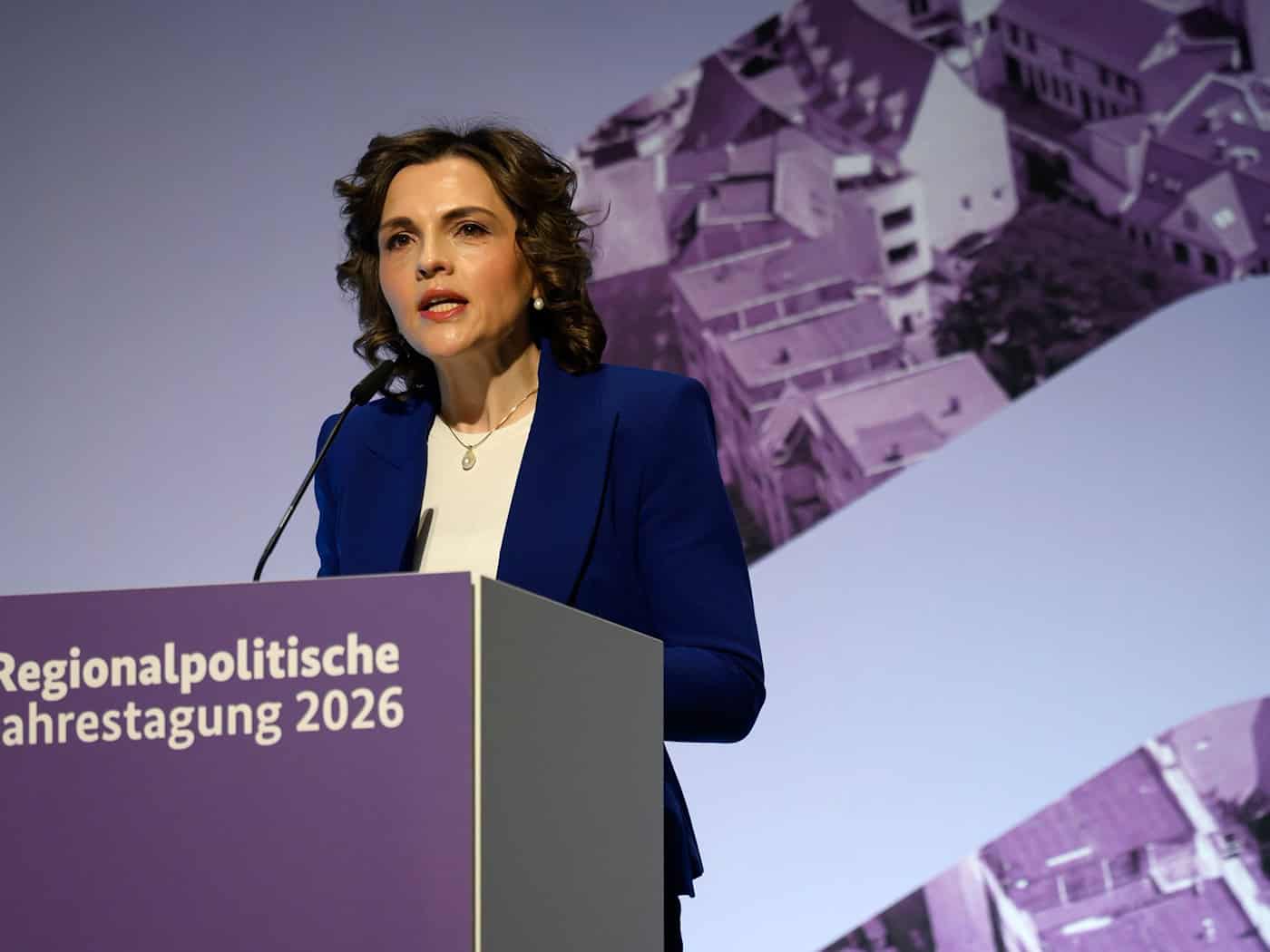
The East German economy continues to face structural challenges, according to the Federal Government. "The economic situation in eastern Germany is mixed," said Elisabeth Kaiser (SPD), Federal Government Commissioner for Eastern Germany, at the annual regional policy conference of the Federal Ministry of Economics in Halle. Growth of around 0.3 percent is expected for 2025, which is slightly above the national average. However, this growth is not yet self-sustaining industrially in all areas. As key problems, Kaiser cited high energy prices for energy-intensive industries, the demographically induced shortage of skilled workers, a comparatively low level of research and development intensity in companies and a lack of corporate headquarters. Value creation and decision-making power are still too often located outside the regions. At the same time, the Minister of State emphasized the strengths of the East. Today, it is an industrial location, research region and energy transition country at the same time and produces more renewable electricity than it consumes - "a strategic location advantage for connecting the energy transition and industry". Structural change can succeed if it is actively shaped, said Kaiser, referring to major projects such as the establishment of a university medical center in Lusatia, the semiconductor cluster in Saxony and the Erfurter Kreuz industrial area. These show what is possible when the federal government, federal states, local authorities and local players act together. The Joint Task for the Improvement of Regional Economic Structures (GRW) remains a key instrument. Since 1990, around 65 billion euros in funding has been used, investments of more than 260 billion euros have been initiated and around 3.1 million jobs have been created or secured. In the future, funding should focus more strongly on future-oriented sectors such as microelectronics, batteries, hydrogen, green steel and the circular economy. The guiding principle is: "Retain and transform industry, not replace it." For better investment conditions, Kaiser announced competitive energy prices, the reduction of bureaucracy, faster procedures and investment in infrastructure and the immigration of skilled workers. The aim is to anchor value creation more firmly in the east. Copyright 2026, dpa (www.dpa.de). All rights reservedLack of corporate headquarters as a weak point
Structural change through major projects
Better framework conditions for investment

