

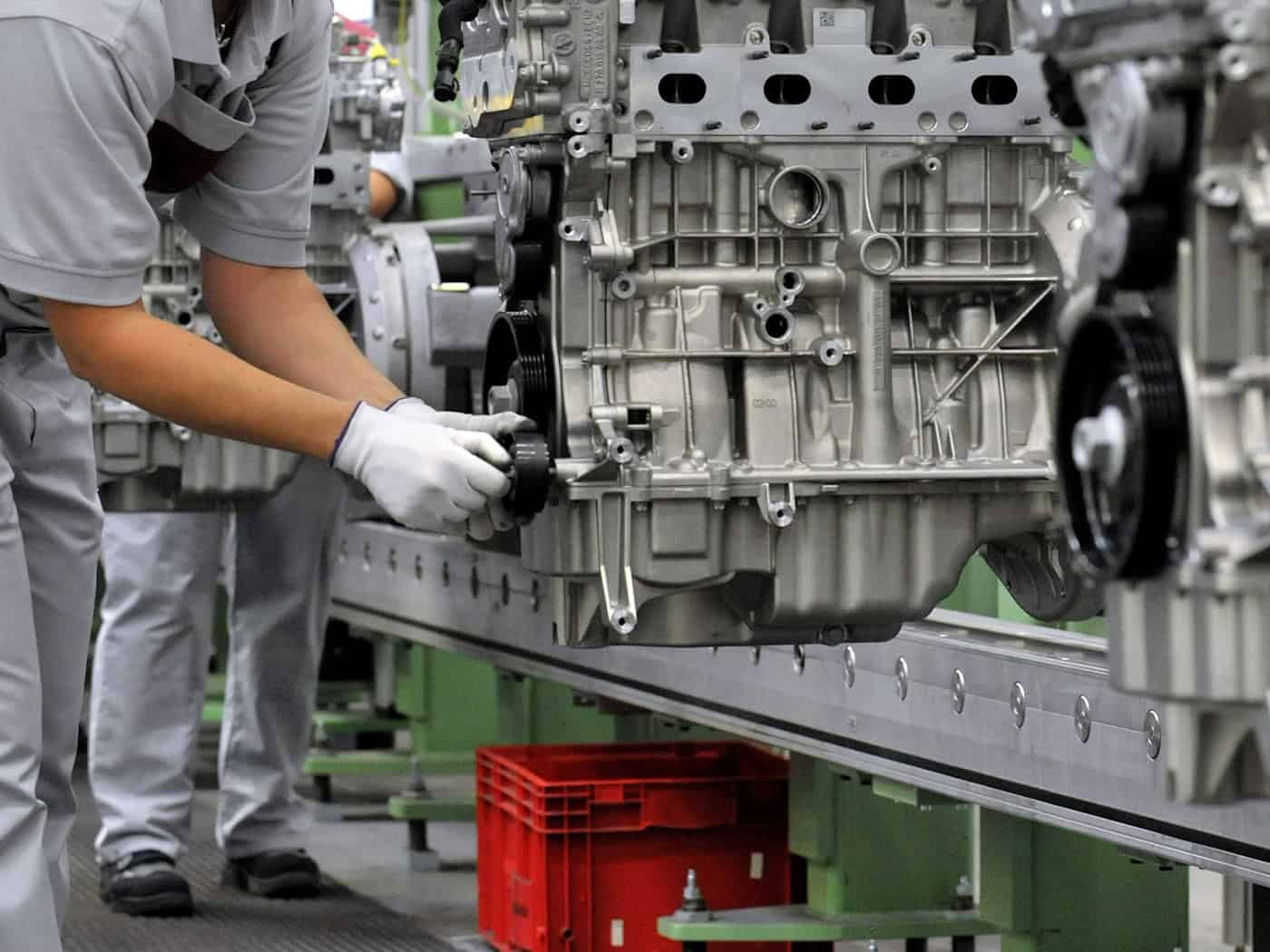
According to a study, there are opportunities for the struggling automotive supply industry in Saxony and Thuringia in the defense industry. "Armaments are not the only lifeline for the automotive sector," explains industry expert Werner Olle. "But companies need to position themselves more broadly and armaments can be a component of this." This could help to secure employment. As examples, he cited the production of body parts, drive components, but also vehicle and assistance systems. Weak sales in the German automotive industry and the shift towards electromobility are affecting many suppliers. Job losses are the result. In contrast, the arms industry is experiencing strong growth and expansion due to international conflicts such as Russia's war of aggression against Ukraine. For example, the KNDS Group has taken over the former wagon factory in Görlitz to produce tank parts there. The automotive industry is also looking at armaments projects in order to reduce overcapacity. Volkswagen, for example, is looking for a future for its plant in Osnabrück, Lower Saxony, and is also in talks with armaments companies. A number of companies in the automotive industry are already active in the armaments sector, as shown by the analysis carried out by Olle on behalf of the Automotive Thüringen association. The study analyzed 150 suppliers to the defence industry across Germany. There are also examples in Saxony and Thuringia, the researcher told the German Press Agency. For example, in special vehicle construction, vehicle armoring, but also in the fields of optics, photonics and electronics. For historical reasons, the centers of German armaments production are primarily located in West Germany. "It will be difficult to locate large armaments companies in East Germany," estimates Olle with a view to demands that the East should benefit more from armaments orders. However, the automotive industry offers many technological points of contact, especially with regard to products that can be used for civil and military purposes. In addition, defense orders involve smaller quantities. This offers small and medium-sized companies in particular the opportunity to become active here as suppliers. The level of interest on the part of companies is high, states Rico Chmelik, Managing Director of the Automotive Thuringia Association. In an industry survey last year, around 75 percent of companies stated that they were active in the defense sector or were considering entering it. However, there are hurdles, as Olle explains. This is because the defense industry is new territory for interested suppliers - with different structures, customers, business models and requirements. Supplying parts or components to defense companies or joining forces with other companies that are already active in this field is particularly promising. There are currently good opportunities for automotive suppliers to enter this sector, Chmelik states: "The window is there." Politicians can support companies in this - for example by opening doors to large defense companies such as Rheinmetall, Airbus or KNDS. Olle also advises networking demand and supply and creating joint platforms. Copyright 2026, dpa (www.dpa.de). All rights reservedSpecial vehicles, armor, electronics
Chmelik: "The window is there."


