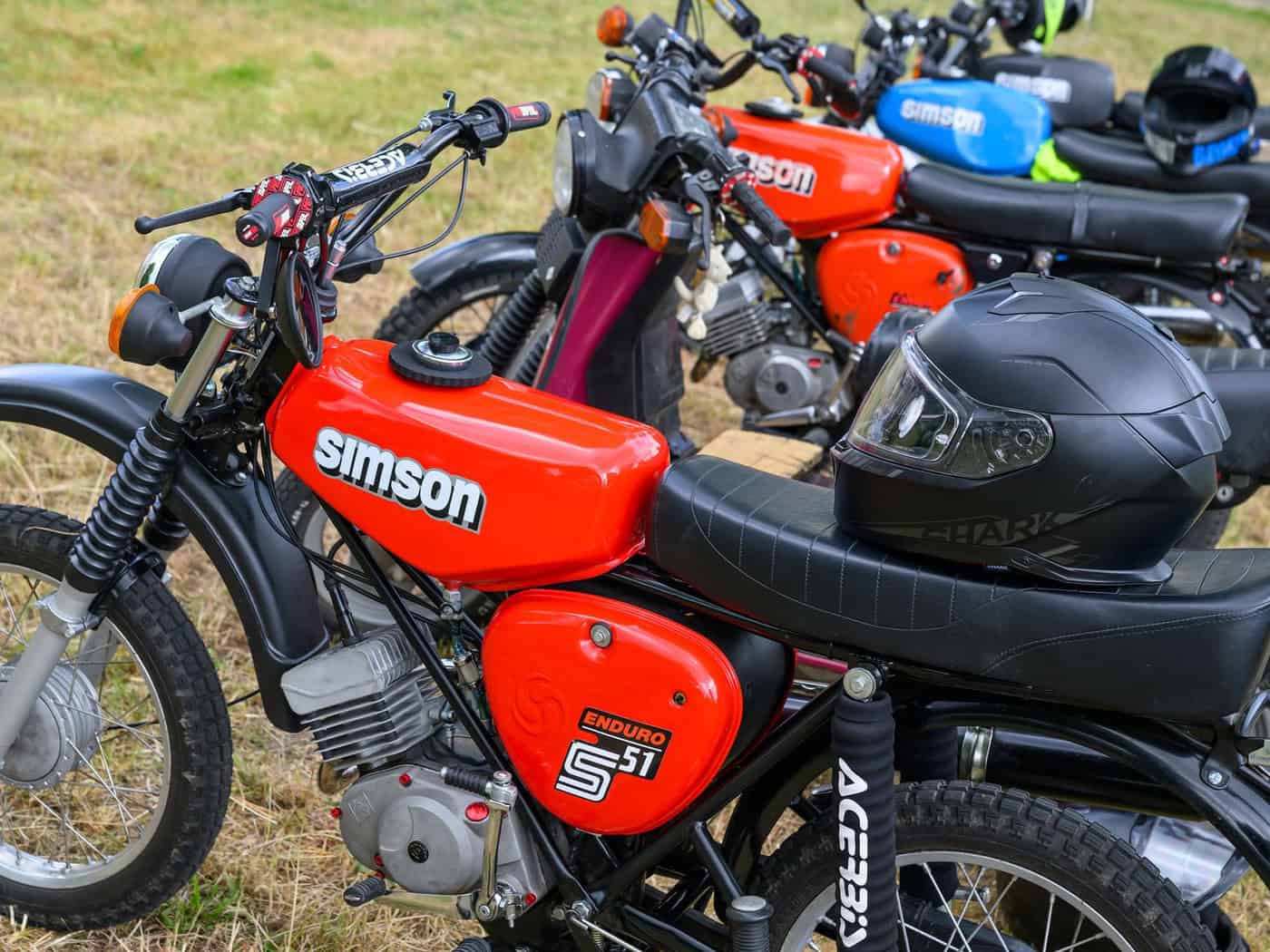
GDR mopeds have been rattling down the streets at 60 for decades; now Saxony and Thuringia are calling for the speed limit to be relaxed for other two-wheeled vehicles as well. The Bundesrat is set to vote on Friday on a corresponding resolution proposed by the two states. But getting the green light in the Bundesrat would only be the beginning. After all, there’s still a long way to go before scooters, e-mopeds, and other light motorcycles are actually allowed to zoom around at 60 kilometers per hour. Since the 1990s, a maximum speed of 45 km/h has applied to mopeds at the EU level. This means that even if the engine in the two-wheeler could reach higher speeds, the vehicles must be limited to 45 km/h—in other words, their speed must be restricted. There are exceptions for East German mopeds such as the Schwalbe, Star, Simson S50, or S51. This was stipulated in the Unification Treaty. In addition, grandfathering and transitional provisions still apply in some cases. For example, older West German models are sometimes allowed to travel at 50 km/h. The two federal states want to ensure that the speed limit is raised from 45 to 60 km/h at the EU level. The motion for a resolution states that the Bundesrat requests the federal government to advocate at the European level for a revision of the regulations, with the goal of allowing vehicles to operate at a maximum design speed of up to 60 km/h. “Since the introduction of vehicle classification, both technical capabilities and mobility requirements have evolved,” the motion states. Modern vehicles now meet higher technical standards, particularly in terms of braking systems, suspension, tires, and lighting. In addition, the proposers cite the need for mobility in rural and structurally disadvantaged areas. “Greater distances between homes, schools, training centers, and workplaces, as well as a sometimes less frequent local public transit service, increase the importance of cost-effective and independently usable modes of transportation in these areas,” the motion states. Thuringia’s State Chancellery Chief Stefan Gruhner (CDU) points out that there is already experience with this in eastern Germany, since GDR mopeds are already permitted to travel at 60 km/h. “This experience shows that it works.” He himself used to ride a Simson moped. The aim of the initiative is to improve mobility for young people and apprentices in rural areas. The proposal covers vehicle classes L1e-B, L2e, and L6e. These primarily include widely used mopeds and electric scooters, but also special vehicles such as three-wheeled light motorcycles or small, lightweight cars. In the Bundesrat, the Committee on European Union Affairs, as well as the Committees on the Interior and on Transportation, have already addressed the issue. They recommend that the states adopt the resolution. A spokeswoman for the Ministry of Infrastructure stated that Saxony is therefore confident that the motion will be approved. However, it remains to be seen whether the initiative will also be heard and well-received at the EU level. Copyright 2026, dpa (www.dpa.de). All rights reservedWhy do different speed limits apply to mopeds?
What are Saxony and Thuringia calling for in their motion?
What are the reasons behind the motion?
Which vehicles are involved?
What are the chances of this initiative succeeding?