Logo Die Sachsen News
News / Economy

"A pile of scrap": ex-GDR dream ship is dismantled

"A pile of scrap": ex-GDR dream ship is dismantled
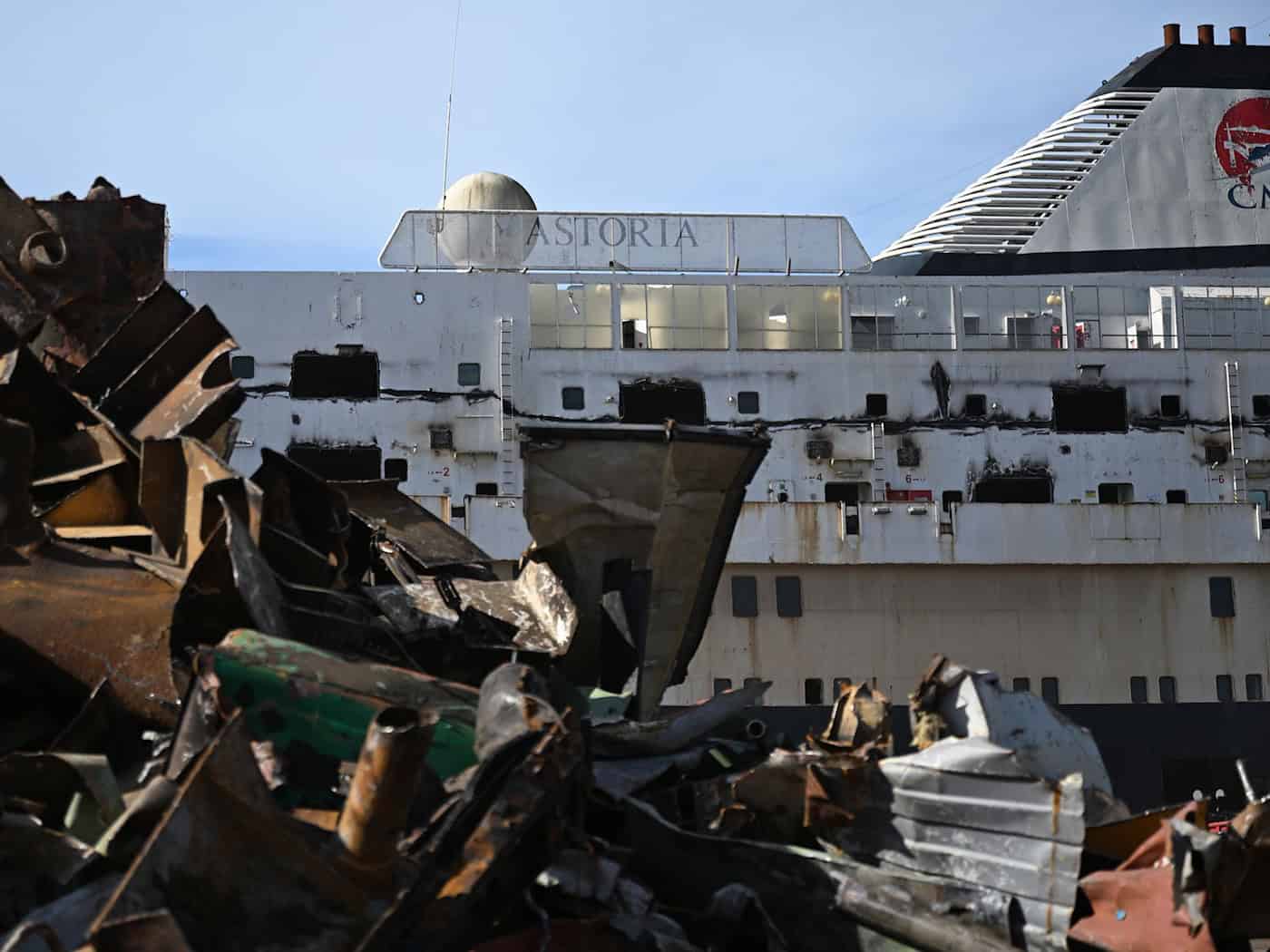
The many parts of the ship are to be 97 percent recycled. / Photo: Markus Lenhardt/dpa
From: DieSachsen News
The "MS Völkerfreundschaft" was part of the small "dream ship fleet of socialism". The GDR cruise ship has an eventful history, which is now finally coming to an end in Ghent.

"It used to be a really proud ship," says Dieter Schumann wistfully. "And now it's a pile of scrap." The 72-year-old spent three quarters of a year as a young sailor on the "MS Völkerfreundschaft" in 1973. It was the first GDR cruise ship. It took the citizens of the socialist state as far as the Black Sea, for example - not only much easier than the "Trabi", but also in luxurious surroundings. But it also sailed to Athens, a "capitalist foreign country" and therefore actually taboo as a destination for GDR citizens.

37 years after the fall of the Berlin Wall, the history of the 160-metre-long ship, which was once built in Sweden, comes to an end. It last sailed under the name "Astoria" under the Portuguese flag - until it became unfit to sail. The historic ship was towed to a recycling yard in Ghent, where it is currently being scrapped.

More from this category

Ship being dismantled

On board, the splendor of former times is long gone. The large dining room has been gutted. The last rooms, one floor below, are next. Even before that, the "Astoria" was no longer recognizable as the "MS Völkerfreundschaft". She is being dismantled into countless individual parts. Nevertheless, the wishes of many people for a souvenir of the ship cannot be fulfilled, regrets the head of ship recycling at the Galloo shipyard, Peter Wyntin.

A total of 12,000 tons of material will be recovered from the ship, including wood, glass and plastic as well as steel. Galloo plans to recycle over 97 percent of the material. The process is well-timed and almost identical for every ship, regardless of whether it transports freight or people, says Wyntin. "I would say the only difference is that there's more waste on board because it's a cruise ship."

GDR paid 20 million Swedish crowns

The ship was built in Gothenburg, Sweden, and was initially named "Stockholm". It had its maiden voyage in 1948. It initially sailed between Scandinavia and North America. On July 25, 1956, the "Stockholm" became world-famous due to a sad event: In dense fog off the North American coast, it collided with the Italian luxury liner "Andrea Doria". This eventually sank. 51 people died.

The GDR bought the "Stockholm" in 1959 for around 20 million Swedish crowns. In 1960, the ship was finally launched into the sea as the "MS Völkerfreundschaft". For 25 years, the "dream ship of the GDR" was operated by the Free German Trade Union Confederation (FDGB), according to the DDR Museum in Berlin website. Places on board were often a reward for workers or party veterans.

Vacation and escape

Luxury was definitely a trademark of the "Völkerfreundschaft", even though it was a single-class ship. There was an outdoor and indoor swimming pool, a hairdressing salon, a smoking salon, a veranda café with a large dance floor and a movie theater for 180 visitors. There was also an operating theater and an X-ray laboratory as well as a hospital with six beds.

It was the first ship in the small GDR cruise ship fleet, which also included the "Fritz Heckert" and the "Arkona". Around 280,000 GDR citizens were lucky enough to take such a sea voyage. Many also used them to say a final farewell to their homeland: "225 passengers and crew members escaped from the ship during shore leave or by making daring jumps (48)," lists the Maritime Museum in Rostock. The floating museum on a ship also displays large models and paraphernalia of the GDR cruise fleet on "Deck 3".

"TV captain" Peters on the bridge

The former sailor Schumann has fond memories of the year 1973. These include his time with TV captain Gerd Peters, who was known to millions of viewers in the GDR and was temporarily in command of the "Völkerfreundschaft". "He always looked really smart. And he was a party animal," recalls Schumann. Peters was initially a nautical officer on the FDGB vacation ship and later captain.

Young sailor Schumann was once assigned to the "night brigade" with a colleague, which at the time mainly meant cleaning the deck. But because there was to be a disco event on board, they were both asked if they could also play music. No sooner said than done. Sailor Schumann became a DJ that night.

And as TV captain Peters was a big fan of James Last, he also played his music as soon as Peters came into view. "And it wasn't long before Peters was dancing through the hall too," reports Schumann.

Transatlantic ship with the longest history

In 1985, the GDR sold the ship and replaced it with the larger and much more modern "Arkona". As the GDR Museum writes, the former "Völkerfreundschaft" was then in service under changing names and owners - as the longest transatlantic ship in the world in service.

Copyright 2026, dpa (www.dpa.de). All rights reserved

The translations are automated with the help of AI. We look forward to your feedback and your help in improving our multilingual service. Write to us at: language@diesachsen.com.
Sachsen News
Article from

Sachsen News

Sachsen News is responsible for the content itself. The platform's code of conduct applies. The platform checks and treats content in accordance with the legal requirements, in particular the NetzDG.

Social Media