

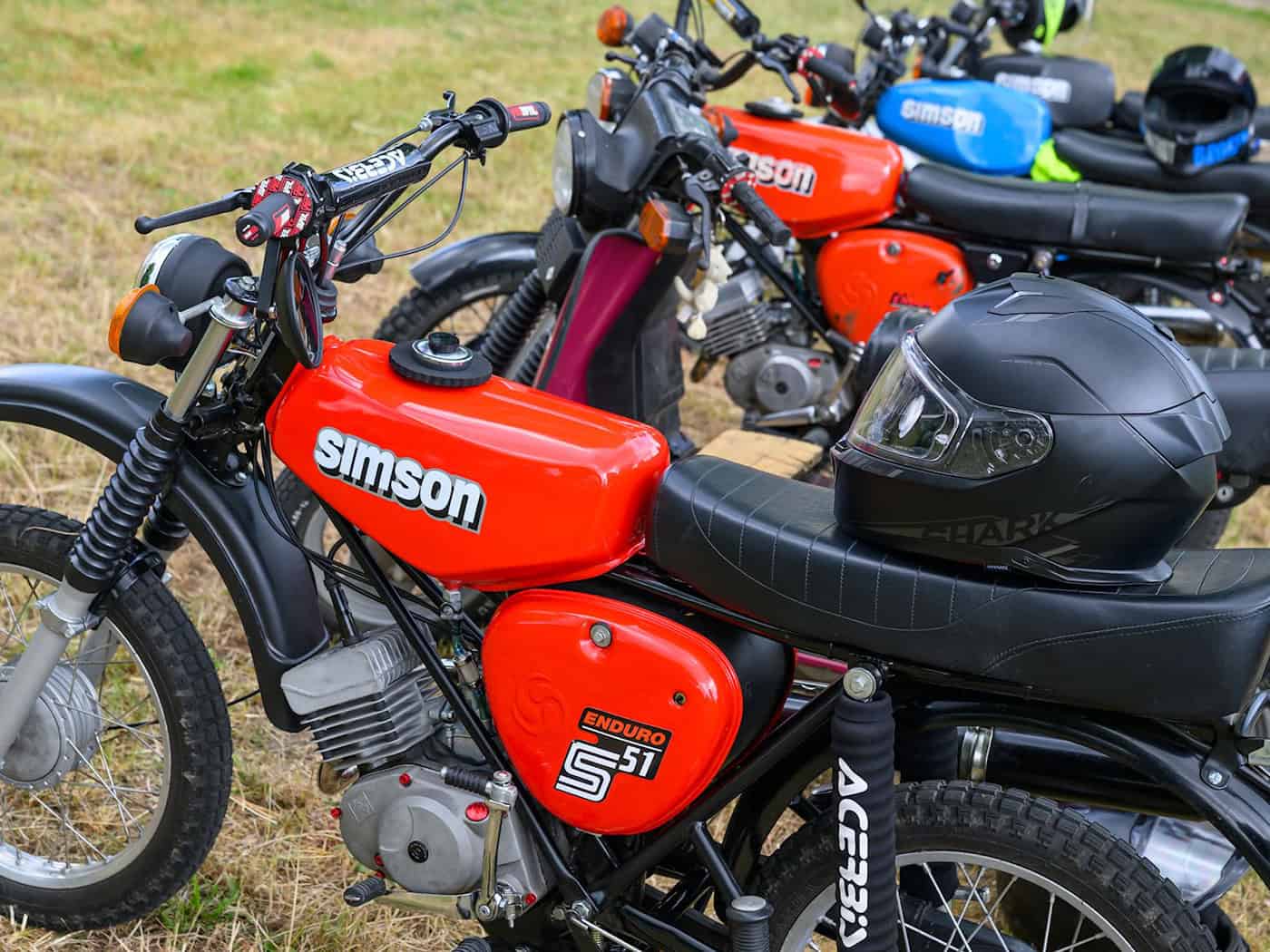
According to Minister President Mario Voigt, Thuringia is making a new push to allow re-imported Simson mopeds with a top speed of 60 to be driven on German roads. “We’re still working on it,” the CDU politician told the German Press Agency in Erfurt. This involves issues under European law that need to be clarified. Germany cannot act unilaterally to grant special status regarding the permitted speed limit to Simson mopeds reimported from Hungary or other Eastern European countries, for example. Thuringia will raise the issue at a planned cabinet meeting with the EU in Brussels in early September, Voigt said. He hopes for understanding from European policymakers: “The situation is difficult, however.” So far, vehicles built during the GDR era with names such as Schwalbe, Star, Sperber, or S50/51 can travel at 60, because a special provision in the German Unification Treaty allows for this. This applies to two-stroke mopeds that were already registered in the GDR. The situation is different for reimported Simson mopeds. Like other mopeds, they can only travel at 45 kilometers per hour. The reason for this is the legal framework established by the EU. Under this framework, the speed limit for mopeds is set at 45 kilometers per hour throughout Europe. This means that mopeds built in Suhl, East Germany, for export cannot, in principle, be treated any better upon re-importation than other European mopeds from that era. Voigt also referred to plans by investors to build an electric version in Thuringia. There is talk of an “E-Schwalbe.” Currently, the discussions center, among other things, on naming and licensing rights. The investors were part of the economic delegation during his visit to India this year. Their project has also generated interest there. Tens of thousands of Simson mopeds are still chugging along the roads, especially in eastern Germany. According to various suppliers, the supply of replacement parts for them is secured for years to come. Many young people, especially in rural areas, ride these two-stroke mopeds—not only because of their history in the GDR and their design, but because they provide mobility. The state parliaments in Thuringia and Brandenburg have already addressed Simson re-imports and their legal status. The AfD also raises this issue repeatedly. The AfD is accused of exploiting the Simson cult—especially among young people in eastern Germany—for its own purposes. A descendant of the Jewish Simson family, to whom the factory in Suhl traces its origins, recently expressed shock during a visit to Thuringia at the political co-opting of the name. Proponents of a special regulation argue that reimports would increase supply and curb black market prices. Production of the mopeds in Suhl has long since ceased—the final curtain fell on a small-scale follow-up production in 2002. Copyright 2026, dpa (www.dpa.de). All rights reservedProvision in the Unification Treaty Does Not Apply to Reimports
More Simson mopeds on the market?
Re-imports also an issue for the AfD


