

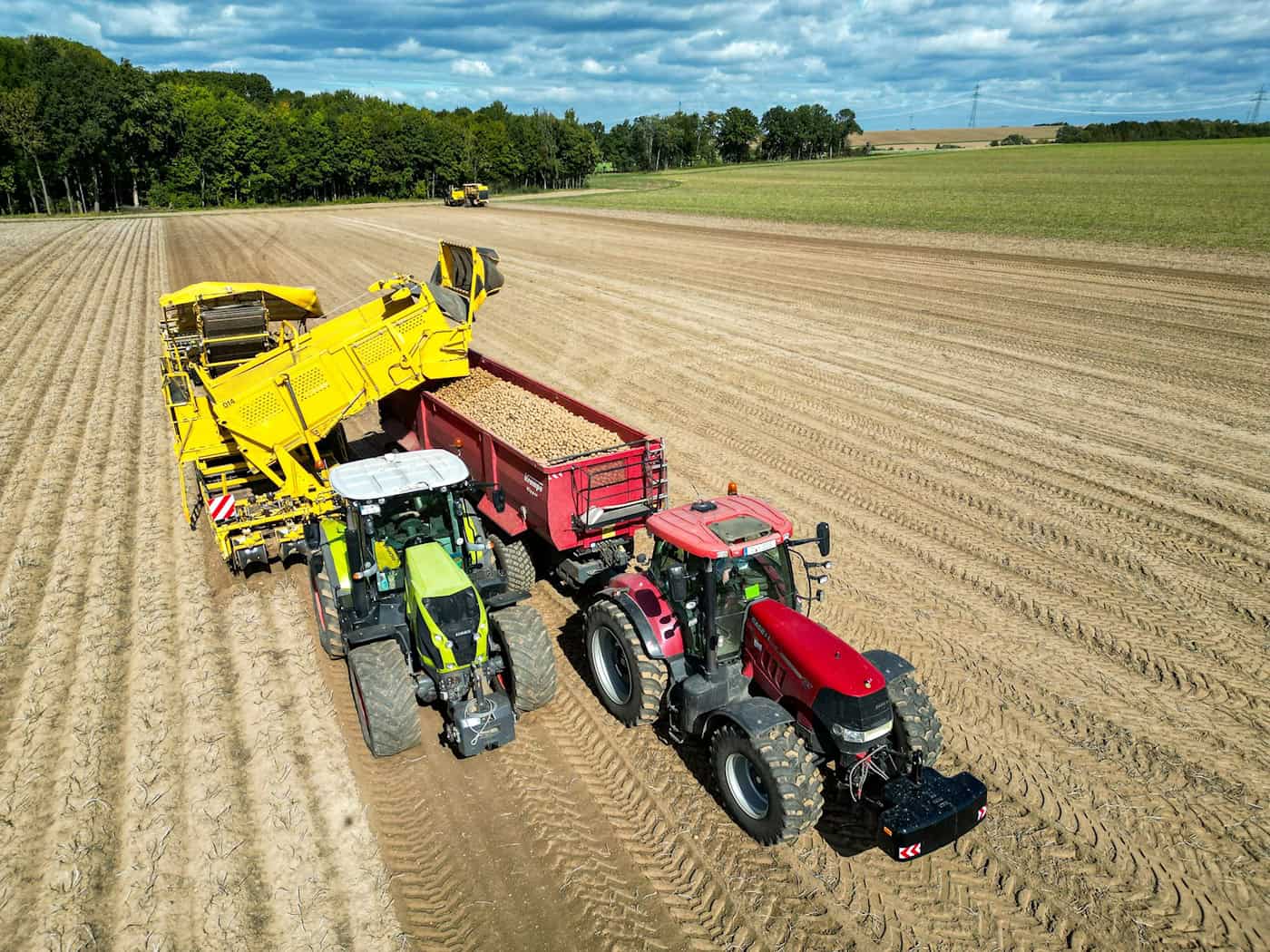
The European Union’s planned agricultural reform could have a significantly greater impact on agriculture in eastern Germany than in many other regions of Europe. This is the warning issued by a study conducted by the Leibniz Institute for Agricultural Development in Transition Economies (IAMO) and the University of Rostock. The main reason is the prevalence of large agricultural operations in eastern Germany, which, under the European Commission’s plans, would have to expect lower direct payments. The European Commission intends to reform the Common Agricultural Policy (CAP) for the funding period from 2028 to 2034. Among other things, the plan calls for reducing area-based direct payments to larger farms and redistributing them more heavily in favor of smaller farms. At the same time, member states are to be given more leeway in designing the support programs. According to the researchers’ assessment, this would have far-reaching consequences in eastern Germany. Unlike in many western German regions, large agricultural operations often dominate the landscape in Brandenburg, Mecklenburg-Western Pomerania, Saxony, Saxony-Anhalt, and Thuringia. If their direct payments are cut, this could not only burden individual businesses but also adversely affect employment, regional economic output, and incomes in rural areas, according to the study. At the same time, the authors fear consequences for environmental and climate protection measures. Many agri-environmental programs have so far been supported by larger farms. Declining revenues could reduce their willingness to participate in costly subsidy programs. The researchers also view the planned financing critically. In the future, environmental and rural development programs would have to be co-financed to a greater extent by member states, while income support would continue to be paid entirely from the EU budget. This could put additional pressure on countries or regions with tight budgets. For Saxony alone, the study estimates the additional funding required at around 240 million euros to maintain the current level of support. From the authors’ perspective, the planned cuts to large farms should not be implemented in their current form. If they were nevertheless decided upon at the EU level, the authors believe that, at the very least, exemptions should be created and the reduced funds should remain in the affected regions. In addition, the researchers advocate further developing existing environmental programs and securing their long-term funding. Copyright 2026, dpa (www.dpa.de). All rights reservedLarge Farms Particularly Affected
State governments would likely have to contribute more money
Researchers Recommend Changes


