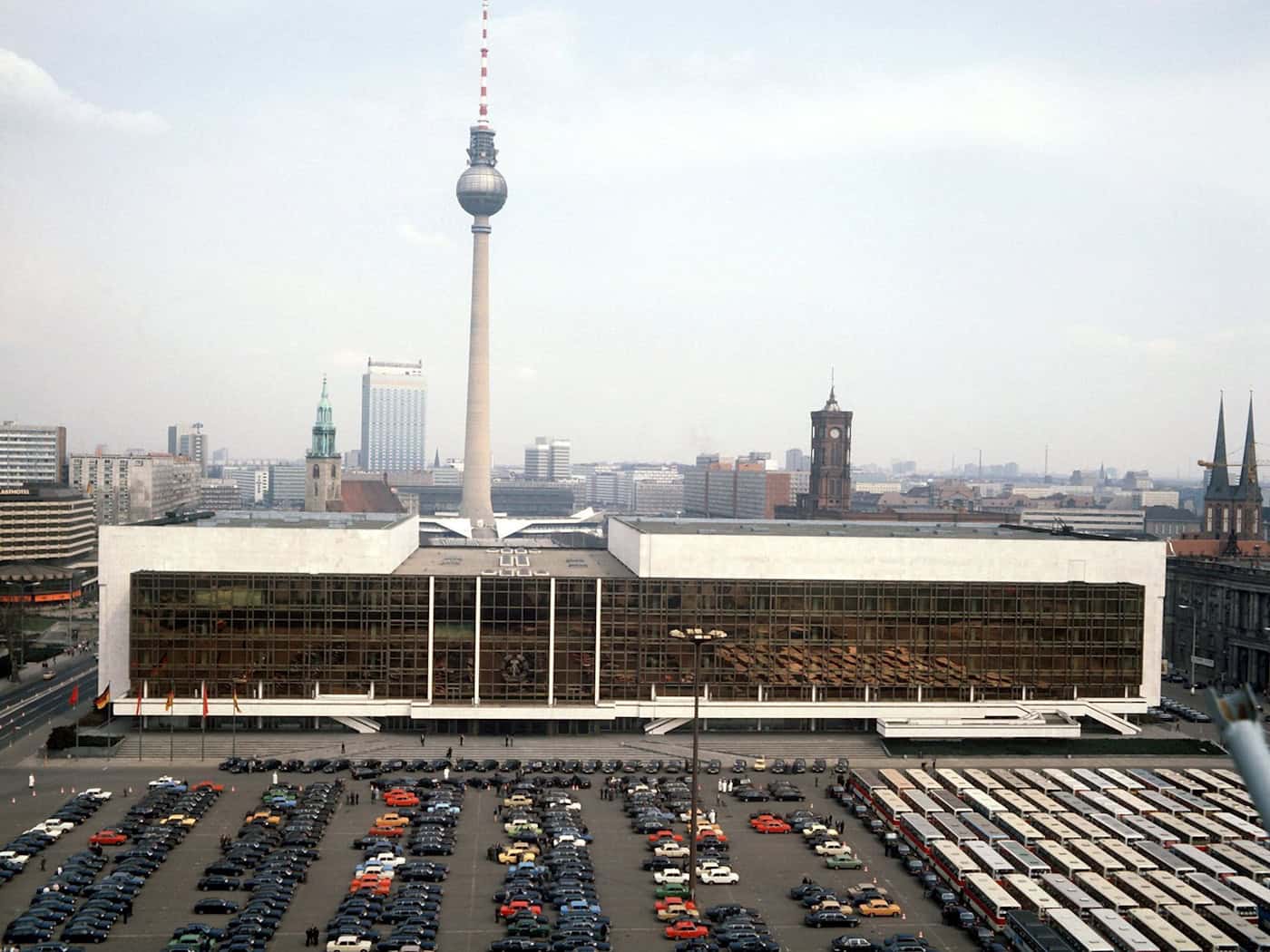
Many GDR citizens can no longer cease to be amazed. Marble floors, comfortable seating areas, plant arrangements, large paintings on the walls and a five-metre-high glass flower in the middle - they wandered through the brand new Palace of the Republic in East Berlin in April 1976 with curiosity, almost disbelief. Their gaze is also directed upwards, where a sea of almost 10,000 spherical lamps is illuminating the huge foyer - the inspiration for the name "Erich's Lamp Shop", which soon became popular.
The palace, whose striking, copper-brown reflective façade made of Belgian thermal glass quickly dominated the cityscape, was a prestige project of SED and State Council Chairman Erich Honecker. The remains of the Hohenzollern City Palace had already been blown up in 1950. In its place, thousands of workers built the palace in just 32 months - a kind of people's house for meetings, culture, entertainment, food and drink.
The costs were immense, but unlike other GDR construction sites, there was no shortage of materials. "There's no doubt that the workers and engineers put a lot of effort into this building. The workmanship is neat and decent," enthused a West German television correspondent at the time.