


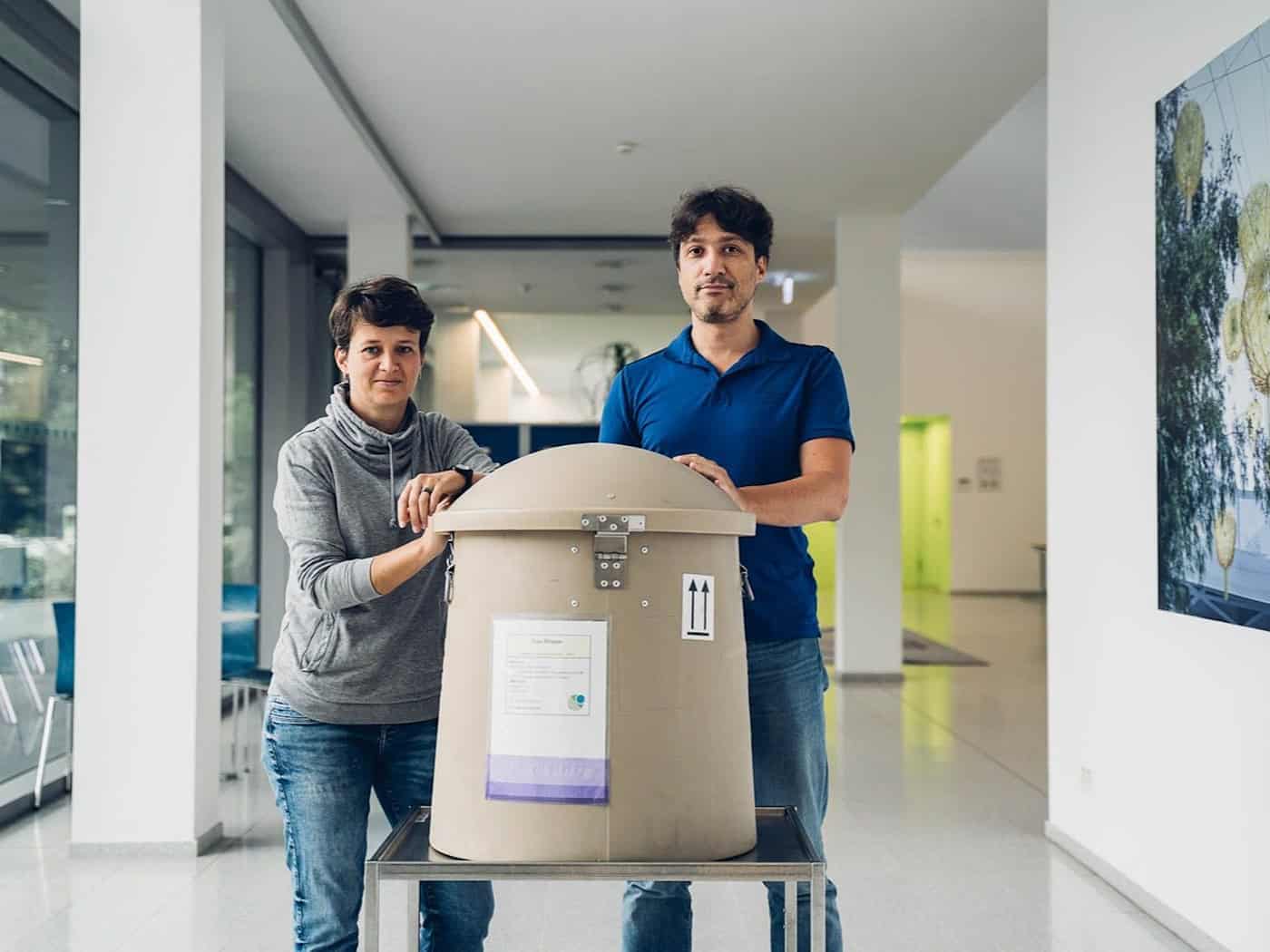
Newborns enter the world with a precious companion: the umbilical cord. It is usually discarded after birth. But researchers at Dresden University Hospital Carl Gustav Carus have recognized the medical potential it contains. They isolate special cells from the tissue of healthy umbilical cords — and these could help seriously ill patients.
A recent study involving researchers from Dresden found that patients receiving intensive care for severe COVID-19 had a significantly lower risk of death after treatment with these cells. The results were published in the journal Stem Cell Reports. “We are proud that the approach developed in Dresden for cellular therapy in premature babies also has the potential to save the lives of adults,” says Prof. Mario Rüdiger, Director of the Center for Feto-Neonatal Health at Dresden University Hospital.
When the immune system becomes a danger
In severe COVID-19, the body sometimes reacts too strongly. The immune system goes into overdrive and begins attacking the body’s own organs — a life-threatening condition. This is where mesenchymal stromal cells, or MSCs, come into play. They have anti-inflammatory properties and can help calm the immune system when it spirals out of control.
The Dresden team led by Dr. Marius A. Möbius and Dr. Daniel Freund originally developed these cells to help extremely premature babies suffering from chronic lung disease. A new method now makes it possible to obtain sufficiently large quantities of very young, high-quality cells from umbilical cords. This had previously been considered a major obstacle, but the new approach marks an important step forward.
Saxony as a hub for the cell therapies of the future
The study was conducted in Canada at the Ottawa Health Research Institute, but the cells used in it came from Dresden. Because the pandemic ended before the planned number of participants could be enrolled, further research is needed. That is why a larger study involving 296 participants has been underway in Canada since 2024 — this time in patients with severe sepsis, a life-threatening reaction to infection. Dresden is supplying the cells for that study as well.
The work is part of the SaxoCell project, funded by the Federal Ministry of Research, Technology and Space. The aim is to strengthen Saxony as a location for cell-based therapies. “If the data from the COVID study can also be reproduced in adults with severe sepsis, then a therapy that originally came from neonatology would revolutionize treatment in adults,” Rüdiger says.

