


Unknown cells discovered in the Alzheimer's brain
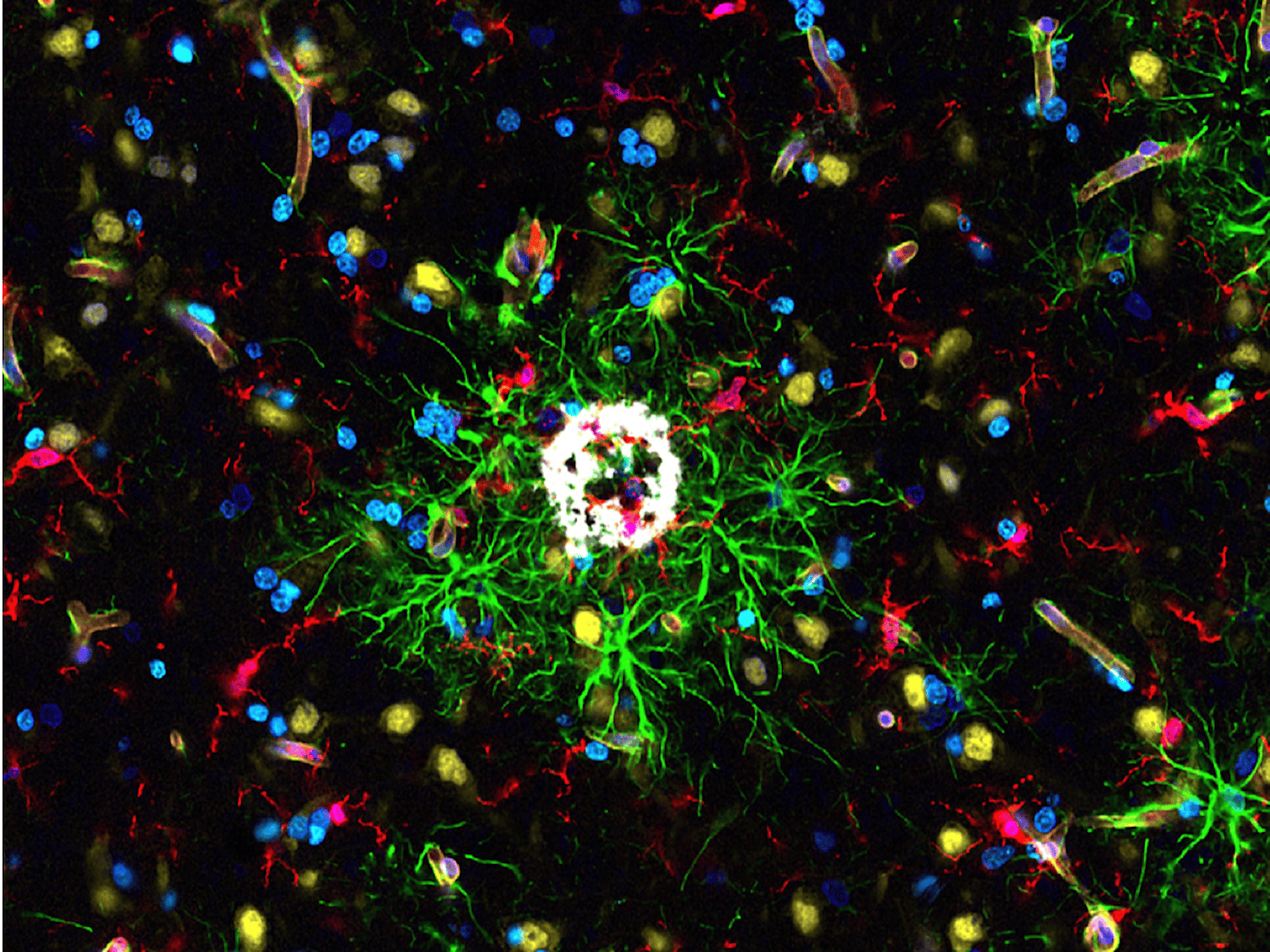
Millions of people worldwide live with Alzheimer's disease. Researchers still do not fully understand why nerve cells in the brain gradually die off as the disease progresses. Step by step, this limits the abilities of sufferers. According to the German Alzheimer's Society, around 1.8 million people in Germany suffer from dementia. Alzheimer's accounts for around 60 to 70 percent of all dementia cases. A team from Leipzig University has now found a new clue to the role of certain immune cells in Alzheimer's disease.
Researchers from the Institute of Anatomy at Leipzig University, together with international partners, discovered the previously unknown group of immune cells in the brains of Alzheimer's sufferers. The results have been published in the journal Nature Neuroscience. The study focuses on so-called microglial cells. These are specialized immune cells that only occur in the brain. They are a kind of the brain's own immune system and react to damage and deposits in the brain tissue. Scientists have suspected for years that these cells play a decisive role in how Alzheimer's develops and progresses.
New method makes the invisible visible
In the living human brain, these cells were previously almost impossible to study. Experiments on animals only provided limited findings because important factors such as human age are difficult to transfer. The researchers therefore analyzed tissue samples from the brain bank of the Institute of Anatomy in Leipzig. These were samples from body donors who had suffered from Alzheimer's disease during their lifetime.
The discovery was made possible by a new microscopy technique called CODEX-CNS. It can be used to visualize many proteins simultaneously in a tissue sample. The method was further developed by the researchers specifically for the human brain and supplemented by new computer programs for data analysis. This allowed the cells to be distinguished not only by their chemical composition, but also by their shape and their position in relation to neighboring cells.
Protein deposits and new cell population
In the process, the scientists discovered a previously unknown cell group. "When analyzing brain tissue from body donors, we identified a previously unknown cell population that is closely linked to certain protein deposits in the tissue and occurs significantly more frequently in the Alzheimer's brain," says Dennis-Dominik Rosmus, scientist at the Institute of Anatomy at Leipzig University and one of the first authors of the study. The research team collaborated with the group of Bahareh Ajami from the Oregon Health and Science University in Portland.
In addition, the results showed that microglial cells in the Alzheimer's brain adopt different, specialized states. These cells would simply have been overlooked using conventional methods. In the long term, a better understanding of them could help to develop more targeted therapies against Alzheimer's disease. Next, the researchers want to apply the new method to other brain diseases and test whether the discovered cell groups can one day also be detected in living humans.
Original publication:
Original publication in Nature Neuroscience: Spatial proteomic analysis in human Alzheimer's disease brains enables identification of microenvironment-dependent microglial cell states.
.

