

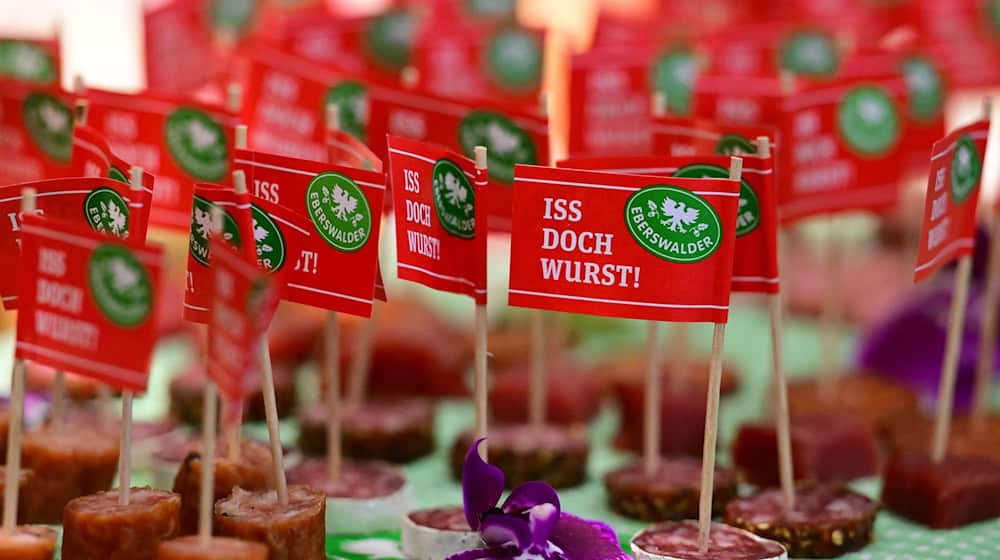
The "Eberswalder" brand is known for its grilled sausages without casings and smoked salami, and is even considered a cult brand from East Germany by some. But after almost 50 years, the traditional sausage factory in Britz near Eberswalde in Brandenburg, north-east of Berlin, is coming to an end. Production will end at the end of February - a shock for around 500 employees. The NGG trade union plans to fire up the barbecue in front of the factory gates this Saturday and organize a "funeral service". The company, which belongs to the Zur-Mühlen Group and thus to the meat giant Tönnies from North Rhine-Westphalia, is closing the sausage factory. However, it does not want to give up the "Eberswalder" brand, but produce it elsewhere in eastern Germany. "There are hundreds of thousands of customers who want it," says a company spokesperson. Numerous brands with a certain cult status in the GDR, such as Halloren-Kugeln, Filinchen-Brot and Bautzner Senf, have survived and can be found on supermarket shelves in the West. However, a number of traditional businesses have been taken over by West German or foreign companies. Two examples: The Bielefeld-based Dr. Oetker Group bought the baking company Kathi from Saxony-Anhalt in 2025. The dishwashing detergent brand Fit has a new owner from Spain. It was announced that Halberstädter Bäcker und Konditoren GmbH in Saxony-Anhalt, known for its stollen, is to be restructured. The ailing traditional bakery filed for insolvency. Will consumers lose their appetite if the "Eberswalder" brand from the East moves? Brand experts are convinced that a traditional brand is more than just a logo and packaging: it stands for origin, history and identity. "We're actually talking about cultural treasures here, so to speak - things that I grew up with, things that have more or less shaped my everyday life," says Oliver Errichiello, Professor of Brand Sociology at Mittweida University of Applied Sciences in Saxony. He sees a loss of trust for East German brands. This has to do with the fact that "East Germans have now learned that most East German brands are no longer backed by East German companies," says Errichiello. "Eastern brands were once small, colorful, likeable beacons of goods that showed what was possible in the new federal states, a piece of identity and Eastern pride, but now it's just a case of eat or be eaten," says Errichiello's colleague, brand expert Arnd Zschiesche, on takeovers of East German companies. Will the name "Eberswalder" remain just a shell of a word? A spokesperson for the sausage manufacturer in Britz, which was taken over by the Zur-Mühlen Group in 2023, has announced that the brand will be produced at sites in Chemnitz, Suhl and Zerbst in eastern Germany in future. The recipe, which is decisive for the taste, will remain unchanged. The majority of the raw materials, such as the pork, are East German raw materials. In January, the company stated the reasons for the plant closure: "Unfortunately, we had to realize that there is no realistic perspective under the given economic conditions." The trade union for food, beverages and catering NGG accused the Tönnies Group behind the closure - which operates as the Premium Food Group - of pursuing a "ruthless yield and market adjustment policy". The German meat market is dominated by a few large companies. With companies in "family hands" there was usually a different awareness and an emotional connection, but this is visibly dwindling, says Uwe Ledwig, chairman of the eastern district of the NGG. Two weeks before sausage production at Eberswalde comes to an end, trade unionists and employees want to bid farewell to a piece of regional history at a protest action on Saturday at 12.05 pm. "When a long tradition ends, it's a painful loss," they say. Copyright 2026, dpa (www.dpa.de). All rights reservedEast German brands in transition
Experts: Brands are more than just logos
The "Eberswalder" brand will also come from Saxony in future
Trade union: painful loss


