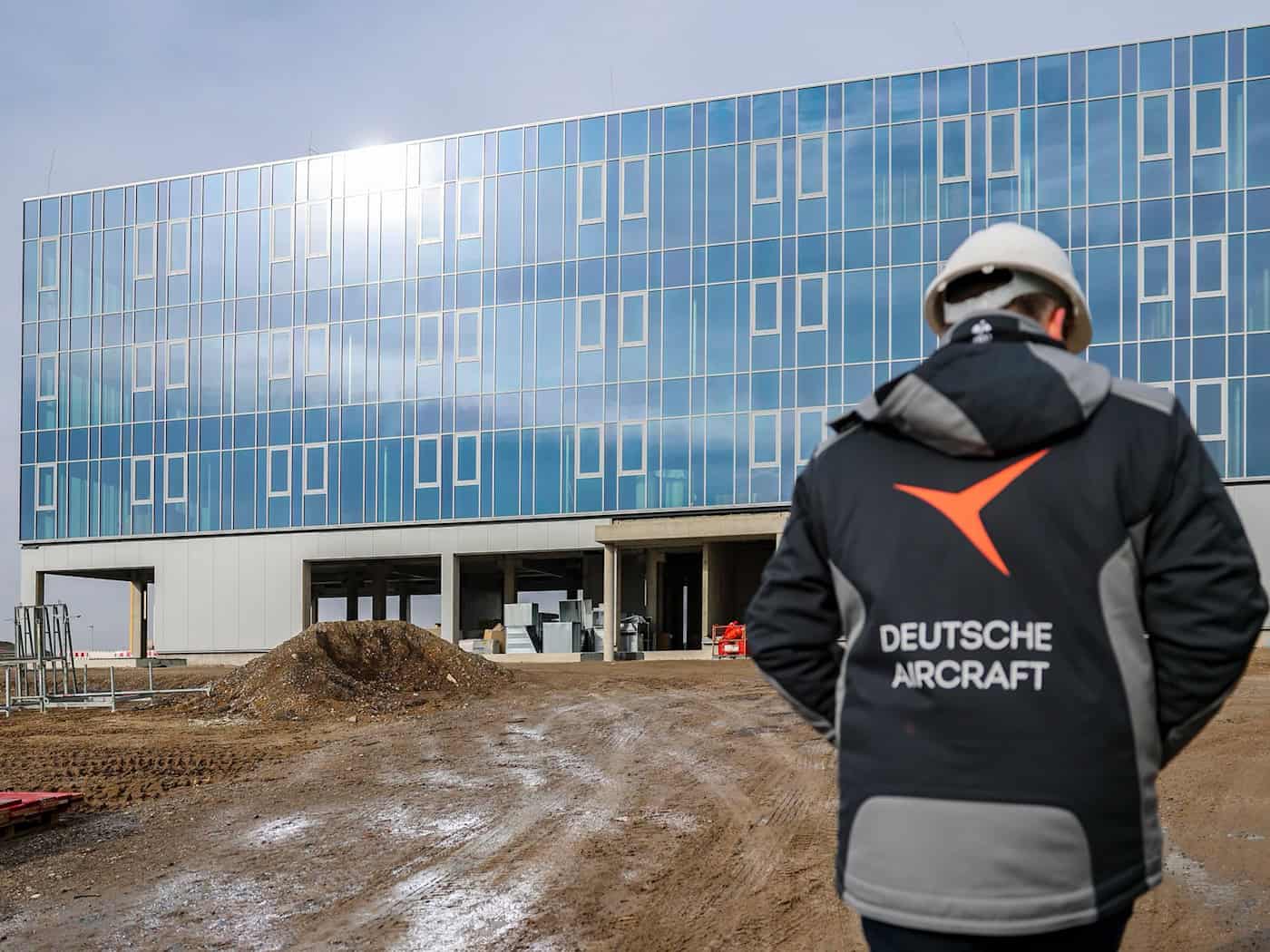
Domestic flights are becoming rarer, tickets are expensive and short-haul flights are particularly criticized from a climate perspective. Despite this, a plant for a new regional aircraft is being built at Leipzig/Halle Airport. How does this fit together - and what does it mean for the region? Air traffic expert Hartmut Fricke definitely sees a future in smaller, more economical aircraft. Modern regional aircraft "could bring about a renaissance in transportation", says the Professor of Aviation Technology and Logistics at the Technical University of Dresden. Traditional short-haul flights with large jets are hardly profitable for many airlines. At the same time, rail and road have recently become less reliable. The search for fast connections between smaller cities is therefore "higher than it has been for a long time". The D328eco, which is being developed by German aircraft manufacturer Deutsche Aircraft and is to be built in Leipzig in future, is aimed precisely at this gap. The turboprop aircraft - a propeller-driven regional aircraft with a turbine engine - is designed for around 40 passengers and consumes significantly less fuel on short routes than larger jets. Today, aircraft that are too large are often used on such routes, says site manager Sebastian Böhnl from Deutsche Aircraft. Smaller aircraft are much more economical for these routes. "The demand for regional aircraft is there." The concept behind it sounds simple: instead of fewer flights with large aircraft, more direct connections with smaller aircraft could be created again - often as feeder flights to international hubs. This would also benefit smaller airports. Before the coronavirus pandemic, Leipzig/Halle Airport in particular offered many domestic German routes - a business model that has developed significantly less well since the pandemic because airlines are shifting their capacities more towards hubs and tourist destinations. This is exactly where the concept of smaller, more efficient aircraft comes in. They are intended to make routes that are no longer profitable with larger aircraft profitable again. The potential market goes beyond traditional regional airlines. Authorities, coastguards and military users are also potential customers. Whether regional aircraft actually make a comeback depends heavily on climate protection. The new aircraft is designed for sustainable aviation fuels (SAF), which produce significantly less CO2 than conventional kerosene. However, this fuel will remain in short supply for years to come. "In the next five years, a shortage of SAF is unavoidable," says Fricke. Nevertheless, he believes that a fixed blending quota makes more sense than higher CO2 taxes, because emissions would then fall due to cleaner fuel - and not primarily because flying would become more expensive and demand would fall. The aircraft manufacturer sees itself primarily as a technology driver here. "We manufacture the product and naturally hope that this will get the ball rolling," says Böhnl, adding that it is a classic "chicken and egg principle": without new aircraft, there is no demand for climate-friendly fuel - and without sufficient fuel available, climate-friendly air traffic will remain limited. For Saxony, the plant is one of the largest aviation projects in decades. The Leipzig/Halle site is the only production location for the aircraft. In the future, up to 48 aircraft per year are to be built here - roughly one every five days. Around 150 highly qualified specialists are needed in assembly alone. The build-up is taking place in stages because the requirements in aviation are particularly high. Errors cannot simply be rectified during operation. "An aircraft can't stop in the air and pull over like a car," says Böhnl, which is why the company is initially relying on experienced employees from the industry and is preparing retraining programs with chambers and employment agencies in parallel. Parts of the added value are already created in Saxony: the cabin floors for the aircraft come from Elbe Flugzeugwerke in Dresden. At the same time, the industry is considered to be labor-intensive - around 80 percent of the work in aviation is still done by hand, significantly more than in the highly automated automotive industry. The plant is visibly taking shape on the construction site. The logistics technology is being installed in the halls and the assembly stations will be equipped from June. The first test aircraft assembled in Leipzig is scheduled for completion in the first quarter of 2027. Although the unusually cold weather in recent weeks has delayed construction by a few weeks, the schedule is still being adhered to, says Böhnl. In the long term, the site is designed for growth. Expansion areas are already planned on the site in case demand increases. An aircraft plant is planned "for 30 years plus", says Böhnl. The market - and climate policy - will ultimately decide whether the plan works out. Nevertheless, the project is already a signal for Leipzig/Halle as an aviation location: in a shrinking segment, the region is focusing on a new, more efficient generation of aircraft. Copyright 2026, dpa (www.dpa.de). All rights reservedHope for new connections
Climate issue remains crucial
Industrial project with an impact for the region
Production designed for decades