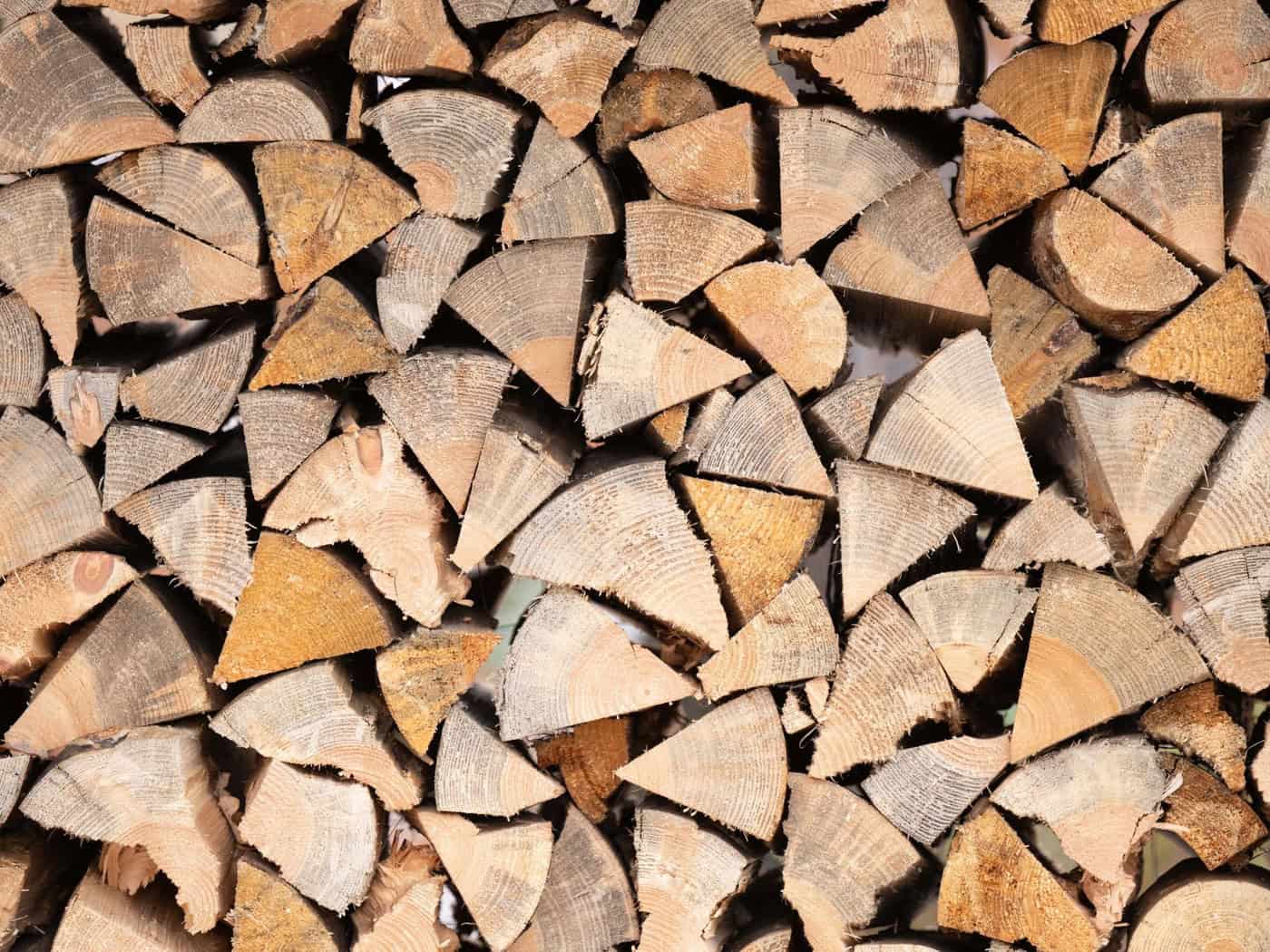
Firewood fresh from the forest has become more expensive in Saxony in recent years. “Currently, the price of wood is very high overall, which is also affecting the price of firewood,” explains Marco Horn of the state-owned enterprise Sachsenforst in response to a query from the German Press Agency. Sachsenforst sells about 1.5 million cubic meters of roundwood each year, of which about 100,000 cubic meters is firewood. Demand for firewood is relatively stable, fluctuating by about ten percent annually. Firewood is primarily sold to end consumers, Horn explains. It is sold “ex-forest road,” meaning the buyer must arrange for transportation themselves. Before the wood goes into the stove, the logs—which are usually two meters long to begin with—must be cut into smaller pieces and split, and the logs must then dry for up to three years. It’s more economical for stove owners to harvest the wood themselves in the forest. “This means that, after receiving instructions from the responsible forest district manager, fallen trees are delimb, cut into pieces, and transported out of the forest,” explains Horn. “Felling trees by private individuals is generally not permitted in state forests due to the associated risks.” Anyone who buys firewood directly from Sachsenforst in the forest now has to pay significantly more than they did a few years ago. In 2020, softwood cost an average of about 18 euros, and hardwood 35 euros—both net per cubic meter. By 2026, the prices are expected to be around 47 euros (softwood) and 56 euros (hardwood). Sachsenforst currently cites roughly 55 euros for spruce and pine and 70 euros for beech as a “rough guide”—net prices per solid meter in each case. Those who harvest the wood themselves can save an additional 15 to 20 euros. “Currently, the overall price of wood is very high, which is also affecting the price of firewood.” Data from the Federal Statistical Office confirms this trend. Compared to 2020, firewood and wood pellets were a good 45 percent more expensive in 2025. However, this price increase is lower than that for natural gas (91 percent) and heating oil (89 percent). Prices vary not only by tree species but also by region. According to Horn, firewood often costs slightly more in urban areas than in rural regions. In principle, interested buyers can purchase firewood in all forest districts. In addition to the state-owned enterprise Sachsenforst, there are also other suppliers such as municipalities, church parishes, and private forest owners. Last year, private households in Germany used approximately 33 million solid cubic meters of energy wood for heating. This is according to calculations by the Thünen Institute, as cited by the Federal Environment Agency. While more than 70 percent of the wood is burned primarily as logs, However, the comparatively convenient use of wood pellets has gained ground despite rising prices. While consumption stood at 2.24 million metric tons in 2020, it had already reached 3.65 million by 2025, as the Pellet Institute explains. A further increase is expected in 2026. According to figures from the chimney sweep trade association, there are more than one million boilers in Germany that are fueled by firewood, wood pellets, or wood chips. According to the 2022 Microcensus, wood-fired heating systems provide heat in 4.1 percent of households. This ranks them fourth—albeit by a wide margin—behind gas (55.9 percent), oil (18.8 percent), and district heating (15.1 percent). Wood-fired heating systems were thus more widespread than heat pumps (2.7 percent), as an overview from the Federal Environment Agency shows. In addition, there are 11.7 million stoves and fireplaces that heat individual living spaces. Their number has increased; in 2016, there were still about 11 million. Copyright 2026, dpa (www.dpa.de). All rights reservedDo-it-yourselfers can save money
Here’s how much more expensive fresh firewood has become
Wood Ranks Fourth Nationwide