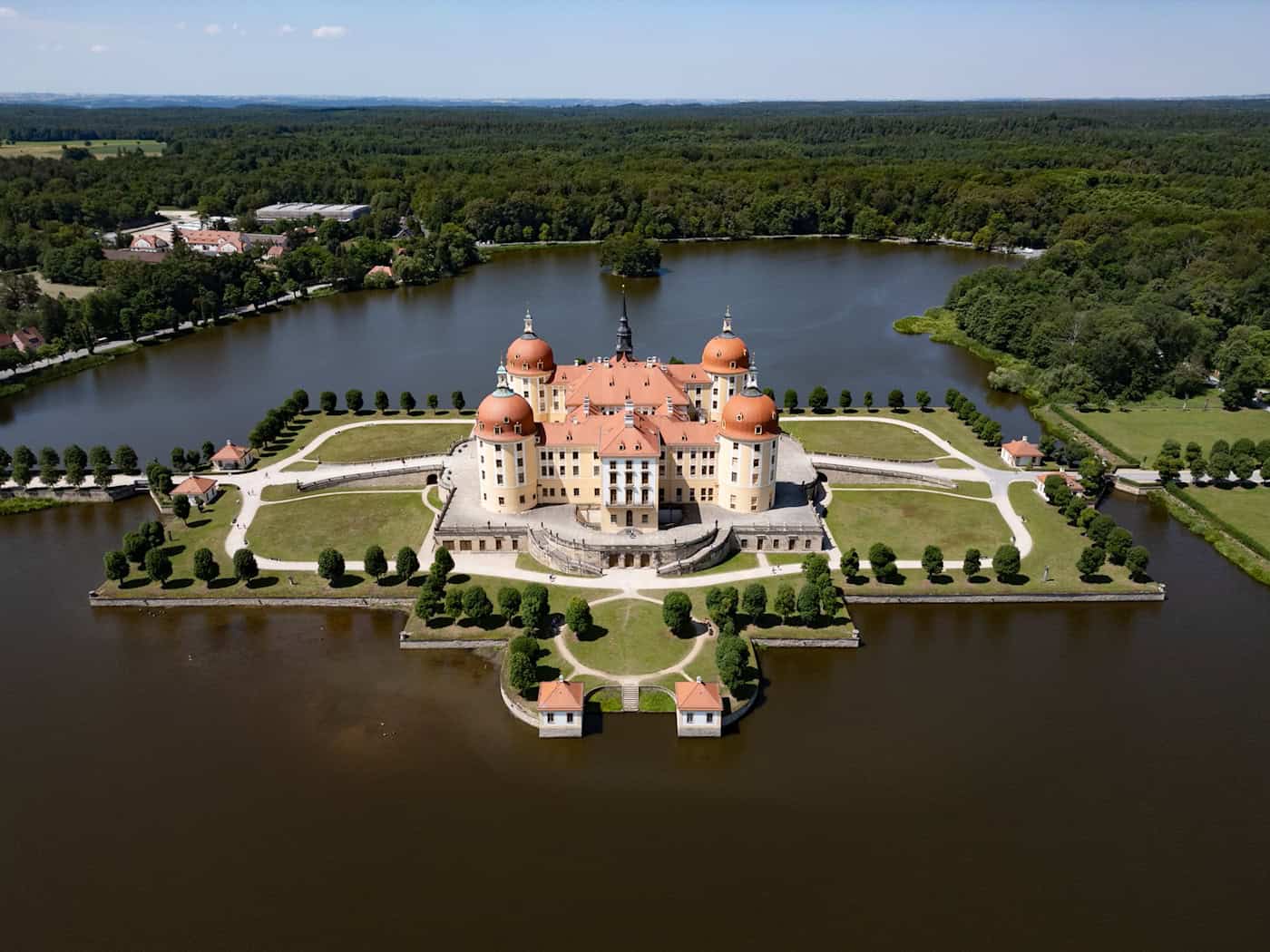
The Moritzburg Festival remains a hotspot for musicians from all over the world. For the finale this weekend, the renowned festival pulled out all the stops once again. The Moritzburg Academy, featuring more than 40 young artists from 19 countries, performed at Dresden’s Kulturpalast, with its orchestra concert themed “Everything Flows.” The performance sparked a wave of enthusiasm among the audience. In fact, just as with the festival as a whole, the finale was a musical journey through river landscapes. The program opened with Bedřich Smetana’s “The Moldau,” conducted by the academy’s chief conductor, Josep Caballé Domenech. An arrangement of Richard Wagner’s “Song of the Rhine Maidens” from the opera “Götterdämmerung” and Robert Schumann’s “Rhenish Symphony” also tied in with the program’s title. “The Blue Danube” by Johann Strauss followed as an encore. The Dresden premiere of a work by Mozart was awaited with particular anticipation. Of his Concerto for Oboe and Orchestra in F major, only the first movement had survived as a fragment. Oboist and composer Gotthard Odermatt had completed it. Albrecht Mayer performed the virtuosic work and received enthusiastic applause. Incidentally, the principal oboist of the Berlin Philharmonic also declared his love for Dresden. He said he really enjoys coming to the city on the Elbe—and not just because of the Frauenkirche. It starts with the friendly doorman at the Kulturpalast: “I don’t know anything like that in Berlin.” At the finale, the festival, directed by cellist Jan Vogler, took stock of its success. A total of around 7,300 visitors attended the 20 events. That corresponds to a capacity utilization rate of 97 percent. “A year full of inspiration—the performances of the younger generation and the enthusiasm of our wonderful audience were particularly impressive,” Vogler emphasized. In doing so, he was alluding not least to the fans’ “resilience to the weather.” For while the first week featured performances on balmy summer evenings on the north terrace of Moritzburg Castle in a wonderful atmosphere—at times accompanied by the chattering of waterfowl in the castle pond —the music festival had to move to Moritzburg Church during the second half due to rain, where the closing concert also took place on Sunday. This year, Vogler had named the concert programs after rivers. The Elbe kicked things off on August 7 with works by German composers. The “Seine” concert featured French masters, while “Neva” focused on Russian music. The journey also took the audience to America. “From the Hudson River to the Mississippi” featured works by Philip Glass, George Gershwin, and even a song by Elvis Presley. The festival brought together 26 soloists who performed together in various ensembles. At the same time, the Moritzburg Festival Academy, under the direction of Vogler’s wife Mira Wang, focused on nurturing young musical talent. Each year, participants are selected from hundreds of applicants through an international application process. Thanks to sponsors and private sponsorships, all academy students in Moritzburg receive a full scholarship. Jan Vogler launched the festival in 1993 together with his brother Kai and his fellow cellist Peter Bruns. The idyllic location just outside Dresden soon became a magnet for chamber musicians from all over the world. The founders had drawn inspiration from the Marlboro Festival in the U.S. There, too, participants present the results of their work in concerts following a rehearsal period. Copyright 2026, dpa (www.dpa.de). All rights reservedA musical journey through river landscapes
Concerts at 97 Percent Capacity
Unpredictable weather in the second week
“River Concerts” from the Neva to the Mississippi
Talents from Around the World at the Moritzburg Festival Academy