

Autonomous Travel Across the Fields: Dresden Research Team Launches High-Tech Project
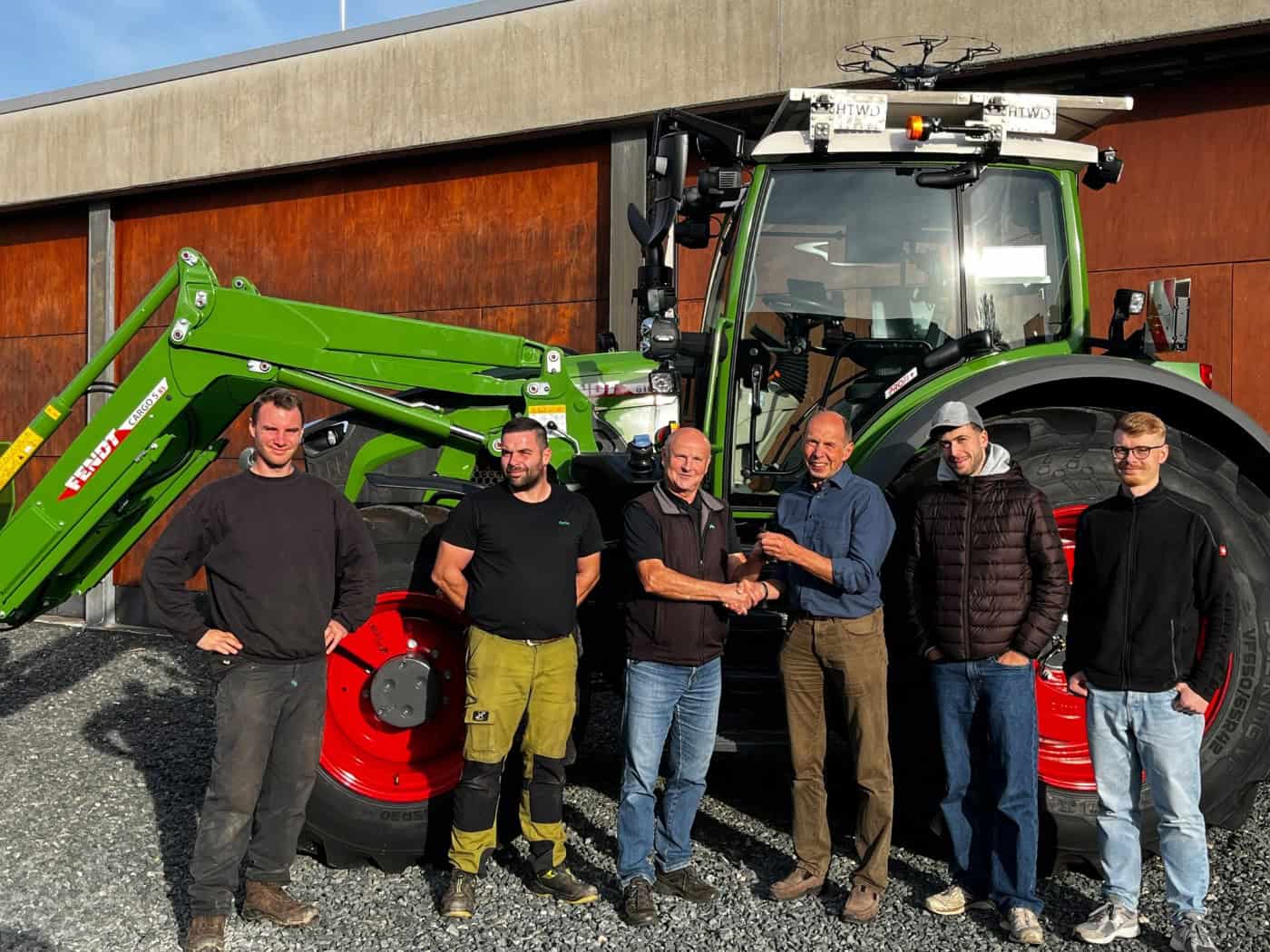
Dresden. A high-tech tractor that directly links agriculture and aviation is now rolling across the fields on the Pillnitz campus. The Dresden University of Applied Sciences (HTWD) has put a specially equipped test tractor into service, from whose cab roof drones can automatically take off and land.
The new Fendt 618 tractor is designed to offer new opportunities to students and researchers in the Faculty of Agriculture, Environment, and Chemistry. The German Research Foundation (DFG) and the State of Saxony funded the project through the “State-Owned Large Equipment” program with a total of 400,000 euros.
Patented Drone Platform on the Cab Roof
At the heart of the specialized technical equipment is a takeoff and landing platform for unmanned aerial vehicles on the tractor’s roof. The HTWD holds an international patent for this in-house development. The drones survey crop stands and agricultural land from the air, while the tractor simultaneously records operational data from the tractor itself and its attachments.
All measurement and image data are digitally consolidated and can be analyzed together. This enables researchers to investigate complex processes in the field. For example, they determine wind direction and wind speed based on movements in the crop stand in order to apply fertilizer more precisely. In addition, drone technology can be used to measure exactly how much pesticide drifts due to wind.
Practical Training and Autonomous Procedures
In teaching, the vehicle is used in practical exercises. There, students test modern assistance systems, digital interfaces, and automated driving functions directly in the field.
In research, the focus is on its application in precision farming methods, communication between the tractor and implements, and autonomous workflows. The vehicle is technically capable of performing many tasks largely autonomously. Since legal requirements currently still mandate a driver in the seat, the system is initially being used to research and further develop automated processes under real-world conditions.