


AI to help store nuclear waste safely for a million years
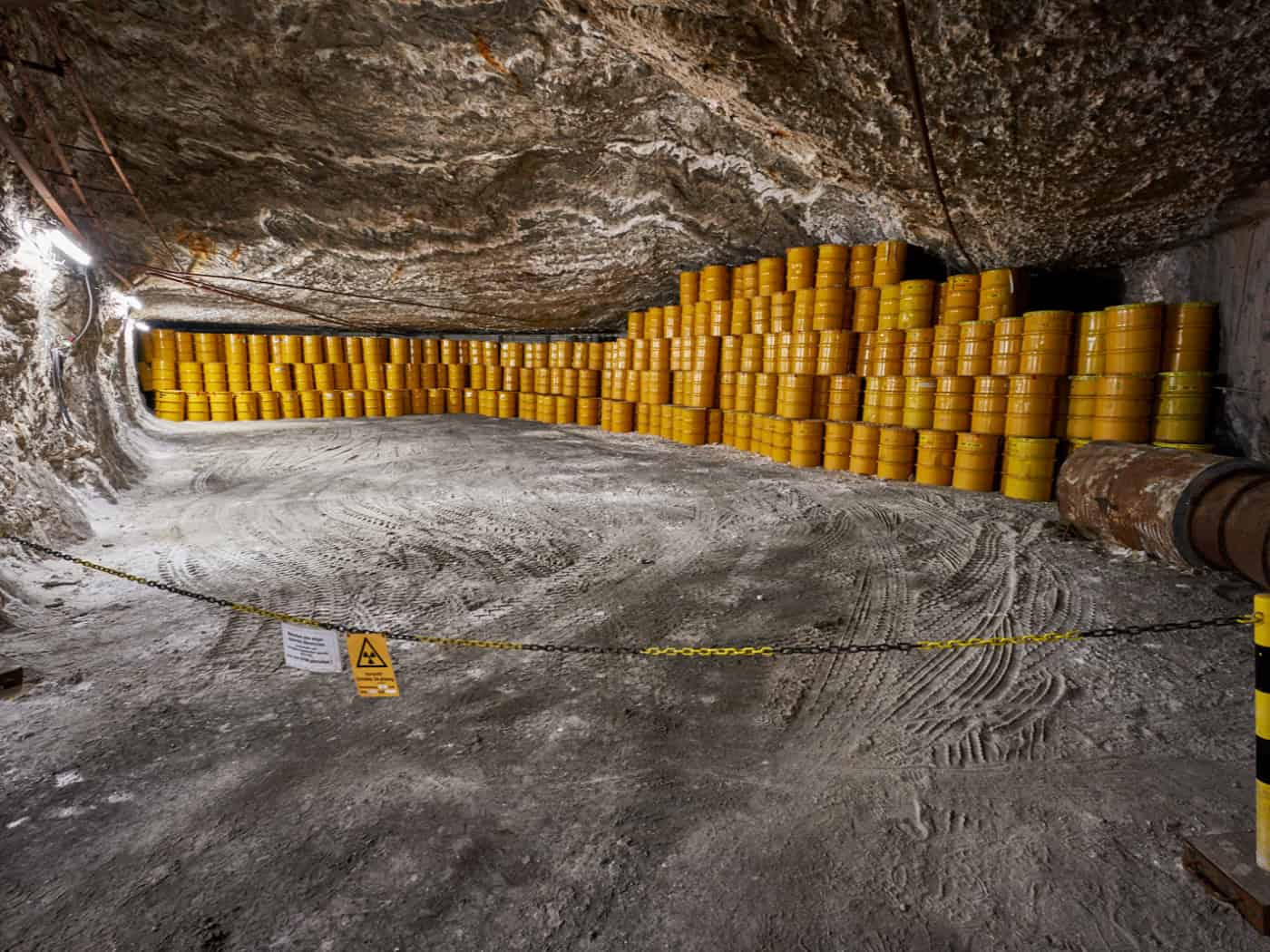
High-level radioactive waste remains dangerous for extremely long periods of time. Far longer than human civilizations have existed. How can such a legacy be stored safely? Researchers at the Helmholtz-Zentrum Dresden-Rossendorf (HZDR) and the Center for Advanced Systems Understanding (CASUS) in Görlitz are looking into this question. The Federal Ministry for the Environment, Climate Protection, Nature Conservation and Nuclear Safety is funding their MALEK project with around 1.7 million euros.
MALEK stands for "Machine learning for complex hydrological-geochemical processes in crystalline waste disposal". Put simply, it is about predicting how radioactive substances move and change deep in the rock - over periods of up to one million years.
Germany is currently facing a major environmental challenge: the safe final disposal of highly radioactive waste. Even after the phase-out of nuclear energy, the waste that has already been produced is still present and must be secured responsibly. A nationwide search process is currently underway to find a site that will permanently and reliably shield the nuclear waste from people and the environment. This search is necessary because the existing interim storage facilities are only designed for a limited period of time. However, high-level radioactive waste remains dangerous for very long periods of time, sometimes for hundreds of thousands of years.
KI meets geology
Long-term forecasts of this kind are extremely challenging. Traditional computer simulations reach their computational limits because they have to take into account enormous amounts of data and very long periods of time. MALEK therefore combines physics-based models with machine learning. So-called surrogate models are used. These are trained using complex simulations and can replace them in many cases. They deliver results much faster and remain bound to the known physical and chemical rules.
"One example is sorption, i.e. how strongly radionuclides bind to rocks or minerals," explains project manager Prof. Vinzenz Brendler from the HZDR. Radionuclides are radioactive atoms. "The stronger this bond is, the slower radionuclides can spread underground." These models will also be used to calculate more precisely how radioactive substances spread through the rock and change chemically in the process.
Traceable and verifiable
Speed alone is not enough. The models must be transparent, verifiable and reproducible. Dr. Attila Cangi from CASUS emphasizes that MALEK wants to develop robust and reproducible modelling approaches to enable more reliable safety assessments for potential repository sites. This includes extensive comparative calculations and uncertainty analyses. Experience from underground research laboratories such as Äspö in Sweden or Grimsel in Switzerland will be incorporated.
The focus is on so-called crystalline host rock such as granite. Although this rock is usually very dense, it has cracks and fissures through which water can circulate. It is precisely these structures that determine how dissolved substances move underground and make predictions particularly complex.
In addition to the HZDR and CASUS, the TU Bergakademie Freiberg and the TU Darmstadt are also involved. The project started at the beginning of 2026 and will run for three years. The aim is to further improve the scientific basis for the safety assessment of a deep geological repository.

