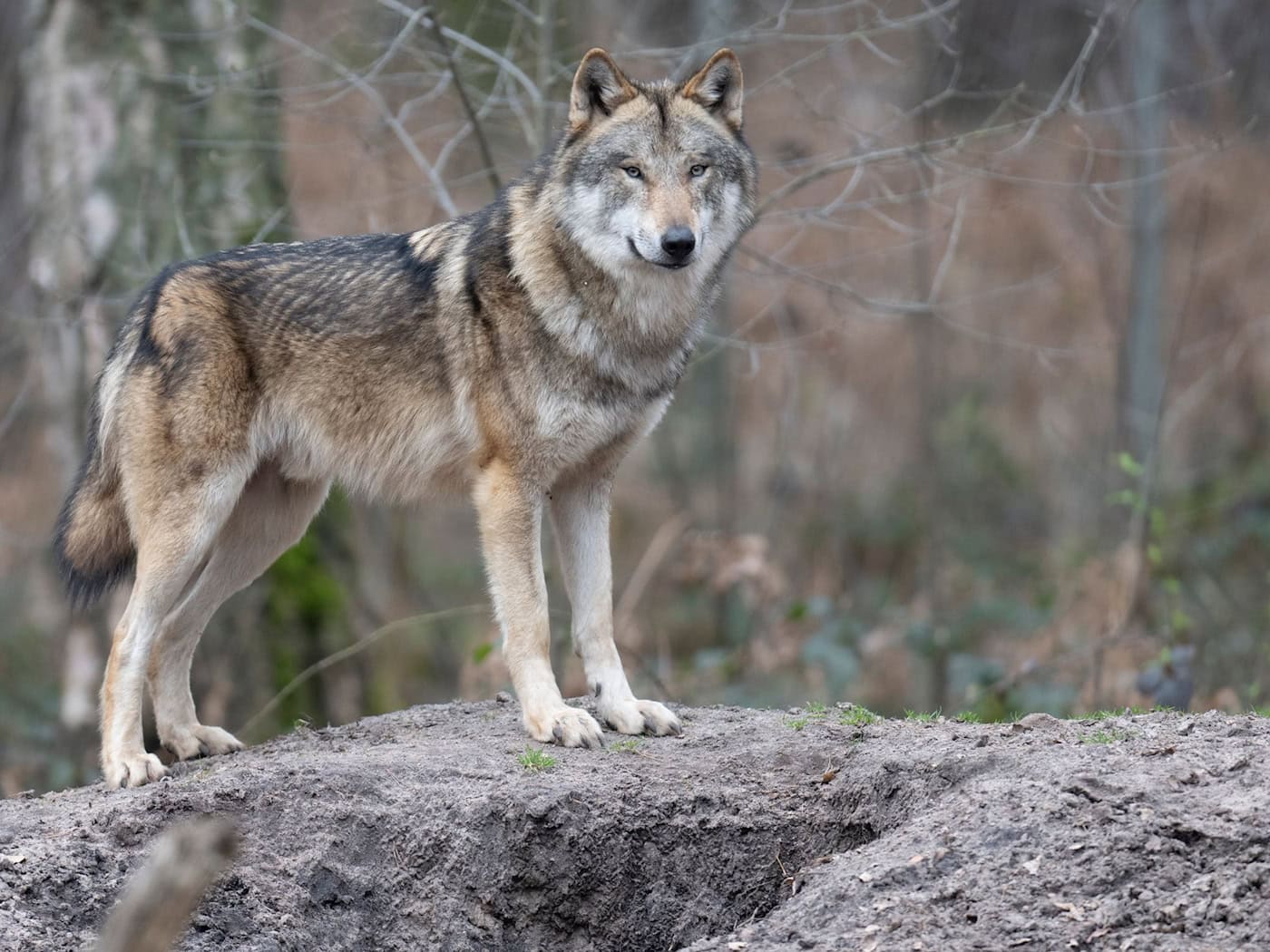
In order to protect grazing animals, the Bundestag has decided to make it easier to shoot wolves. With the votes of the black-red coalition and the AfD, the animal was included in hunting law. Among other things, this makes it easier to kill so-called problem wolves - for example, if they have climbed fences and killed sheep. However, after the Bundestag, the Bundesrat must also give its approval before the new regulation can come into force. The number of wolves in Europe has almost doubled within ten years. By 2023, there are expected to be 20,300 animals. According to the authorities, more than 1,600 wolves were recently counted in Germany alone - mainly in the area from Lower Saxony to Saxony-Anhalt, Mecklenburg-Western Pomerania and Brandenburg to Saxony. While animal rights activists welcome this development, grazing livestock farmers are concerned about the safety of their sheep, goats and calves. Federal states should therefore be allowed to permit hunting in regions where the wolf is in a favorable "conservation status", meaning it has a good chance of surviving in the area in the long term. The hunting season would then be from July 1 to October 31. If a wolf has killed or injured grazing animals, it may even be shot regardless of the conservation status and hunting season. In addition, the federal states can designate areas where hunting wolves is necessary because grazing animals are difficult to protect from them - for example on alpine pastures or dykes. Nevertheless, the state will continue to provide financial support for protective measures such as fences or livestock guarding dogs. The German Hunting Association welcomed the new regulation, while the Working Group for Rural Agriculture sees it as at least a "small contribution" to the protection of grazing animals. The Nature and Biodiversity Conservation Union (NABU), on the other hand, called on the federal states to stop the law in the Bundesrat: "Species protection in Germany must not be sacrificed for actionist symbolic politics," said NABU wolf expert Marie Neuwald. "Instead of blanket culls, we need comprehensive herd protection." The coalition rejected the criticism from conservationists. "The suffering of grazing animals, which are often killed in the bloodlust of wolves, has nothing to do with animal welfare," said the chairman of the Bundestag Committee on Agriculture, Hermann Färber (CDU). SPD MP Isabel Mackensen-Geis also emphasized that the wolf remains a protected species despite its inclusion in the Hunting Act. Despite this, the Greens and the Left Party voted against the law in the Bundestag. Green MP Harald Ebner accused the coalition of undoing decades of work on species protection. Sascha Wagner from the Left Party complained: "Blanket shooting quotas will not reduce the number of predators, and the bill will not prevent wolves with problematic behavior either." Copyright 2026, dpa (www.dpa.de). All rights reservedClear rules for wolf hunting
Environmentalists deplore "symbolic politics"
Criticism from the Greens and the Left