


Flapping Ears and Air Conditioning in Their Trunks: Animals Brave the Heat
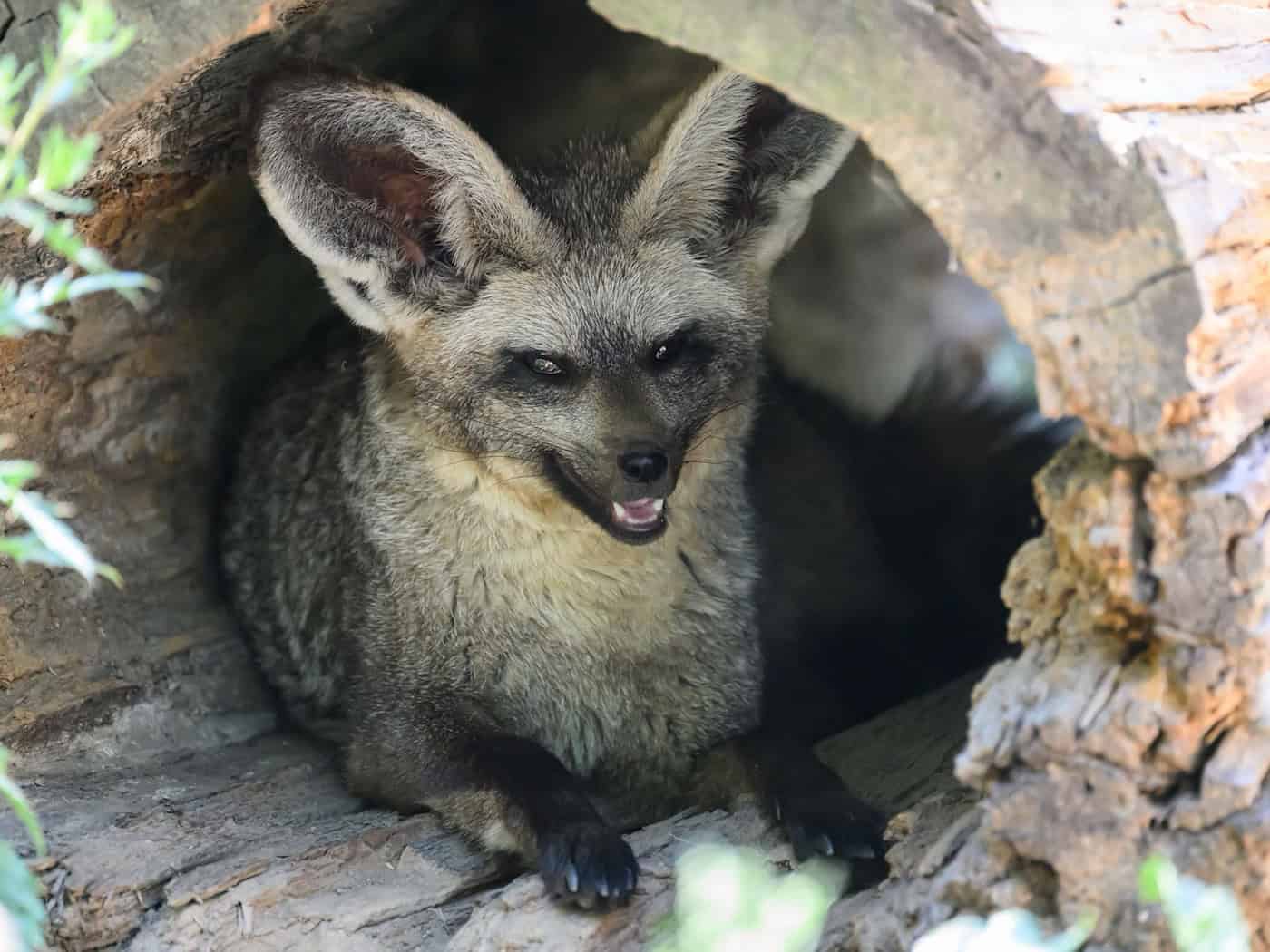
Anyone visiting a zoo these days, with temperatures soaring past the 30-degree mark, can expect to find the animals in a siesta mood. While the red pandas at the Dresden Zoo use at least the cooler morning hours for a few stretching exercises, things come to a complete standstill as soon as the sun is at its peak. “The animals aren’t stupid,” says biologist Thomas Brockmann. They simply retreat—into burrows, caves, or stables—but always into the shade. “They feel just the same as we do,” says Evelin Schröder, a predator keeper at Dresden Zoo. The animals move very little, drink a lot, and doze away in the shade. “Rest is the best remedy on days like these.” To help the pandas cool off a bit, she sets up a water sprinkler in their enclosure. Although the animals don’t particularly like the water spraying up from below, it does at least bring some coolness to the tree where the animals like to hang out. Brockmann, who is responsible for species conservation and environmental education at the Dresden Zoo, points out a fundamental difference in how animals cope with heat. Animals native to tropical regions or desert areas are morphologically and physiologically better adapted to high temperatures than those from cooler climates. Brockmann points to the enclosure of the graceful dik-diks, small antelopes from Central and West Africa. Their distinctive noses act like air conditioners, cooling the air they breathe. “In their native habitat, they have to cope with temperatures of 40 degrees Celsius,” Brockmann reports. Their trunk-like, elongated nose contains a lot of mucous membrane with numerous tiny blood vessels. Breathing generates evaporative cooling, which cools the blood. “Dik-diks don’t really have a problem with heat. Nevertheless, when designing their enclosure, we make sure they can find shade.” Shade is important for all animals, whether they live in the savannas of Africa or in colder regions. When it comes to physique, there is definitely a north-south divide. Animals in warm regions generally have larger ears that can effectively dissipate body heat. The elephant is considered a prime example. “It uses them like a fan to waft fresh air over itself,” says Brockmann. But the ears also serve another function. Unlike the rest of the elephant’s body, the skin in this area is very thin and has a dense network of tiny blood vessels. When the elephant fans its ears, the blood is cooled at the same time. For other animals, the only option in the heat is to flee—even if, as in the case of the Seychelles giant tortoises, this doesn’t happen at sprinting speed. The reptiles, named Hugo 2 through 4 in Dresden, move more like they’re in slow motion. Nevertheless, in the wild, they have to keep an eye on the sun’s position. Even though they really like the heat, they have to be careful, says Brockmann. “Their shells can get extremely hot. If they don’t make it into the shade fast enough, they’ll suffer heat exhaustion and die.” Since animals like cats and dogs don’t sweat and thus can’t regulate their body temperature, they have to cool themselves in other ways—such as by panting. The spoon-nosed dog—a resident of Africa—also has oversized ears. It uses them to dissipate body heat. In the Arctic, a spoon-nosed dog couldn’t survive simply because of its ears—they would freeze off. That’s why Arctic animals like the arctic fox have very small ears. “The closer you get to the equator, the larger and longer these body appendages generally become,” says Brockmann, articulating a biological rule. Among animals of the same species, those from colder regions are larger than their counterparts from warmer climates. Here, the ratio of body surface area to volume is important. Smaller animals are more likely to freeze to death in the cold. Small penguins living near the equator wouldn’t stand a chance in Antarctica—which is why the largest penguin species, the king penguin, is native to that region. Brockmann does not want to venture a prediction about how climate change will affect animals or whether they will all succeed in adapting. There are also species that benefit, says the biologist. As an example, he points to the stork, originally a classic migratory bird. Nowadays, more and more storks are no longer flying to Africa or the Iberian Peninsula but are instead spending the winter here. “They find food, don’t have to expend energy flying, and also have the quickest access to the best nesting sites.” Other animals have long since arrived in our latitudes as “animal immigrants.” Golden jackals, which originate from the Middle East, have already been spotted in German forests. Even the Egyptian goose no longer really needs the Nile to survive. A completely different species has to cope with the heat at the zoo in its own way—the zookeepers. The Dresden Zoo is responding with adjusted work schedules; the keepers start earlier and can thus clean most of the enclosures before the midday heat sets in. Unfortunately, humans do not have their own built-in air conditioning—aside from sweating. In this regard, dik-diks are far ahead of them. Copyright 2026, dpa (www.dpa.de). All rights reservedRest is the best remedy for the heat
Small antelopes, big impact: evaporative cooling through breathing
Heat can also be a danger to animals
Animals are adapting to climate change

