


Off and on: Lynx Juno is back
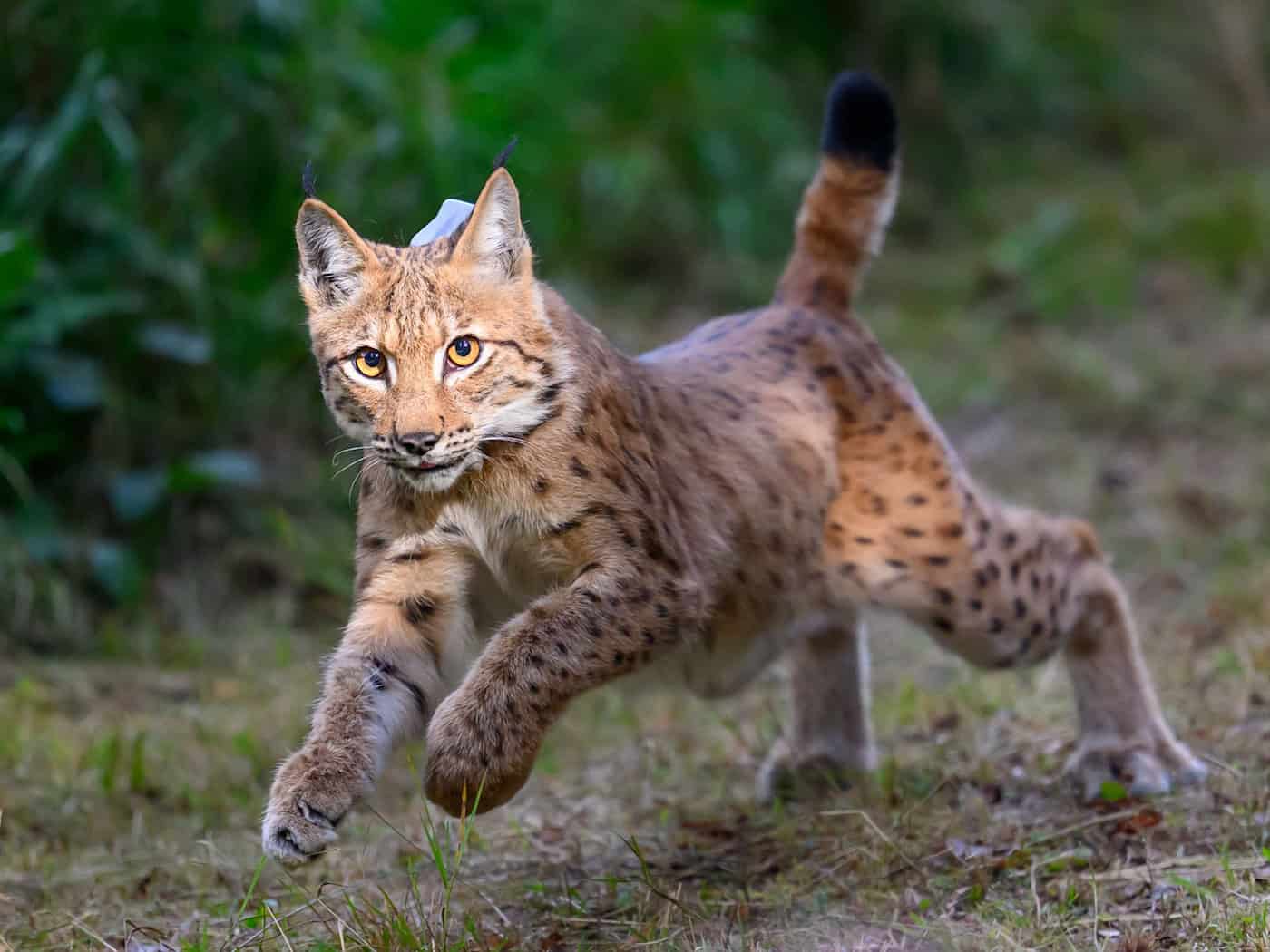
Saxony's lynxes are back in full numbers. In March 2024, Kuder Juno was the first lynx to be released into the wild in Saxony's reintroduction program near Eibenstock in the Westerzgebirge mountains and disappeared six months later - since then, there has been no evidence of him. Now the State Office for the Environment, Agriculture and Geology has given the all-clear. After increasing evidence of a lynx in the area between Freiberg, Flöha and the German-Czech border since the beginning of the year, there is now certainty. "With the help of a genetic analysis, the animal could be individualized: It is clearly the male lynx Juno," the state office announced. The genetic material was provided by Juno's urine, which was found in the snow not far from the border near Flaje. The animal had previously been caught in photo traps. Based on the fur pattern, this had already pointed to Juno. "The fact that Juno has been found again after such a long time is a small sensation for everyone involved in the project and for lynx monitoring in Saxony. The last clear evidence of Juno came from a photo trap from the Eibenstock forest district in September 2024," the state office announced. Juno had stayed there after being released into the wild. What caused the two-year-old lynx to wander off is unclear. Normally, lynx stay where there are already other lynx, it is said. In Juno's case, it was the two female lynxes Alva and Nova, whose territories overlapped with Juno's. "If Juno stays in the central and eastern Erzgebirge, he will probably not contribute to further offspring in the small core population in the Westerzgebirge during this year's mating season from February to April," the state office added. Different matings between the lynxes are desirable in order to carry the genes of as many released animals as possible into the next generation and thus preserve genetic diversity in the population. The authority also provided information about the other lynxes. Nova migrated to Thuringia at the beginning of 2025. Photographs document her stay near Jena. Alva mated with Chapo in spring 2025 and gave birth to two cubs - a male and a female. She continues to roam extensively through her territory in the Eibenstock region. The same applies to Chapo. Charlie still wears a GPS transmitter collar and regularly sends data from the Czech Republic. Freya migrated towards Zwönitz a few weeks after being released into the wild in late summer 2025 In Saxony, a total of seven lynxes have been released into the wild in the Eibenstock forest district since spring 2024. One of the animals is no longer alive. Lynx Anton was run over just a few weeks after being released into the wild. This year, two more lynx are to be released into the wild in late summer. Copyright 2026, dpa (www.dpa.de). All rights reservedAuthority speaks of small sensation
Project hopes for the widest possible gene pool

