


More storks in Saxony despite lack of offspring
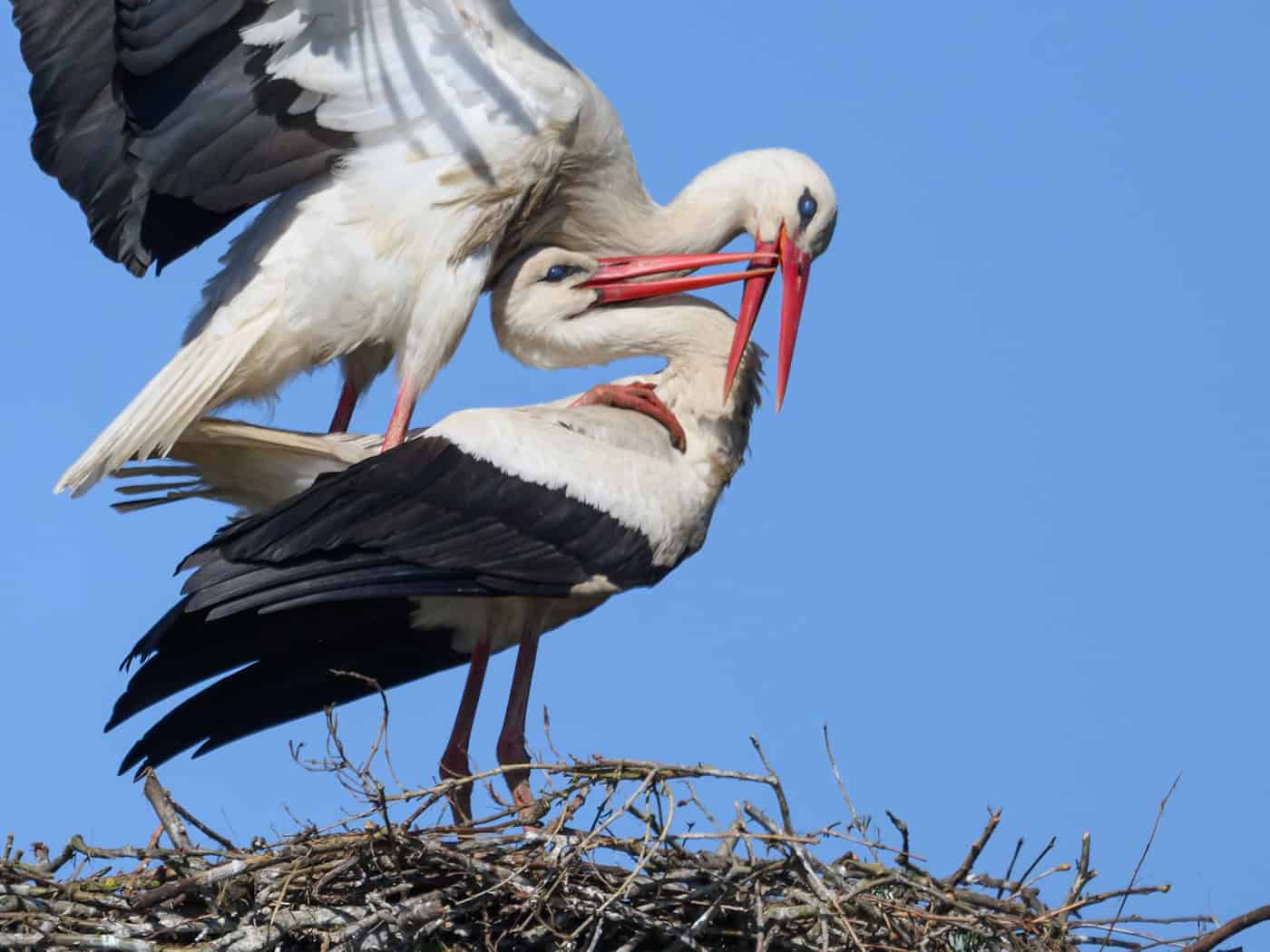
The birds are rattling on the masts and chimneys in Saxony's villages again: The white stork breeding season is in full swing. According to recent surveys by the Nabu Nature Conservation Institute in Dresden, the population of the birds is at its highest level since records began. According to preliminary figures, there were 495 breeding pairs in the Free State last year. As data from the volunteer regional supervisors in the Meißen and Chemnitz areas is still missing, the final total is likely to be even higher than 500, says Sylvia Siebert from the Nabu regional association Dresden-Meißen. By comparison, there were 471 breeding pairs in 2024. According to initial observations, the trend is also continuing in the current season, says Siebert. However, the breeding season is still ongoing and the first chicks hatched at the beginning of May. This shows a trend in Saxony that is continuing throughout Germany. "In the last 10 or 15 years, the population has risen sharply, especially in western Germany, so that we now have around 14,400 pairs across Germany," says stork expert Kai-Michael Thomsen from the Michael Otto Institute of Nabu in Schleswig-Holstein. In Saxony, according to the experts, most storks are found in the Upper Lusatian Heath and Pond Landscape and the Oder-Neisse Valley, followed by the Röderaue (Meißen district) and the Leipzig Lowland Bay. According to the Dresden Nabu experts, there has been a steady increase in the number of storks in the state, especially since 2018. Measures such as the rewetting of wet meadows, the renaturation of bodies of water and also the measures taken by energy suppliers to mitigate the power pylons that are popular with the large birds for breeding have contributed to this, explains Siebert. According to the energy supplier Sachsen Energie, storks occupying pylons is a common occurrence. This can be life-threatening for the animals, as the nests can catch fire. The power lines could also be damaged, says a spokeswoman. There are currently 22 stork nests on electricity pylons in the district of Bautzen alone. In each case, it is decided individually whether the animals can safely remain on the installations. Despite the increasing number of breeding pairs, experts believe that Saxony's storks are not reproducing sufficiently to ensure the survival of the population. On average, fewer than two stork chicks per breeding pair currently survive. At least 2.4 would be needed. According to the experts, the reason for the lack of offspring is that too many of the chicks are dying - in particular due to a lack of food. In order to secure the remaining offspring, the breeding birds throw chicks out of the nest or even eat them. Accidents also occur with fledgling storks during their first flights. But if there is a lack of offspring, where do the many storks in Saxony come from? According to experts, the so-called "western migrants" are responsible for the "stork boom". This refers to white storks that do not fly to Africa via the Middle East to spend the winter like the birds that were previously native to Saxony. Instead, the birds migrate to western or south-western Europe in winter. There, the birds not only encounter increasingly mild winter conditions as a result of climate change, but also open garbage dumps, which serve as a source of food for them, as ornithologist Jan Schimkat from Nabu's Dresden Nature Conservation Institute explains. The phenomenon has existed for years and means that the animals find more food, reach sexual maturity earlier and also return from their wintering grounds earlier than their African wintering counterparts, says Nabu expert Sylvia Siebert from Dresden. In addition, fewer animals die as the route is less strenuous. As a result, Saxony's native storks are increasingly being displaced by the "western migrants". This is because their breeding territory is shifting further and further east from western Germany. However, this is not healthy or sustainable. Not only is the food on the garbage tips unhealthy. The animals also often eat plastic waste or rubber bands, which they mistake for worms, and die as a result. The EU and Spain have been at loggerheads for years over the problem of open garbage dumps. This is because the member state is actually obliged by the EU Waste Framework Directive to secure and cover its waste dumps. The EU Commission therefore took Spain to the European Court of Justice in June last year. The proceedings are ongoing. So it is an environmental sin of all things that is causing the German "stork boom". Nabu ornithologist Siebert is concerned about what might happen if Spain eventually fulfills its duty and the garbage tips cease to be a source of food for storks. Experts then expect that the population could collapse as drastically as it has grown in recent years. This is because the white stork was threatened with extinction in Germany until well into the 1980s. Copyright 2026, dpa (www.dpa.de). All rights reservedConditions for storks have improved since 2018
Lack of offspring worries conservationists
Why Spain's garbage tips are causing a "stork boom"
What happens when landfill sites cease to be a source of food?

