


Rare species, old trees: Wechselburg Park in a changing climate
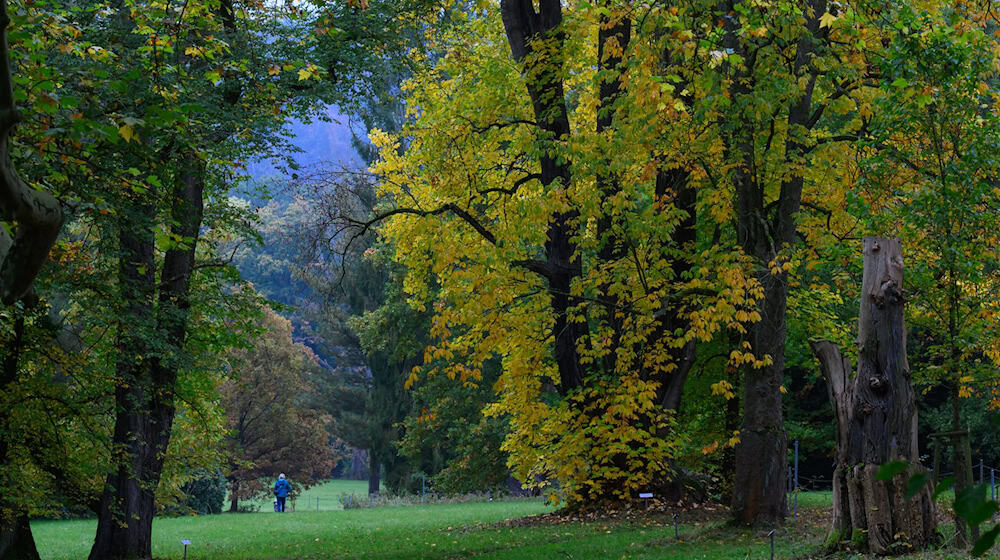
When you enter Wechselburg Castle Park, you can hardly escape the magic of nature. Rare tree species such as the tulip tree, trumpet tree and cake tree ensure this. "There are trees from all over the world in the park, people have always experimented with planting here," says Tomas Brückmann, spokesman for the Landesstiftung Natur und Umwelt (LaNu). It is the largest owner of the 18-hectare park in the district of Central Saxony and ensures that nature conservation is maintained. It enjoys special status as a fauna-flora habitat and bird sanctuary. The castle park is to be made fit for the future by 2027 as part of the "Adaptation of urban and rural areas to climate change" funding program. The Federal Ministry of Construction is providing the municipality of Wechselburg with 1.4 million euros for this purpose. A local consultant is coordinating the project on their behalf. "A park maintenance plan and a rain and climate concept are currently being drawn up," explains consultant Max Krombholz. The aim is to reconcile monument protection and nature conservation. "It's not that easy, because the monument authority often has different views to the nature conservation authority," adds Brückmann. The park in Wechselburg surrounds the castle and a late Romanesque basilica. It was created around 1830 by the noble Schönburg family in the style of an English landscape park in the valley of the Zwickauer Mulde. Its winding paths lead through old, valuable trees and species-rich meadows. Every year, thousands of visitors come to Wechselburg to experience the beauty of the park. Many people make a pilgrimage here to the "Lourdes Grotto" with a statue of Mother Mary. The oldest trees already have 200 years "on their bark". The park is home to extensive areas of oak and beech trees, alluvial forest and meadows. Another special feature is the occurrence of ostrich ferns. The area provides a habitat for around 20 bird species such as the tree falcon, black woodpecker, kingfisher, red kite and red-backed shrike. Otters and bat species such as the greater mouse-eared bat and the pug bat also have their roosts here. With the demolition of an old building, the park regained another area that is now used as a butterfly meadow, for example for the protected "Spanish flag". "Insects have become rare," says Brückmann. Frequent mowing would irretrievably destroy the butterflies' habitats. This is why LaNu called for a participatory campaign years ago. Under the slogan "Doll's houses wanted - flowering meadows for Saxony's butterflies", owners of meadow areas were given tips on how they can preserve the butterflies' habitats with gentle mowing. Another protected species poses a particular challenge for the "park keepers" of Wechselburg. This is because beavers like to nibble on the old beech trees in the castle park. The trees had to be protected, as the Landesstiftung Natur und Umwelt is also responsible for traffic safety. Falling trees must not pose a danger to visitors to the park. The park also illustrates the diversity of climate problems. On the one hand, it is threatened by flooding from the Mulde, while on the other, trees suffer from drought stress during drought. In addition to complying with legal requirements, the foundation is primarily concerned with giving nature the space it needs to develop. "That may seem messy to some people," says Brückmann, referring to critical voices from the public: "People don't always agree with what we do in the park for aesthetic reasons. There are discussions when we leave the meadows longer and only mow them twice. And there is criticism when we leave the deadwood in the wooded areas." From next Friday to Sunday, the State Foundation and the Saxon Heritage Society are hosting the third Saxon Parks Seminar. The aim is to carry out maintenance work on trees and shrubs. A new Weymouth pine will be planted on the large castle meadow at the opening. It is a replacement for the more than 200-year-old Weymouth pine, which fell over in a storm a year ago. "Wechselburg Castle Park is a cultural and historical gem and is also a valuable habitat for many strictly protected animal and plant species. We must preserve this together," says Foundation Director Robert Clemen. Copyright 2025, dpa (www.dpa.de). All rights reservedFederal funding for climate change adaptation program
Habitat for around 20 bird species and rare animal species
Beavers have damaged the trees in Wechselburg Park
Weymouth pine toppled in storm gets a successor

