

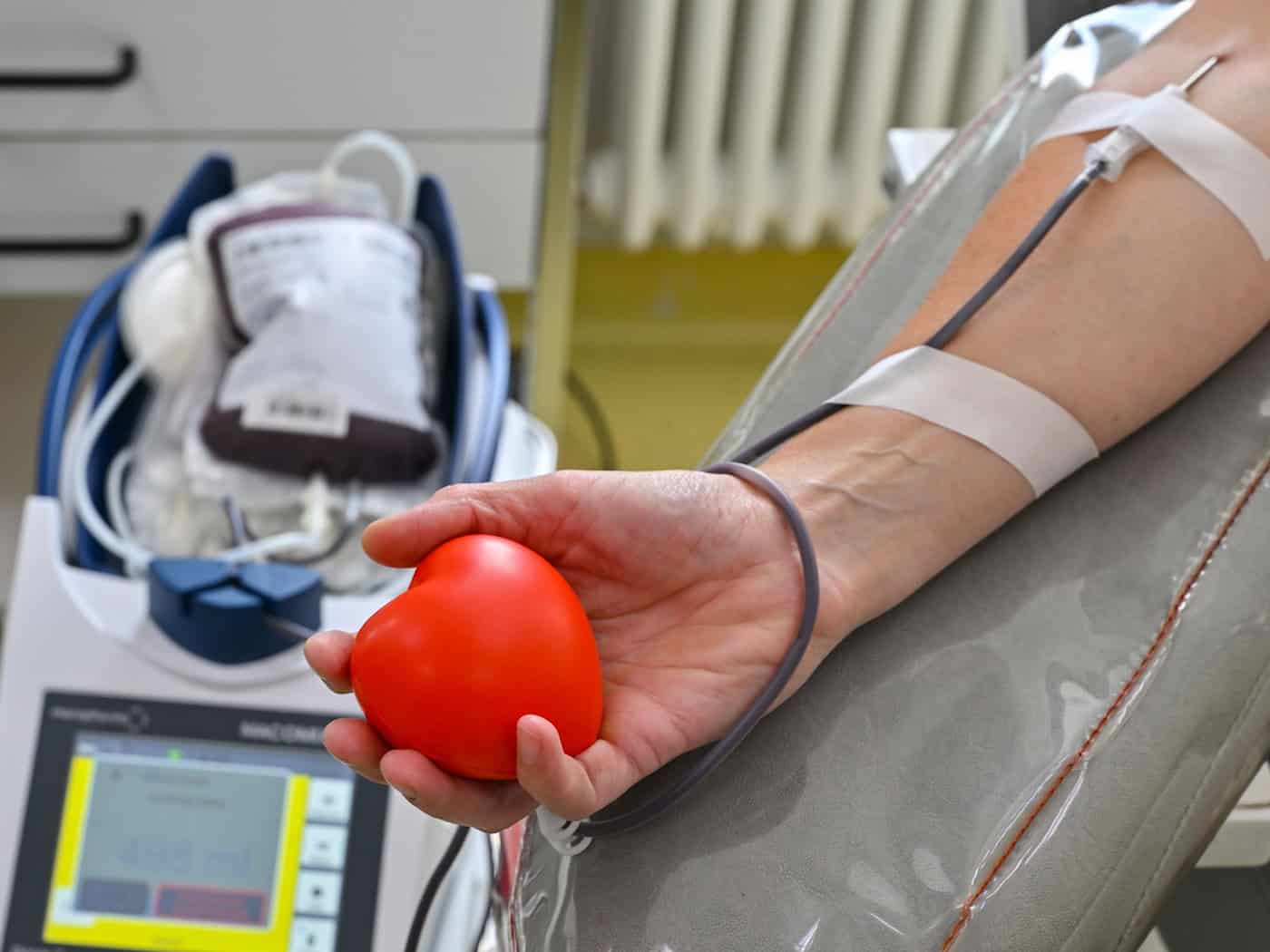
In Saxony, blood supplies are running low due to the heat. Currently, supplies are sufficient for two to three days, the German Red Cross (DRK) Blood Donation Service Northeast reported in response to an inquiry. Normally, however, there are five days’ worth of supplies. According to press spokesperson Kerstin Schweiger, the fact that fewer people donate on hot days was evident during the heat wave at the end of June: About a quarter of the scheduled blood donation appointments were not kept that week. Overall, blood donations remain at a stable but low level. Schweiger advises those who are unable to donate blood on hot days to book an appointment for cooler days. Since heat waves are expected to become more frequent in the future, the German Red Cross (DRK) is now considering the implications. However, the current decline in blood donations is also due to summer vacation, during which many regular donors are away on vacation. A blood donation is separated into three components: red blood cells, platelets, and plasma. This means that a single donation can help up to three people. However, blood does not have a long shelf life. According to the DRK, platelets have a shelf life of only four days, which is why large stockpiles cannot be built up. To ensure that the demand for blood donations can continue to be reliably met, Schweiger says there must be no further significant declines. To meet the demand in Saxony, 650 blood donations are needed per workday. Even though there are currently sufficient supplies for all blood types, blood types 0 Rh-negative and 0 Rh-positive are particularly rare. Donors with the rare blood type 0 Rh-negative qualify as universal donors for all blood types. Copyright 2026, dpa (www.dpa.de). All rights reservedHeat and summer vacations compound the short shelf life of donations
Few donations of blood type 0


