Logo Die Sachsen News
News / Salud

There is a shortage of doctors in many places in Saxony - trend towards part-time work

There is a shortage of doctors in many places in Saxony - trend towards part-time work
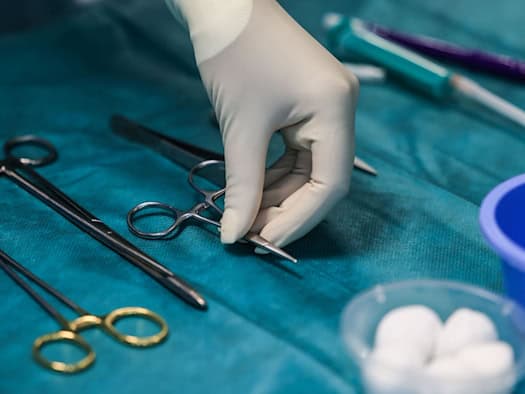
There is a shortage of specialists in many places in Saxony. (Symbolic image) / Photo: Sebastian Kahnert/dpa/dpa-tmn
From: DieSachsen News
GP and specialist practices are understaffed in many regions of Saxony. The east and southwest of the state are particularly affected. The responsible ministry diagnoses a slight improvement.

There are gaps in medical care in many places in Saxony. This is made clear by figures from the Ministry of Health, which Left Party parliamentary group leader Susanne Schaper asked about in the state parliament. According to the figures, the need is particularly great in eastern Saxony and south-western Saxony. There is also a shortage of GPs. In ten of Saxony's 48 planning areas, there is or is likely to be a shortage. The data refer to January 1 of this year.
More from this category

Need particularly high in south-west Saxony and east Saxony

The level of care as a statistical measure indicates how well the population in a region is cared for. It compares the actual number of available doctors with the theoretically defined demand. As a rule, we speak of undersupply if the level of care is below 75 percent. But even values above this are considered problematic.

There are too few GPs in many planning areas, for example in Annaberg-Buchholz, Aue, Auerbach, Döbeln, Frankenberg-Hainichen, Marienberg, Reichenbach, Stollberg, Werdau, Zwickau, Dippoldiswalde, Görlitz, Hoyerswerda, Löbau, Riesa, Weißwasser, Oschatz and Torgau. The Werdau planning area only has 69.1 percent coverage. In purely mathematical terms, around 308 additional GPs are needed in addition to the existing 2,607.

Supply rate varies regionally

The situation looks better for ophthalmologists, but the supply rate in Stollberg is only 67.7 percent. The supply problem with gynecologists is new in Riesa-Großenhain. There is an undersupply of ENT specialists in Freiberg (70.2), Löbau-Zittau (74.2) and in Saxon Switzerland (71.5). There are problems with dermatologists in seven regions. The situation is most acute in Löbau-Zittau with a level of only 15 percent.

There is a shortage of pediatricians, particularly in Freiberg. In the field of urology, this applies to Bautzen, Riesa-Großenhain and Löbau-Zittau. Another major problem is the shortage of staff in child and adolescent psychiatry, where the level of care throughout Saxony is 85.9 percent. Southern Saxony (69.7 percent) and Upper Lusatia-Lower Silesia (55.9 percent) have acute shortages.

Number of doctors has risen - but there are still gaps

Saxony's Minister of Health Petra Köpping (SPD) also attributes this to a change in attitude towards the profession. In 1995, there were around 13,000 doctors working in Saxony; in 2024, there were almost 20,200. Many thousands more doctors sounds good. However, today they have different expectations of their work and their life outside of work.

Köpping understands the desire for a work-life balance and manageable working hours. It is in line with social developments. "As a result, we still have to deal with demand and unfilled doctor's posts despite the rising number of doctors. But the good news is that our long-term measures are starting to take effect." She also sees improvement in sight for GPs.


Saxony has adopted measures to "treat" the problems

In order to tackle the shortage of doctors in the outpatient sector, Saxony has focused on training and offered significantly more study places - also to attract more doctors to rural regions. "There are currently 435 young people enrolled in the study programs. Over the next few years, 10 to 30 more GPs will arrive in rural regions every year," the Minister calculated.

Köpping recalled a whole bundle of measures that have already been taken - from the "20-point program - medical care 2030" to the rural doctor quota and the rural dentist quota. Applicants are no longer subject to the numerus clausus if they commit to working in the province for several years after completing their studies. However, telemedicine or models such as the mobile ophthalmology practice in south-west Saxony could also help.

"No one should have to wait months for an appointment."

For Left Party politician Susanne Schaper, one thing is certain: "It shouldn't be a question of where you live as to whether you can get medical help quickly. No one should have to wait months for an appointment." A look at the age structure of the population and the medical staff makes it clear that bottlenecks are also looming in areas where there are no or only small gaps today.

According to Schaper, the rural doctor quota alone will not be enough. Among other things, she points to further training, a reduction in bureaucracy and better remuneration. Degrees obtained abroad must be recognized quickly. More study places are also needed. "Studies should be open to a larger number of suitable people - it should no longer be the A-level grade that is decisive for admission, but also social skills."

Copyright 2026, dpa (www.dpa.de). All rights reserved

The translations are automated with the help of AI. We look forward to your feedback and your help in improving our multilingual service. Write to us at: language@diesachsen.com.

Topics :

Sachsen News
Article from

Sachsen News

Sachsen News is responsible for the content itself. The platform's code of conduct applies. The platform checks and treats content in accordance with the legal requirements, in particular the NetzDG.

Social Media