


Tiny blind fish discovered in a well
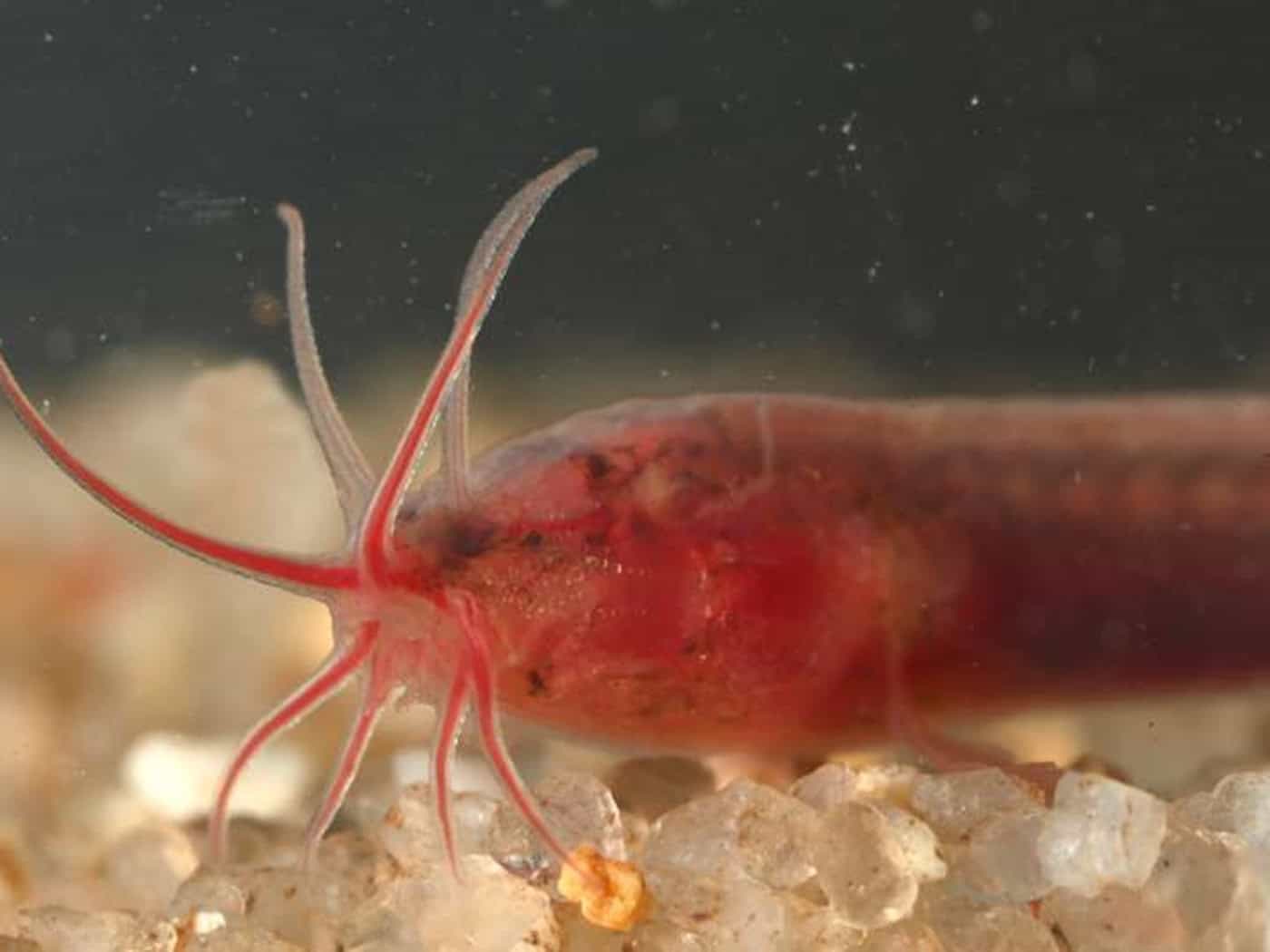
In north-east India, a doctoral student carries water from a well she dug herself. When she pulls up the bucket, a tiny, pale fish swims in it. Only 20 millimetres long, transparent, with severely reduced eyes. And, as it later turns out, without a bony skull roof. A creature that science had never seen before.
Dr. Ralf Britz from the Senckenberg Natural History Collections in Dresden was on a research trip to the region in 2024 when he was shown the fish. “I was immediately sure that this was a very special find,” he says. Together with his Dresden colleague Dr. Amanda Pinion and Indian researcher Velentina Kangjam, he has now scientifically described the fish. The new species is called Gitchak nakana and belongs to the loaches, a group of small freshwater fish.
Where hardly any light falls
The new species lives in an aquifer – a water-bearing rock layer deep underground. These habitats are almost inaccessible to researchers. Wells are often the only connection to them. “Of the more than 37,000 known fish species worldwide, only about one percent have adapted to life underground,” explains Britz. “Of these, in turn, less than ten percent live in aquifers. These fish are extremely rarely discovered – and when they are, it usually happens by chance.”
Gitchak nakana shows typical features of life in darkness: severely reduced eyes, pale, almost transparent skin and enhanced non-visual senses. But one detail surprises even experts: the fish has no bony skull roof. The brain is protected from above only by skin. “A unique feature among known loaches,” says the Dresden ichthyologist. Using micro-CT scans – a high-resolution X-ray technique – the team was able to examine the skeleton of the fish in detail.
A milestone for research
“The tiny, blind loach is so unique that it represents not only a new species but even a new genus,” adds Britz. India ranks fourth worldwide in the diversity of subterranean fish species. Until now, such animals were mainly known from the north-east and south-west of the country. Gitchak nakana is now the first known groundwater fish from the Assam region.
The discovery suggests that there may be many more unknown species living in the aquifers of this region. “The discovery suggests that this region may host a highly specialized subterranean fauna that now needs to be explored.”
Original publication:
Publication: Britz, R., Marak, W.K., Velentina, K. et al. A miniature, subterranean, blind cobitid loach, Gitchak nakana, new genus and species, is the first groundwater-dwelling fish from Northeast India. Sci Rep 16, 7746 (2026).

