


Investigation shows: Ahr flood 2021 was not an isolated case
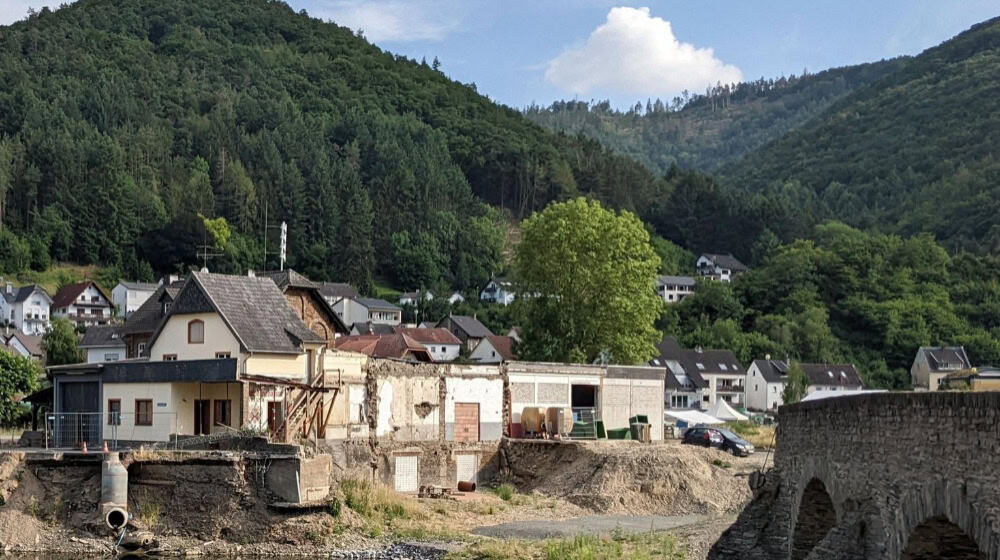
The images from July 2021 are etched in our minds. Houses that sank into the water. Cars washed through the streets like toys. 134 people died in the flood disaster in the Ahr valley. Many people wondered afterwards whether such an extreme event could ever happen again. Researchers at Leipzig University have now found an answer. Such massive floods are not an exception in the Ahr Valley, but are repeated regularly.
A team led by Prof. Dr. Christoph Zielhofer has examined drill cores from the riverbed of the Ahr. These soil samples contain the history of the river. The researchers found traces of at least four extreme floods over the past 1,500 years. In addition to the disaster of 2021, these included the well-known floods of 1910 and 1804 as well as a previously unknown event from the 5th century AD. The Helmholtz Centre for Environmental Research (UFZ) in Leipzig and the Leibniz Institute for the History and Culture of Eastern Europe (GWZO) were also involved in the study.
Previous hazard models were not sufficient
"Our study shows that high-energy flood events in the Ahr valley in the range of centuries to millennia are not the exception, but the rule," explains study leader Zielhofer. The sediments examined document the catastrophic flood of 2021 and the two historical extreme floods of 1804 and 1910, the Leipzig geographer continues. The researchers also found a previously unknown flood event from the 5th century.
The problem with the previous warning models was easy to explain. They only took into account measurements from the second half of the 20th century onwards. What happened before that was ignored. As a result, the forecasts before 2021 significantly underestimated the actual danger. Dr. Ulrike Werban from UFZ Leipzig adds an important detail. "The sedimentological data in combination with near-surface geophysical findings show that the floodplain of the Ahr is characterized by deposits of high-energy flood events," says the geophysicist. Medium or smaller floods, on the other hand, leave no traces in the deposits.
Danger looms, especially in summer
The researchers have also evaluated historical records. Dr. Martin Bauch from the Leipniz Institute GWZO combed through documents dating back to the Middle Ages. His findings are surprising. "The occurrence of extreme floods in the Ahr Valley shows no clear connection with the hydroclimatic history of Central Europe," explains the environmental historian. What is striking, however, is that the historically documented extreme flood events in the Ahr Valley occur particularly in the summer months.
There is a physical reason for this. In summer, the air can absorb more water vapor. This increases the likelihood of extreme precipitation. The study has just been published in the journal "Earth Surface Processes and Landforms". It shows how important it is to look to the past in order to predict the future. Only those who know what happened in the past can better assess what could happen in the future. The results of the Leipzig researchers enable a reassessment of such flood risks.

