


Turtles in Germany: 14 of 15 species are not native
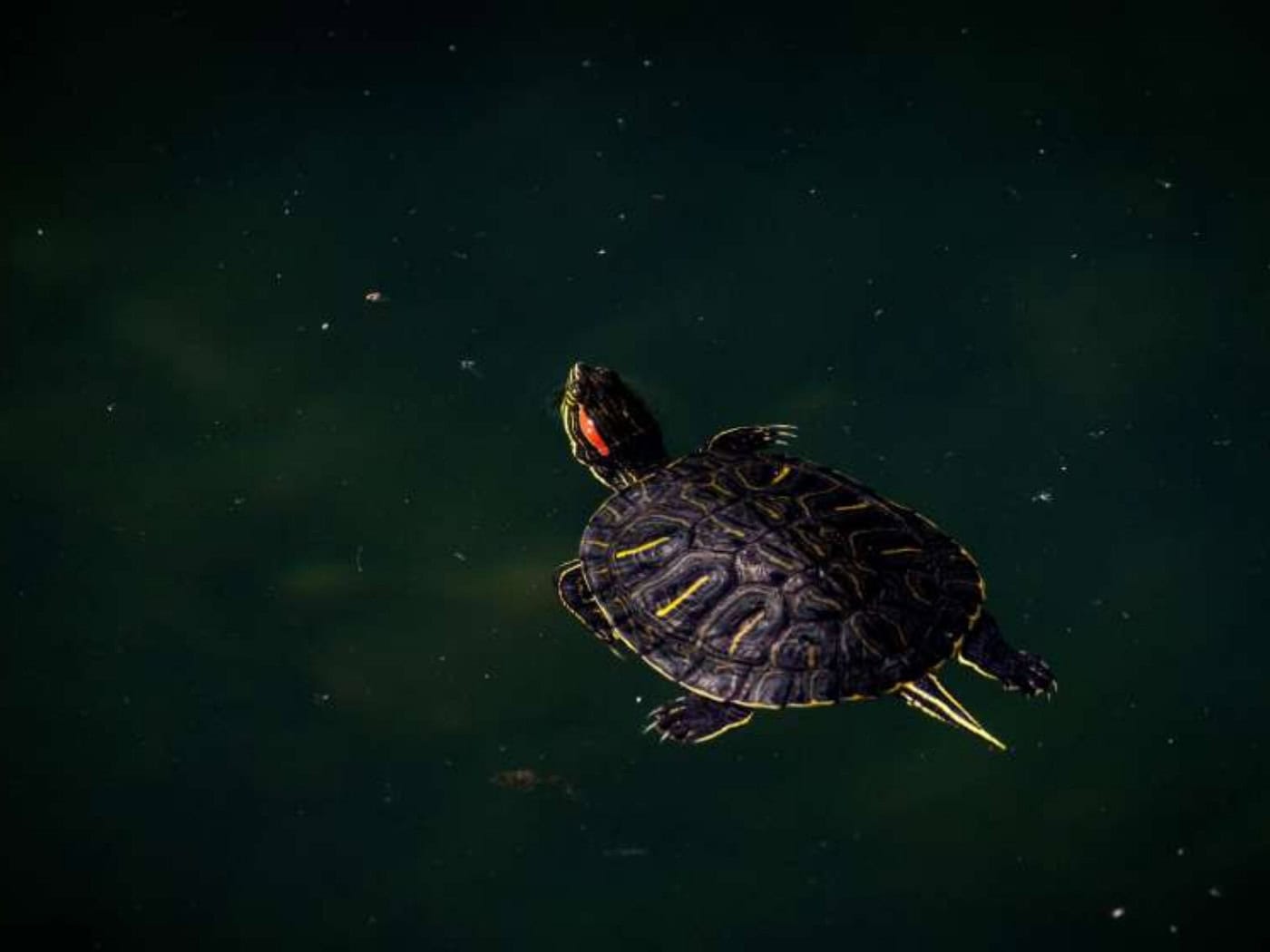
Many people are delighted by this sight: a turtle in an urban pond. A beautiful piece of nature, many of them might think. But they’re wrong. In most cases, the animal in the pond is not part of the natural ecosystem, but an abandoned pet. This is shown by a new study on turtles in Germany that has just been published.
Researchers from the Senckenberg Natural History Collections in Dresden, together with colleagues from the Museum für Naturkunde in Berlin, investigated which turtle species actually occur in Germany. For their analysis, the team evaluated 1,770 turtle records from scientific publications and citizen science projects.
Of the 15 species of aquatic turtles documented in the wild, only one is native – the European pond turtle. All 14 other species were introduced, mostly by people who abandoned their pets.
The ornate tortoise, an animal traded by the millions
By far the most common species is the North American lettered tortoise. It originates from the Mississippi region of the United States and has been sold worldwide by the millions as a pet since the 1950s. This species accounts for about 70 percent of all recorded turtle sightings in Germany. “In 2016, Trachemys scripta was added to the EU list of invasive species. This introduced turtle has also established itself in Germany and is found in numerous bodies of water,” explains Dr. Melita Vamberger of the Senckenberg Natural History Collections in Dresden.
Although the European pond turtle is considered a native species, With the exception of a few populations in Brandenburg, however, many of today’s populations can also be traced back to releases.
Its distribution is particularly striking. Most animals are found in cities and suburban areas around Hamburg, Frankfurt, Stuttgart, Munich, or in the Ruhr region. In eastern Germany, there is a larger concentration only around Berlin and sporadically near Leipzig. The researchers see this as clear evidence that many of the animals were originally kept as pets and later released.
“This pattern confirms a close connection between the animals’ distribution and human presence. It strongly suggests that human activities – particularly the release of pets – play a decisive role,” says lead author Hedi Schloddarick, who co-authored the study as part of her undergraduate research.
Climate change could exacerbate the problem
So far, three of the 14 non-native species have permanently established themselves in the wild and are reproducing independently. So far, only the lettered tortoise has been officially classified as invasive – that is, as seriously harmful to the native ecosystem. But the researchers warn: That could change. “Due to climate change, more species could successfully reproduce in the future, possibly spread, and have a greater impact on native ecosystems,” explains Vamberger. Rising temperatures could make it easier for other species to reproduce permanently in Germany and colonize new habitats.
That is why the team at Senckenberg has launched the “AquaSchild” project. There, researchers, government agencies, animal and nature conservationists, and educational institutions are working together on solutions for managing non-native species. The team is also calling for public participation. Turtle sightings can be reported via the iNaturalist platform as part of the “Turtles of Germany” project.
“The more people who participate, the better we can track the distribution and spread of non-native turtle species in Germany and develop targeted conservation measures for animals and ecosystems,” says Frederic Griesbaum of the Museum für Naturkunde Berlin.
Original publication:
Schloddarick H, Griesbaum F, Vamberger M, Penner J (2026) Striking diversity and distribution of non-native chelonians in Germany. NeoBiota 107: 207–224.

